Intel / Intelligence Leaks
Real-time monitoring of security incidents, escalation signals and threat indicators across global hotspots, focusing on rapid alerts and emerging risk developments. Topic: Intelligence-Leaks. Updated briefs and structured summaries from curated sources.
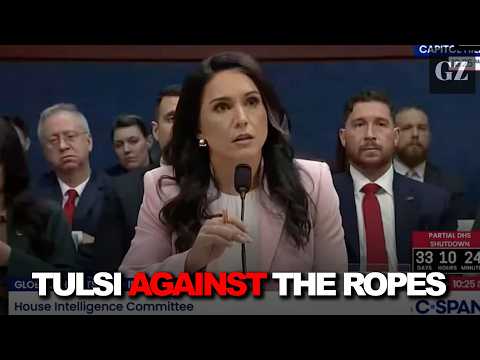
Tulsi chooses loyalty over principle
Summary
Joe Kent criticized the war narrative as based on falsehoods, while Tulsi Gabbard's responses during congressional testimony raised concerns about her credibility and alignment with the Trump administration. Gabbard's hesitance to challenge Trump's assertions suggests a compromise of her principles, which could undermine public trust in intelligence assessments.
Gabbard's approach during the testimony indicated a reliance on political loyalty over factual integrity. Her failure to directly contradict Trump, despite the intelligence community's assessments, highlights a significant divide within the intelligence community regarding the narrative on Iran.
The contrasting approaches of Gabbard and CIA Director John Ratcliffe illustrate the challenges public officials face in balancing political loyalty with factual integrity. Gabbard's alignment with the Trump administration raises questions about her credibility and the integrity of her claims regarding Iran's nuclear threat.
The reliance on political narratives over factual assessments creates a dangerous environment where misinformation can thrive. This dynamic raises concerns about the potential for miscalculations in foreign policy, particularly regarding military actions based on flawed intelligence.
Perspectives
Analysis of Tulsi Gabbard's congressional testimony and its implications.
Critics of Tulsi Gabbard
- Accuses Gabbard of choosing political loyalty over integrity
- Highlights Gabbards failure to challenge Trumps claims
- Questions Gabbards credibility based on her congressional testimony
- Points out the inconsistency between Gabbard and the intelligence communitys assessments
- Denounces Gabbards alignment with the Trump administration as compromising her principles
- Warns that Gabbards approach undermines public trust in intelligence
Supporters of Tulsi Gabbard
- Claims Gabbards presence exposes the Trump administrations inconsistencies
- Argues that having Gabbard in a position of power is better than other potential candidates
- Defends Gabbards approach as a strategic choice in a politically charged environment
- Poses that Gabbards testimony reveals the political pressures within the administration
- Highlights Gabbards historical opposition to war as a point of credibility
- Notes that Gabbards responses reflect the complexities of intelligence assessments
Neutral / Shared
- Acknowledges the complexity of intelligence assessments in political contexts
- Recognizes the challenges faced by public officials in navigating political loyalty
- Notes the potential impact of political narratives on public perception of intelligence
Metrics
other
the imminent nuclear threat posed by the Iranian regime
White House statement regarding Iran's nuclear threat
This claim reflects the administration's justification for military action.
the imminent nuclear threat posed by the Iranian regime
other
the intelligence community assessed that Iran maintained the intention to rebuild and to continue to grow their nuclear
Intelligence community's assessment of Iran's nuclear intentions
This assessment contradicts the White House's claims about an imminent threat.
the intelligence community assessed that Iran maintained the intention to rebuild and to continue to grow their nuclear enrichment
other
Iran does not have any clear weapons program.
CIA's assessment of Iran's nuclear capabilities
This assessment is crucial for understanding the justification for military action.
there is a gulf between the DNI and the intelligence, the so-called IC and the political wing of the administration
Key entities
Timeline highlights
00:00–05:00
Joe Kent criticized the war narrative as based on falsehoods, while Tulsi Gabbard's responses during congressional testimony raised concerns about her credibility and alignment with the Trump administration. This situation underscores the challenge for public officials in balancing political loyalty with factual integrity.
- Joe Kent criticized the war narrative as based on falsehoods, while Tulsi Gabbard has not publicly opposed the Trump administrations claims, raising concerns about her integrity within the intelligence community
- During her congressional testimony, Gabbard struggled to reaffirm her earlier statement that Iran was not pursuing a nuclear weapon, which significantly undermines her credibility
- Gabbards responses regarding the intelligence communitys view on Irans nuclear threat indicate she is prioritizing presidential authority over factual intelligence, which could weaken the integrity of the intelligence community
- The White Houses claim of an imminent nuclear threat from Iran contradicts Gabbards past statements, suggesting her choice of political loyalty over factual integrity may harm her reputation
- Gabbards hesitance to challenge Trumps assertions reflects a troubling alignment with his administration, indicating a potential compromise of her principles for political survival
- This situation highlights the broader challenge for public officials in balancing political loyalty with truth, potentially influencing how intelligence leaders engage with political narratives in the future
05:00–10:00
Tulsi Gabbard's alignment with the Trump administration raises questions about her credibility and the integrity of her claims regarding Iran's nuclear threat. The contrasting approaches of Gabbard and CIA Director John Ratcliffe illustrate a significant divide within the intelligence community regarding the narrative on Iran.
- Tulsi Gabbard has prioritized political expediency over integrity by aligning with the Trump administrations narrative on Iran, raising doubts about her credibility
- Her reluctance to contradict President Trumps claims about Irans nuclear threat reflects her vulnerable position within the administration and avoids addressing inconsistencies
- The differing strategies of Gabbard and CIA Director John Ratcliffe highlight a rift in the intelligence community, with Gabbard adhering to some intelligence assessments while Ratcliffe misrepresents them for a war agenda
- Gabbards testimony suggests a concerning trend where political loyalty takes precedence over factual integrity, affecting her reputation and public trust in intelligence assessments
- Her alignment with Trump and failure to challenge his assertions could put pressure on her political future, risking alienation of her base
- The administrations narrative on Irans nuclear threat indicates a broader strategy favoring military action over diplomacy, potentially leading to increased regional instability