Intel / Europe
Real-time monitoring of security incidents, escalation signals and threat indicators across global hotspots, focusing on rapid alerts and emerging risk developments. Topic: Europe. Updated briefs and structured summaries from curated sources.
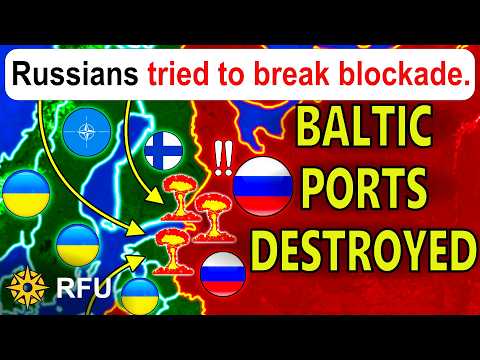
No more escorts: Ukraine obliterates Russian Baltic ports
Summary
Recent developments indicate a significant shift in the dynamics of Russian oil exports due to Ukraine's military actions and European blockades. The European blockade has severely restricted Russia's ability to leverage the Iran War for oil profits, prompting discussions about military escorts for illicit tanker operations.
Ukraine's targeted strikes on Russian oil infrastructure have complicated Russia's maritime strategy, effectively reducing the necessity for such escorts. The French Navy's interception of a tanker suspected of operating under a false flag exemplifies the growing European resolve to disrupt Russian oil transport.
As European states actively engage in seizing Russian vessels, alarm has spread within Russia regarding the potential for further escalations. Analysts warn that passive responses are no longer viable, and discussions of forceful countermeasures in the Baltic Sea are gaining traction.
Despite these discussions, there is recognition within Russia that its navy lacks the capacity to sustain extensive escort operations. Alternative measures, including deploying armed security teams and exploring unconventional methods like naval drones, highlight the challenges faced by Russia.
Perspectives
short
Ukraine and European States
- Disrupt Russian oil transport through military actions
- Seize vessels operating under false flags to enforce blockades
- Target critical infrastructure to undermine export capabilities
- Shift focus from protecting tankers to addressing export capacity
Russia
- Consider military escorts for illicit tanker operations
- Discuss forceful countermeasures in response to Western actions
- Explore alternative measures like armed security teams
- Acknowledge limitations in naval capacity for sustained operations
Neutral / Shared
- Recognize the impact of the Iran War on global oil supply
- Acknowledge the role of intelligence sharing in maritime operations
Metrics
export_capacity
1 million barrels per day barrels/day
Primozk's export capability
This figure highlights the scale of Russia's oil export potential, which is now jeopardized.
Primozk alone capable of exporting around 1 million barrels per day.
Key entities
Timeline highlights
00:00–05:00
The European blockade has significantly hindered Russia's ability to capitalize on the Iran War for oil profits, prompting military escort considerations for illicit tanker operations. Ukraine's targeted strikes on Russian oil infrastructure have further complicated Russia's maritime strategy and reduced the necessity for such escorts.
- The European blockade has severely restricted Russias ability to leverage the Iran War for oil profits, leading to considerations for military escorts for illicit tanker operations
- Ukraines targeted strikes on critical oil infrastructure have effectively negated the need for Russian military escorts, complicating Russias maritime strategy
- The French Navys seizure of the tanker Dana, aided by British intelligence, demonstrates Europes resolve to disrupt Russian oil transport and marks a shift from previous caution regarding escalation
- Contrary to expectations of reduced pressure due to the Iran conflict, European officials have escalated their stance on tanker seizures, prioritizing long-term strategic pressure on Russia over immediate market stability
- Russian analysts express growing concern over the possibility of European nations seizing Russian oil and gas, prompting discussions of aggressive countermeasures in the Baltic Sea to safeguard exports
- Ukraines drone attack on the Transneft oil terminal in Primorsk has critically disrupted Russian oil loading operations, shifting the focus from securing transit routes to the core issue of export capacity
05:00–10:00
Ukraine's drone strikes have critically undermined Russia's oil export capabilities, forcing a suspension of operations at key ports. The European blockade and military actions against Russian vessels indicate a significant shift in Western strategy, increasing pressure on Moscow.
- Ukraines drone strikes on oil terminals have forced Russia to suspend operations at key ports, critically undermining its oil export capabilities
- The European blockade and recent military actions against Russian vessels reflect a significant shift in Western strategy, actively disrupting Russian oil transport and increasing pressure on Moscow
- Russian officials are acknowledging their naval limitations in addressing these threats, as discussions about naval convoys and armed escorts reveal a growing sense of urgency
- The ongoing conflict in Iran has tightened global oil supplies, yet Western nations are intensifying efforts to seize Russian assets, further isolating Moscow
- As tensions escalate, the likelihood of military confrontation in the Baltic Sea rises, raising concerns about Russias ability to protect its oil exports from further disruption