Intel / Asia
Real-time monitoring of security incidents, escalation signals and threat indicators across global hotspots, focusing on rapid alerts and emerging risk developments. Topic: Asia. Updated briefs and structured summaries from curated sources.
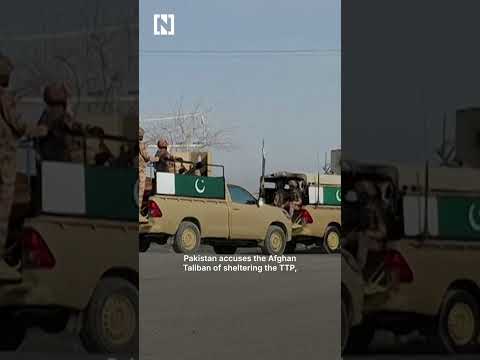
Pakistan declares ‘open war’ on Afghanistan
Summary
Pakistan's defense minister has declared an open war with Afghanistan following a bombing in Kabul by the Pakistani Air Force. This escalation has led to both countries exchanging fire across their shared border, resulting in numerous casualties. The conflict centers around the militant group Tehrik-i-Taliban Pakistan (TTP), which has conducted a series of attacks in Pakistan over the past year.
Pakistan accuses the Afghan Taliban of providing shelter to the TTP, a claim that the Afghan side denies. The porous nature of the border complicates the situation, as tribal networks often hold more influence than the central governments of either country. This lack of control allows TTP fighters to operate more freely in the border regions.
Despite the Afghan Taliban's denial of any strategic relationship with the TTP, both groups share political and ideological sympathies, particularly in their opposition to the colonial-era borders that separate Pakistan and Afghanistan. This shared sentiment fuels Pakistan's belief that Kabul is responsible for the TTP's attacks.
Perspectives
short
Pakistan
- Declares an open war with Afghanistan following a bombing in Kabul
- Accuses the Afghan Taliban of sheltering the TTP
- Claims justification for military action based on TTP attacks
- Highlights the porous border as a challenge for control
- Argues that tribal networks undermine state authority in border areas
- Believes Kabul is responsible for TTP activities
Afghanistan
- Denies accusations of sheltering the TTP
- Rejects claims of a strategic relationship with the TTP
- Emphasizes the complexity of tribal dynamics at the border
- Questions the validity of Pakistans justification for military action
Neutral / Shared
- Notes the shared political and ideological sympathies between the Afghan Taliban and TTP
- Acknowledges the impact of colonial-era borders on regional tensions
Metrics
casualties
many casualties reported units
casualties from the exchange of fire
High casualties indicate the severity of the conflict.
many casualties reported
attacks
a wave of attacks in Pakistan in the past year units
attacks carried out by TTP
The frequency of attacks highlights the ongoing security threat posed by TTP.
a wave of attacks in Pakistan in the past year
Key entities
Timeline highlights
00:00–05:00
Pakistan's defense minister has declared an open war with Afghanistan following a bombing in Kabul by the Pakistani Air Force. The conflict is primarily driven by the militant group Tehrik-i-Taliban Pakistan, which has been accused by Pakistan of receiving support from the Afghan Taliban.
- Pakistans defense minister has declared an open war with Afghanistan following the bombing of Kabul by the Pakistani Air Force
- Both countries have exchanged fire across their shared border, resulting in many reported casualties
- The conflict centers around the militant group known as Tehrik-i-Taliban Pakistan, which has conducted numerous attacks in Pakistan over the past year
- Pakistan accuses the Afghan Taliban of providing shelter to Tehrik-i-Taliban Pakistan, a claim that the Afghan Taliban denies
- The porous border between Afghanistan and Pakistan complicates control, as tribal networks often hold more influence than the central governments
- Despite denying any strategic relationship, the Afghan Taliban and Tehrik-i-Taliban Pakistan share political and ideological sympathies, particularly regarding colonial-era borders