Geopolitic / North America
Track North America geopolitics, strategic competition, security developments and regional risk signals through structured summaries.
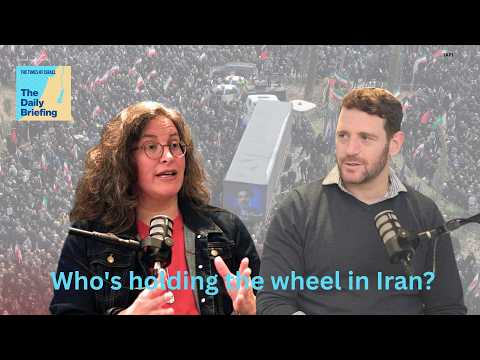
After Larijani assassination, who's holding the wheel in Iran?
Summary
The assassination of Ali Larijani has created significant uncertainty regarding the future of Iran's leadership. Larijani was a key figure in the regime, having been personally chosen by the late Supreme Leader Ali Khamenei to guide the revolution. His death raises questions about the continuity of the regime and the effectiveness of its military response amidst ongoing conflicts.
Iran's missile retaliation following Larijani's assassination indicates a willingness to escalate tensions, yet the regime's internal dynamics are shifting. The Islamic Revolutionary Guard Corps (IRGC) appears to be gaining dominance over clerical authority, potentially leading to increased factionalism within the military structure. This shift complicates the regime's stability and military strategy.
The current Iranian president lacks real power, further complicating U.S. interests in a potential regime change. The weak presidency raises doubts about the effectiveness of external pressures, as internal factions within Iran may resist change. The absence of a strong leadership figure could hinder any attempts at reform or negotiation.
Internationally, U.S. President Donald Trump's calls for NATO allies to assist in securing the Strait of Hormuz have met with skepticism. Many European nations prioritize their own security concerns and may be reluctant to engage in collective action against Iran. This fragmentation could undermine U.S. objectives in the region.
Perspectives
short
Pro-Iranian Regime Stability
- Claims the regime will continue despite significant assassinations
- Highlights the IRGCs growing power over clerical authority
Critique of Iranian Leadership and U.S. Strategy
- Questions the effectiveness of the current Iranian president
- Denies the likelihood of a successful regime change under current conditions
- Accuses NATO allies of lacking commitment to U.S. military efforts
Neutral / Shared
- Notes the ongoing missile attacks from Iran as a response to the assassination
- Observes the lack of visible internal dissent within Irans regime
- Mentions the potential for increased anti-Semitic rhetoric within U.S. politics
Metrics
casualties
dozens injured people
injuries from missile strikes
Indicates the severity of the conflict and its impact on civilians.
dozens injured and brought to hospital
deaths
two in the Glamat Ghan were killed people
fatalities from missile strikes
Highlights the lethal consequences of the ongoing violence.
two in the Glamat Ghan were killed
control
the president doesn't have control over the armed forces
presidential system in Iran
This highlights the unique power dynamics that challenge the authority of elected officials.
the president doesn't have control over the armed forces
authority
weak presidency
describing the current Iranian president's power
A weak presidency may hinder effective governance and stability.
it's a weak presidency anyway in that country.
commitment
no commitment to do anything yet
NATO allies' response to U.S. calls for action
Lack of commitment indicates uncertainty in international military cooperation.
there's no commitment to do anything yet.
energy_needs
20% of the world's oil comes through the strait of hormones
global oil supply
This statistic underscores the strategic importance of the Strait of Hormuz in global energy security.
20% of the world's oil comes through the strait of hormones
energy_needs
70 or 80% of China's energy needs
China's energy dependency
China's reliance on oil from this region complicates its stance on U.S. military efforts.
70 or 80% of China's energy needs
followers
millions and millions units
potential followers gained by promoting anti-Semitic views
This indicates a significant audience for extremist rhetoric, influencing public discourse.
they're gonna get millions and millions of podcasts followers
Key entities
Timeline highlights
00:00–05:00
The assassination of Ali Larijani has raised significant concerns regarding the stability of Iran's leadership and its military coordination. The ongoing missile strikes in retaliation indicate a willingness to escalate tensions amidst a shifting power dynamic favoring the IRGC over clerical authority.
- Ali Larijanis assassination raises concerns about Irans leadership stability and military coordination
- Irans missile strikes in retaliation indicate ongoing conflict and a willingness to escalate tensions
- The IRGCs rise suggests a shift in power dynamics within Iran, overshadowing clerical authority
- The absence of Mojtaba Khamenei complicates future leadership succession in Iran
05:00–10:00
The assassination of Ali Larijani has intensified the uncertainty surrounding Iran's leadership, indicating a potential shift towards an IRGC-dominated governance structure. This change may lead to increased internal factionalism within the IRGC, complicating the regime's stability and military strategy.
- Ali Larijanis assassination creates uncertainty in Irans leadership, potentially signaling an IRGC-dominated future
- The IRGC is emerging as the dominant power, overshadowing clerical authority and impacting military strategy
- Internal struggles within the IRGC may lead to factional power plays focused on influence rather than ideology
- The Supreme Leaders control complicates governance, limiting the power of elected bodies like parliament
- Targeting military leaders over political figures reflects a strategy to weaken military capabilities without destabilizing the regime
- The U.S. and Israels restraint in targeting political figures indicates a strategic choice to avoid negotiation barriers
10:00–15:00
The current Iranian president lacks authority, complicating U.S. interests in a potential regime change.
- Trump seeks a weak Iranian leader, but the current president lacks authority
- Netanyahu urges Iranians to rise during Nowruz, but bombings hinder protests
- Trump faces NATO backlash over Strait of Hormuz security calls with no commitments
- France and the UK are cautious about expanding military efforts in the Gulf
- Estonia shows openness to military cooperation with the US amid mission concerns
- The EU lacks consensus on expanding its Red Sea mission, reflecting member hesitance
15:00–20:00
Iran's missile attacks on Israel have resulted in casualties, highlighting the ongoing conflict. The assassination of Ali Larijani raises significant questions about the stability of Iran's regime following the death of supreme leader Ali Khamenei.
- Irans missile attacks on Israel resulted in casualties, including the deaths of an elderly couple in Ramat Gan, underscoring the ongoing conflict
- The assassination of Ali Larijani raises questions about Irans regime stability after the death of supreme leader Ali Khamenei
- Trump struggles to secure NATO support for a coalition to protect the Strait of Hormuz, a vital oil route
- Chinas support for US military efforts is unlikely as it views Iran as a key ally
- Indias private negotiations with Iran for energy could complicate US coalition efforts
- European nations may respond more favorably to US calls against Iran due to shared concerns about Russia
20:00–25:00
Joe Kent's resignation from the National Counterterrorism Center underscores a growing anti-Semitic sentiment within the MAGA movement. This shift reflects broader cultural changes in the Republican Party, raising concerns about the implications for U.S.
- Joe Kents resignation from the National Counterterrorism Center highlights rising anti-Semitic sentiment within the MAGA movement, reflecting broader cultural shifts in the Republican Party
25:00–30:00
Joe Kent's resignation from the National Counterterrorism Center indicates a shift in the MAGA movement towards anti-Semitic sentiments. This trend raises concerns about the future direction of the Republican Party and its alignment with extremist views.
- Joe Kents resignation from the National Counterterrorism Center signals a shift in the MAGA movement, criticizing Israels influence on U.S. policy
- Kents claims about Israel dragging the U.S. into war reflect rising anti-Semitic sentiment among conservatives
- The resignation could lead to increased scrutiny and backlash against Trump from his supporters
- Figures like Kent may amplify anti-Semitic views to attract followers, raising concerns about the Republican Partys direction
- The anti-Semitic right is gaining traction, with personalities like Megan Kelly and Candace Owens promoting conspiracy theories
- The influence of anti-Semitic figures in Trumps circle raises alarms about the partys future