Geopolitic / Asia
Unclear topic
The potential for US and Israeli military action against Iran poses significant risks to regional stability and global markets. China's reliance on Iran for oil exports and its involvement in BRICS further complicate the geopolitical landscape. The effectiveness of Chinese military equipment is influenced by user training and operational context, with varying performance observed in different conflicts. Iran's evolving relationship with China reflects a shift towards greater military dependence, particularly in intelligence and reconnaissance capabilities.
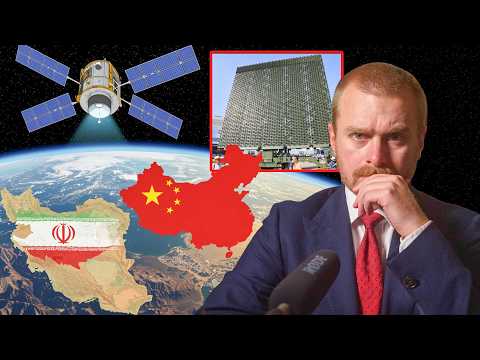
Source material: Critical Factors & Hidden Capabilities - China Arms Iran - Does It Shift the Equation?
Summary
The potential for US and Israeli military action against Iran poses significant risks to regional stability and global markets. China's reliance on Iran for oil exports and its involvement in BRICS further complicate the geopolitical landscape. The effectiveness of Chinese military equipment is influenced by user training and operational context, with varying performance observed in different conflicts. Iran's evolving relationship with China reflects a shift towards greater military dependence, particularly in intelligence and reconnaissance capabilities.
Israel's initial success in the 12-day war was attributed to extensive preparation, including electronic warfare and intelligence from ground proxies. Iran's military capabilities, particularly in ballistic missile systems, were suppressed during the conflict, raising questions about potential preemptive strikes supported by Russia or China. Israel and the United States may justify preemptive strikes against Iran by framing them as anticipatory self-defense to prevent nuclear weapon development. Iran's military strategy appears to rely on waiting for an attack, allowing it to maintain the moral high ground.
Perspectives
LLM output invalid; stored Stage4 blocks + metrics only.
Metrics
oil_exports
80%
Iran's oil exports to China
This highlights Iran's dependence on China as a primary market for its oil.
Iran sells about 80% of its oil to China.
other
12-day conflict
duration of the conflict that influenced Iran's military strategy
This conflict highlighted Iran's vulnerabilities and prompted a shift in its defense strategy.
the 12-day conflict last year where Iran realized that it was far more vulnerable than what it thought it was.
other
Badole system
the system Iran transitioned to for navigation
This transition reduces Iran's vulnerabilities associated with reliance on US technology.
they've moved to the Chinese Badole system.
other
ballistic missile systems
Iran's military capabilities
Understanding the effectiveness of these systems is vital for assessing future conflicts.
Iran's military is more effective in an offensive capacity with its ballistic missile systems
other
99.9 recurring likely %
likelihood of U.S. striking Iran
This high probability indicates a significant risk of military conflict.
in terms of the interest of the US. In terms of the US striking Iran it would be at 99.9 recurring likely.
accuracy
as good as the military grade of GPS
Badole's accuracy compared to GPS
This indicates a significant enhancement in Iran's navigation capabilities.
the military grade version of Badole is depending on the sources at least as good as the military grade of GPS in terms of its accuracy
resilience
more resilient
Badole's ability to resist jamming
Increased resilience complicates adversarial efforts to disrupt Iranian operations.
it's probably going to be more resilient
capabilities
significantly larger and more capable
China's ISR capabilities compared to Russia's
This suggests a strategic advantage for Iran in intelligence gathering.
China is their intelligence so their ISR apparatus is significantly larger and more capable than Russia's
Key entities
Timeline highlights
00:00–05:00
The potential for US and Israeli military action against Iran poses significant risks to regional stability and global markets. China's reliance on Iran for oil exports and its involvement in BRICS further complicate the geopolitical landscape.
- The potential for US and Israeli military action against Iran is a significant concern in the Middle East
- Chinas relationship with Iran is heavily influenced by energy needs. China imports about 13% of its oil from Iran
- Iran relies on China for its oil exports, with approximately 80% of its oil being sold to China
- The stability of the region is crucial for broader trade, not just in energy. Disruptions could impact global markets
- Chinas support for Iran is linked to its involvement in BRICS. This group fosters economic cooperation, though it is not a military alliance
- The effectiveness of Chinese military systems varies. For example, Pakistan has seen success against Indian aircraft, while Venezuela faces challenges with training and equipment use
05:00–10:00
The effectiveness of Chinese military equipment is influenced by user training and operational context, with varying performance observed in different conflicts. Iran's evolving relationship with China reflects a shift towards greater military dependence, particularly in intelligence and reconnaissance capabilities.
- The effectiveness of Chinese military equipment varies significantly based on the training and operational context of the user. In the India-Pakistan conflict, some Chinese systems performed well, while others did not
- Venezuelas military capabilities are difficult to assess due to potential issues with training and operational readiness. If personnel are instructed to stand down, the effectiveness of any missile system is compromised
- Irans relationship with China is more developed than Venezuelas, reflecting a long history of defense cooperation. This relationship has evolved from military equipment support during the Iran-Iraq war to more technical assistance in recent years
- Irans realization of its vulnerability following the 12-day conflict has prompted it to seek more substantial support from China and Russia. This shift indicates a growing dependence on external military assistance
- Chinas support for Iran includes critical enablers such as intelligence, surveillance, and reconnaissance capabilities. These elements are increasingly important for Irans defense strategy, surpassing the need for conventional weaponry
- Irans transition from reliance on the US GPS system to Chinas BDO system represents a significant strategic shift. This change reduces Irans vulnerabilities and enhances its operational capabilities
10:00–15:00
Israel's initial success in the 12-day war was attributed to extensive preparation, including electronic warfare and intelligence from ground proxies. Iran's military capabilities, particularly in ballistic missile systems, were suppressed during the conflict, raising questions about potential preemptive strikes supported by Russia or China.
- Israels success in the opening days of the 12-day war stemmed from extensive preparation. This included electronic warfare and mapping enemy command and control nodes
- The ability to spoof Irans GPS signals played a crucial role in Israels strategy. This capability allowed them to disrupt Iranian defenses effectively
- Ground intelligence from proxies within Iran significantly contributed to the success of the initial strikes. These efforts targeted air defense systems and enhanced operational effectiveness
- Irans military capabilities appear more effective in an offensive capacity. This is particularly true for ballistic missile systems, which were suppressed during the 12-day conflict
- The prerequisites for a potential preemptive strike by Iran seem to have been met. This raises questions about the support they might receive from Russia or China
- The framing of the conflict by the US and Israel as an anticipatory preemptive strike complicates the legal and strategic landscape. This is particularly relevant regarding Irans nuclear development
15:00–20:00
Israel and the United States may justify preemptive strikes against Iran by framing them as anticipatory self-defense to prevent nuclear weapon development. Iran's military strategy appears to rely on waiting for an attack, allowing it to maintain the moral high ground.
- Israel and the United States may justify preemptive strikes against Iran by framing them as anticipatory self-defense. They argue that such actions are necessary to prevent Iran from developing nuclear weapons
- Irans military strategy appears to rely on waiting for the United States or Israel to strike first. This approach allows Iran to maintain the moral high ground in any conflict
- The United States might be attempting to provoke Iran into a preemptive strike. By building up military presence in the region, the United States could create a narrative that justifies its own military actions
- Recent statements from United States officials suggest that Irans nuclear program is closer to being operational than previously believed. This creates a potential justification for military action against Iran
- Concerns about Irans nuclear capabilities have persisted for decades, leading to skepticism about their actual progress. The repeated warnings may diminish the credibility of future claims regarding Irans nuclear advancements
- Analyzing the situation requires an objective perspective, separate from any support for the Iranian regime. Understanding the strategic calculations of both sides is essential for a comprehensive analysis
20:00–25:00
China and Russia are not expected to provide direct military support to Iran, as their interests in the region are significant but not existential. China's intelligence, surveillance, and reconnaissance capabilities, particularly through the Badole Global Navigation Satellite System, are crucial for enhancing Iran's military strategy.
- China and Russia are unlikely to deploy troops or provide direct military support to Iran. Their interests in the region are significant but not existential
- Chinas support for Iran may include critical intelligence, surveillance, and reconnaissance capabilities. These are essential for Irans defense strategy
- The provision of the Badole Global Navigation Satellite System by China is particularly important. Iran has reportedly shifted away from using GPS
- The intelligence support that China provides is not always visible to the public. However, it plays a crucial role in enhancing Irans military capabilities
- Russias focus on Ukraine and other areas limits its ability to offer substantial support to Iran. Despite its interest in the region, its resources are stretched
- ISR capabilities are vital for military operations, even if they do not involve direct combat. Their importance cannot be overstated in modern warfare
25:00–30:00
The military-grade version of Badole is as accurate as military-grade GPS and resilient against jamming, enhancing Iran's defense capabilities. The YLC-8 Bravo radar, a mobile stealth detection system, could significantly improve Iran's early warning and situational awareness against aerial threats.
- The military-grade version of Badole is reportedly as accurate as military-grade GPS. This makes it significant for Irans defense capabilities
- Badoles resilience against jamming is crucial. It presents a challenge for Israel and the US to disrupt its functionality
- Chinas intelligence, surveillance, and reconnaissance capabilities are more advanced than those of Russia. This allows for extensive information collection
- China has previously deployed intelligence-gathering vessels near Australia during military exercises. These vessels collect signals and intelligence
- The YLC-8 Bravo radar is a stealth detection system. It could enhance Irans early warning capabilities against aerial threats
- This radar system is mobile and operates on low frequencies. This requires a larger size for effective signal reception