Geopolitic / Asia
Track Asia geopolitics, strategic competition, regional pressure and escalation signals through structured curated summaries.
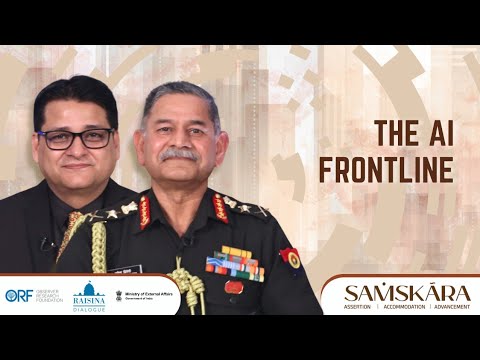
How AI and Drones are transforming the Indian Army
Summary
The Indian Army is adapting its strategy to enhance credible deterrence in response to the changing nature of warfare. This adaptation includes restructuring forces and integrating technology to improve operational effectiveness and address future security threats.
The Army is incorporating cyber and cognitive domains alongside traditional warfare, emphasizing technology integration and joint operations. This evolution aims to enhance operational effectiveness and maintain readiness against modern threats.
Military diplomacy is being enhanced to foster trust and respect with other nations, essential for strengthening defense partnerships and exports. Additionally, the Army is adapting its strategies in response to the evolving security challenges posed by the relationship between Pakistan and China.
The Indian Army is redefining its role in national security by linking defense with economic growth, emphasizing community revitalization in border regions. Initiatives like the Agniveer program and humanitarian assistance reinforce its commitment to stability and nation-building.
Perspectives
short
Indian Army's Strategic Adaptation
- Emphasizes credible deterrence through restructuring and technology integration
- Incorporates cyber and cognitive domains into operational strategies
- Enhances military diplomacy to strengthen international defense partnerships
- Links defense initiatives with economic growth and community revitalization
- Focuses on clearly defined roles for soldiers to ensure effective conflict execution
Challenges and Concerns
- Overlooks complexities of modern warfare in reliance on technology
- Assumes military diplomacy alone can mitigate security threats
- Relies on military initiatives for community support without addressing socio-political dynamics
Metrics
other
three things which are required for the deterrence is the credibility, capability and the third thing is will do wage wa
deterrence requirements
Understanding these elements is crucial for formulating effective military strategies.
the three things which are required for the deterrence is the credibility, capability and the third thing is will do wage war.
other
the policy will be to kind of retaliate in under own terms and conditions.
retaliation policy
This policy shift indicates a proactive approach to military engagement.
the policy will be to kind of retaliate in under own terms and conditions.
other
we have started with the integrated batting group.
organizational changes
This indicates a shift towards more integrated military operations.
we have started with the integrated batting group.
other
any equipment transformation or change requires long time gestation period.
equipment transformation timeline
Recognizing the time required for transformation is crucial for planning.
any equipment transformation or change requires long time gestation period.
timeline
2026 and 2027 years
years declared for technology advancements
These timelines indicate a structured approach to military modernization.
26 and 27 have now been declared as a air of networking and data centricity.
years
28 years
duration of consideration for integrated theater commands
This long-term consideration highlights the ongoing challenges in military integration.
we have been thinking for last approximately 28 years
other
maximum band power in various places
India's contribution to UN peacekeeping
This highlights India's significant role in international peacekeeping efforts.
we have been the number one or number two or within number five countries which we have been providing maximum band power in various places.
other
increased with every passing day
India's defense exports
This indicates a growing capability and focus on defense manufacturing.
our defense exports are increased with every passing day.
Key entities
Timeline highlights
00:00–05:00
The Indian Army is evolving its strategy to enhance credible deterrence in response to the changing nature of warfare. This adaptation includes restructuring forces and integrating technology to improve operational effectiveness and address future security threats.
- The Indian Army is evolving its strategy to enhance credible deterrence in response to the changing nature of warfare. This adaptation is critical as global conflicts increasingly depend on military strength to achieve political goals
- Recent operational insights underscore the necessity for improved collaboration among military and support agencies. Such synergy is vital for effectively addressing future security threats
- The Army is restructuring its force and doctrines to embed technology into military operations. This shift is essential for sustaining operational effectiveness in modern warfare
- Integration of emerging technologies like drones and AI is reshaping the Armys strategic approach. This development is crucial for enhancing capabilities in contemporary combat environments
- Organizational reforms include creating new units dedicated to drone operations and integrated battle groups. These initiatives aim to boost the Armys adaptability to evolving battlefield dynamics
- The Indian Army acknowledges that technological advancements require careful implementation and adaptation. Long-term planning is necessary to ensure effective integration of new systems into military operations
05:00–10:00
The Indian Army is adapting its strategy to incorporate cyber and cognitive domains alongside traditional warfare, emphasizing technology integration and joint operations. This evolution aims to enhance operational effectiveness and maintain readiness against modern threats.
- The Indian Army is evolving its strategy to include cyber and cognitive domains alongside traditional warfare areas. This adaptation is essential for maintaining effectiveness against a range of modern threats
- To improve readiness, the Army is focusing on technology integration, with specific timelines for advancements in AI and robotics. This urgency highlights the need for cutting-edge technologies in military operations
- The Army is emphasizing synergy among its forces, recognizing that joint operations are crucial for effective responses. This strategy aims to enhance command structures and operational coordination across branches
- Military diplomacy is gaining importance as India aims to strengthen global defense partnerships. The Armys international engagement reflects Indias rising influence and the expectations of its allies
- The commitment to integrating advanced technologies like AI and cyber capabilities is vital for future warfare. This focus on rapid technological advancement is intended to keep the Army competitive in a changing security environment
- Challenges persist in establishing integrated theater commands due to varying cultures and operational procedures among services. Nevertheless, the Army is optimistic about achieving effective joint operations soon
10:00–15:00
The Indian Army is enhancing military diplomacy to foster trust and respect with other nations, which is essential for strengthening defense partnerships and exports. Additionally, the Army is adapting its strategies in response to the evolving security challenges posed by the relationship between Pakistan and China.
- The Indian Army is enhancing military diplomacy to build trust and respect with other nations, which is vital for boosting defense partnerships and exports
- Humanitarian assistance and disaster relief are key components of the Indian Armys commitment to regional stability, showcasing its dedication to supporting neighboring countries during crises
- Despite anticipated changes in Pakistans military behavior, the Indian Army notes minimal shifts, necessitating continued vigilance against potential threats
- The growing relationship between Pakistan and China presents a two-front security challenge, compelling the Indian Army to adapt its defense strategies accordingly
- The integration of foreign technology into Pakistans military raises interoperability concerns for India, highlighting the need for India to bolster its military capabilities
- The Indian Armys strategy focuses on readiness for various operational scenarios, which is crucial for ensuring national security in a complex geopolitical landscape
15:00–20:00
The Indian Army is redefining its role in national security by linking defense with economic growth, emphasizing community revitalization in border regions. Initiatives like the Agniveer program and humanitarian assistance reinforce its commitment to stability and nation-building.
- The Indian Army is redefining its national security role by linking defense with economic growth, promoting defense as a facilitator rather than a burden
- Military initiatives in border regions focus on community revitalization through infrastructure and skill development, which are vital for national security and economic stability
- In areas like Ladakh, the Armys economic influence exceeds that of tourism, highlighting its significant role in nation-building and local support
- The Agniveer program aims to recruit tens of thousands of soldiers annually, essential for sustaining a skilled military force
- The Armys involvement in humanitarian assistance and disaster relief reinforces its commitment to stability and enhances relationships with local communities
- Certification of defense exports by the Indian Army is crucial for strengthening the defense industry and establishing India as a dependable global defense partner
20:00–25:00
The Indian Army emphasizes the importance of clearly defined roles for soldiers to ensure effective execution during conflicts. This adaptability to evolving threats and integration of advanced technologies is crucial for maintaining national security.
- The Indian Armys operational effectiveness hinges on clearly defined roles for soldiers, ensuring swift execution during conflicts. This clarity allows each member to perform their duties effectively, akin to an orchestra
- Rapid changes in global security dynamics require the Indian Army to maintain constant vigilance and readiness. This preparedness is crucial to avoid being caught off guard by unexpected developments
- Pre-planned roles within military operations are essential, especially in high-pressure situations. Such preparation enables quick and decisive actions, which are vital in modern warfare
- The Indian Armys adaptability to evolving threats is vital for national security. As geopolitical landscapes shift, the Army must continuously reassess its strategies and capabilities
- The integration of advanced technologies and strategic reforms is reshaping the Indian Armys approach to multi-domain warfare. This evolution is necessary to improve operational readiness and deterrence in a complex security environment
- The Armys initiatives in community engagement and nation-building significantly contribute to local economies. By fostering development in border areas, the Army enhances national security and stability