Energy / North America
Track North America energy trends, oil and gas dynamics, power markets and regional supply signals through structured summaries.
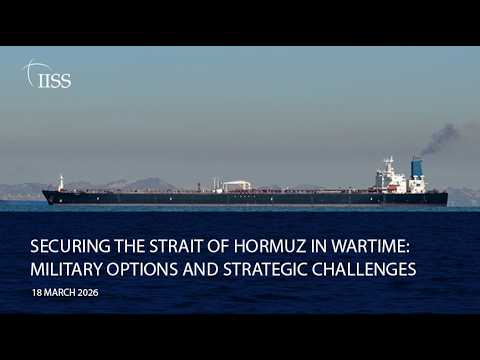
Securing the Strait of Hormuz in Wartime: Military Options and Strategic Challenges
Summary
The Strait of Hormuz is a crucial passage for global oil and LNG, with Iran controlling this vital route. Disruptions here threaten not only energy security but also food supplies for Gulf states, which rely heavily on imports through the strait. Traffic through the Strait of Hormuz has significantly decreased, with just over 100 ships passing this month compared to nearly 1,900 last year. The presence of dark transits and Iranian-linked vessels indicates complex dynamics affecting maritime operations in the region.
Ten ships have recently passed through Iranian waters, indicating a mix of fleet activity influenced by ongoing negotiations. The lack of set conditions for safe transit complicates maritime security in the region. Iran's potential targeting of vessels without US or Israeli ties raises significant maritime security risks, prompting Gulf states to seek strategies to limit Iranian leverage. The evolving battlefield dynamics necessitate a refined military approach to secure the Strait of Hormuz, integrating both military and non-military stakeholders.
Perspectives
LLM output invalid; stored Stage4 blocks + metrics only.
Metrics
flow
one-fifth %
global oil and LNG flows through the Strait of Hormuz
This percentage indicates the strait's critical role in global energy supply.
roughly one-fifth of global oil and LNG flows transit
fertilizers
one-third %
globally traded fertilizers passing through the strait
Disruptions could lead to food security crises affecting millions.
One-third of globally traded fertilizers pass through the strait of Hormuz
food imports
70 percent %
food imports for Gulf states
This highlights the strait's importance beyond energy supplies.
the Gulf states themselves rely on the strait for up to 70 percent of their food imports
transits
just over a hundred ships units
number of ships passing through the Strait of Hormuz this month
This significant reduction indicates heightened risks for maritime operations.
we've had just over a hundred ships passing through
transits
nearly 1900 last year units
number of ships passing through the Strait of Hormuz last year
The comparison highlights the stark decline in maritime activity.
a hundred ships versus nearly 1900
dark transits
29 dark transits units
number of dark transits this month
This complicates tracking and suggests actual transit numbers may be higher.
we have seen about 29 dark transits so far since the start of the month
transits
24% of the transits
percentage of transits accounted for by Iranian-linked vessels
This indicates a significant reliance on specific national affiliations for shipping.
mostly Iranian linked vessels that account for 24% of the transits
transits
60% of all the transits
percentage of transits with some sort of Iranian nexus
This underscores Iran's significant influence over maritime traffic.
60 percent of all the transits have some sort of Iranian nexus
Key entities
Timeline highlights
00:00–05:00
The Strait of Hormuz is a crucial passage for global oil and LNG, with Iran controlling this vital route. Disruptions here threaten not only energy security but also food supplies for Gulf states, which rely heavily on imports through the strait.
- The Strait of Hormuz is a critical choke point for global oil and LNG flows, with Iran exerting significant control that impacts energy security
- Disruptions in the strait affect the global economy and food security, with one-third of traded fertilizers passing through it
- Gulf states depend on the strait for 70 percent of their food imports, highlighting its importance beyond energy supplies
- President Trump must decide between de-escalation or forming a coalition for military action to secure the strait
- Some regional countries may support a U.S.-led military effort, potentially restoring vital energy flows
- The webinar will address operational realities for commercial shipping in the strait and conditions for resuming activities
05:00–10:00
Traffic through the Strait of Hormuz has significantly decreased, with just over 100 ships passing this month compared to nearly 1,900 last year. The presence of dark transits and Iranian-linked vessels indicates complex dynamics affecting maritime operations in the region.
- Traffic through the Strait of Hormuz has dropped significantly, with just over 100 ships passing this month compared to nearly 1,900 last year, indicating heightened risks for maritime operations
- There have been 29 dark transits this month, complicating tracking and suggesting actual transit numbers may be higher
- Iranian-linked vessels account for 24% of transits, highlighting reliance on specific national affiliations for shipping
- Recent activity includes vessels linked to India and Pakistan, indicating a potential shift in regional shipping dynamics
- China is pushing for state-linked vessels to transit through the strait, signaling an increase in its maritime presence
- Despite some movement, there is no evidence of a free pass for vessels, limiting traffic volume
10:00–15:00
Ten ships have recently passed through Iranian waters, indicating a mix of fleet activity influenced by ongoing negotiations. The lack of set conditions for safe transit complicates maritime security in the region.
- Ten ships are passing through Iranian waters, indicating mixed fleet activity influenced by negotiations
- The only bulk carrier not departing from Iran took a normal route, highlighting navigation complexities amid tensions
- No set conditions exist for safe transit through the Strait, complicating maritime security
- Greek and Turkish ship owners show higher risk tolerance, potentially influencing other operators decisions
- A guarantee from Iran or the IRGC is essential for resuming normal shipping operations
- Naval escorts are requested, but skepticism remains about their effectiveness in alleviating concerns
15:00–20:00
Iran's potential targeting of vessels without US or Israeli ties raises significant maritime security risks, prompting Gulf states to seek strategies to limit Iranian leverage. The evolving battlefield dynamics necessitate a refined military approach to secure the Strait of Hormuz, integrating both military and non-military stakeholders.
- Iran may target vessels lacking US or Israeli ties, raising maritime security risks
- Gulf states fear Iranian control over the Strait could lead to blackmail, threatening energy exports
- The current situation is untenable for Gulf exporters, who seek to limit Irans leverage
- Military operations in the Strait require a refined strategy due to evolving battlefield dynamics
- US planning for the Strait was insufficient, lacking necessary countermeasures and pre-warned shipping
- Repositioning of US naval assets indicates a strategic shift rather than a reserve deployment
20:00–25:00
The maritime operation in the Strait of Hormuz is transitioning from a standoff to a stand-in posture, necessitating a shift in engagement strategies. This change aims to enhance security and operational effectiveness in the region while addressing emerging needs.
- The maritime operation in the Strait of Hormuz must shift from a standoff to a stand-in posture for effective engagement and security
25:00–30:00
The US is experiencing operational stretch, with 90% of missions being dynamic across 1.6 million square kilometers. This situation complicates US military efforts, particularly in the context of Iranian forces totaling 1.2 million personnel.
- The US faces operational stretch with 90% of missions being dynamic, increasing demands on forces across 1.6 million square kilometers
- The IRGC and regular forces total 1.2 million personnel, complicating US operational efforts and potentially requiring AI and more human resources
- Operational stretch affects US capabilities, necessitating extended theaters and additional asset deployments
- President Trump urged the defense industrial base to adapt to rising demands, impacting the repositioning of space assets
- Prolonged fighting leads to operational stretch, straining repair processes and human capacity
- Preventing Iranian force reconstitution is crucial, but rebuilding US forces presents a greater challenge