Energy / Europe
Energy sector signals: regulation, infrastructure, markets, and risk. Topic: Europe. Updated briefs and structured summaries from curated sources.

MINSTERIN REICHE VERURSACHT HEIZKOSTEN-SCHOCK
Full timeline
0.0–300.0
Citizens are facing financial burdens due to the government's reliance on gas and oil systems for energy production, which is perceived as neglectful. The shift towards renewable energy is crucial for sustainability, yet current policies prioritize fossil fuels, leading to higher costs for both citizens and companies.
- Citizens face significant financial burdens due to the governments reliance on gas and oil systems for energy production. This situation is causing distress among the population
- The costs associated with CO2 emissions are expected to rise. This increase will impact citizens and the economy as a whole
- The current government, led by a senior official, is perceived as failing to protect the interests of the people regarding energy costs. Many citizens feel neglected in this regard
- China is advancing in renewable energy while Europe continues to invest in fossil fuels. This trend could hinder competitiveness in the global market
- The shift towards renewable energy is crucial for future sustainability. However, current policies seem to prioritize fossil energy, leading to higher production costs for companies
- The ongoing reliance on outdated energy systems contradicts the global trend towards sustainability. This approach undermines efforts to develop renewable energy sources

MINISTERIN REICHE GREIFT UNS ALLE AN
Full timeline
0.0–300.0
Germany's current energy policy is criticized for being detrimental to both citizens and the economy, particularly due to high costs associated with fossil gas. There is a strong call for a new approach that emphasizes market values and sustainable practices to address inefficiencies in the existing system.
- The current energy policy is viewed as an attack on the energy transition and citizens, negatively impacting the economy
- Germany is facing the highest costs of energy production, particularly from fossil gas companies, which burden consumers significantly
- There is a call for a new approach to energy policy that prioritizes market values and sustainable practices
- The existing system is criticized for its inefficiency and the waste it generates, which does not make economic sense
- The organization of fossil energy companies is seen as overly powerful, leading to detrimental effects on society and the economy
- The situation is described as madness, reflecting strong frustration with current energy policies and their implications

Reform, Net Zero Madness & the Social Media Ban: Are Politicians Completely Out of Touch?
Full timeline
0.0–300.0
The Reform UK's economic proposals include a sovereign wealth fund sourced from public sector pension pots and a Great Repeal Act. The panel expresses skepticism about the feasibility and implications of these plans, particularly regarding energy policy and social media regulations.
- Reform UKs economic pitch includes proposals for a Great Repeal Act and a sovereign wealth fund sourced from public sector pension pots
- The panel expresses skepticism about the plan. They note a contradiction in promising to reduce regulations while also advocating for tariffs and protectionism
- Andy Mayer critiques the governments claims about falling energy prices. He argues that shifting green levies to general taxation is merely an accounting trick
- The panel emphasizes the need for a serious commitment to nuclear power. This is crucial to avoid an impending energy crisis in the UK
- Concerns are raised about the Conservative Partys push to ban social media for under-16s. Both guests criticize the exploitation of bereaved parents for legislative support
- The panel agrees that banning children from the internet does not address the underlying causes of poor mental health. This reflects a lack of trust in ordinary peoples judgment
300.0–600.0
Reform UK's proposal to eliminate net zero targets aims to balance climate change efforts with energy affordability and security. The plan includes restoring investment in the North Sea and reviving fracking, but faces skepticism regarding its feasibility and potential contradictions in policy.
- Reform UKs proposal to eliminate net zero targets is viewed as a necessary step to balance climate change efforts with energy affordability and security
- The current governments clean power plan is criticized for increasing energy costs and instability. It undermines its own goals while failing to address emissions effectively
- Reform UKs plan includes restoring investment in the North Sea and reviving fracking. This could provide a genuine source for a sovereign wealth fund if managed cautiously
- The proposed Great Repeal Act aims to eliminate excessive regulations that burden British businesses. However, there are concerns about the feasibility of such an initiative
- Contradictions arise in Reform UKs approach. They advocate for reducing red tape while simultaneously supporting tariffs and protectionist measures for certain industries
- The challenge lies in balancing the repeal of regulations with the introduction of new protective measures. This may complicate the overall economic strategy
- Efforts to identify and eliminate pointless regulations within government have historically faced obstacles. This makes significant progress difficult despite the need for reform
600.0–900.0
The discussion emphasizes the need for a decisive approach to deregulation and supply-side reform amidst political pressures. Concerns are raised about the potential for political interests to undermine genuine reform efforts, particularly regarding the Great Repeal Act.
- The discussion centers on the need for a clear approach to deregulation and supply-side reform. It emphasizes the importance of maintaining a consistent direction amidst political pressures
- Concerns arise about the potential for political interests to overshadow genuine reform efforts. This is particularly true if measures like the Great Repeal Act are not implemented decisively
- The panel critiques past attempts at deregulation, such as the Conservative Partys Red Tape Challenge. These efforts failed to eliminate regulations due to pushback from those benefiting from them
- A successful Great Repeal Act would require a bold approach. It should eliminate regulations without extensive consultation that could lead to indecision and delays
- The conversation highlights the need for politicians to prioritize fundamental economic issues over personal projects. They should focus on reducing taxes and spending while addressing significant regulations
- The current political climate shows a mix of supply-side reforms. However, there is skepticism about whether these will lead to meaningful change or result in a muddled middle ground
900.0–1200.0
Energy bills are currently higher than at the start of the parliament in 2024, despite recent decreases. The government struggles with policy costs related to the clean power drive and the connection of renewables to the grid.
- Energy bills are falling, but they remain higher than at the start of the parliament in 2024. The government cannot control regional gas prices or world oil prices, which impact energy costs
- The government is struggling to manage policy costs, especially those related to the clean power drive. They are trying to load vast amounts of renewables onto the grid to meet political targets
- The energy regulator has faced criticism for emphasizing the governments argument about falling gas prices. They have ignored the significant costs added to household bills from grid expansion
- Renewables can be a viable energy source, but their connection costs and backup system expenses must be considered. It is misleading for the government to suggest that energy bills can be reduced by adding more expensive renewable sources
- Shifting costs from energy bills to general taxation raises concerns about the implications of this practice. If energy costs become a social cost, it could distort economic signals that guide consumer behavior
- Prices are not just numbers; they convey important economic signals to energy users. Maintaining these signals is essential for encouraging consumers to explore alternative energy sources and adjust their usage
1200.0–1500.0
Shifting energy costs to general taxation reduces the visibility of these costs, leading to poor decision-making among consumers and policymakers. There is a pressing need for a stronger role for nuclear power to ensure energy affordability, decarbonization, and security of supply.
- Shifting energy costs to general taxation diminishes the economic signals that prices convey. This leads to poor decision-making among consumers and policymakers
- Both governments have historically treated energy prices as mere numbers. This undermines their role in achieving social goals and accountability
- The Conservative Partys recent push to ban social media for under-16s has sparked criticism. Critics argue it exploits bereaved parents to promote poorly evidenced legislation
- Concerns arise that the government may continue to obscure the true costs of energy. Shifting these costs to general taxation makes them less visible to the public
- The need for a reliable energy supply is pressing. There are calls for a stronger role for nuclear power to ensure affordability, decarbonization, and security of supply
- The current energy strategy risks repeating past mistakes. Reliance on renewables without adequate backup could lead to significant energy shortages
1500.0–1800.0
Politicians are advocating for a social media ban for under-16s, drawing parallels to regulations on cigarettes and alcohol. This approach raises ethical concerns and oversimplifies the complex issues surrounding technology use and mental health.
- Politicians are using the tragic experiences of bereaved parents to promote a social media ban for under-16s. This raises ethical concerns about their approach
- The proposed ban resembles an Australian model. It restricts access to certain apps and technologies for minors, similar to regulations on cigarettes and alcohol
- Concerns about mental health issues linked to technology use are based on research. However, the mainstream experience of technology is not solely negative
- The Conservative Partys reaction to perceived risks is to advocate for immediate bans. This approach lacks clear evidence of effectiveness and oversimplifies a complex issue
- The argument that any potential harm justifies a ban is flawed. Such reasoning could lead to extreme measures against various activities, including sports and toys
- Emotional campaigning based on individual tragedies often results in poorly crafted legislation. This has been seen in recent laws requiring anti-terrorism plans for community venues
1800.0–2100.0
Enforcing a ban on social media for under-16s presents significant practical challenges, including defining social media and monitoring compliance. The focus should shift towards educating children on responsible technology use rather than imposing blanket bans.
- Enforcing a ban on social media for under-16s presents significant practical challenges. This includes defining what constitutes social media and how to monitor compliance effectively
- Children are skilled at circumventing restrictions. They often use VPNs and other methods to access banned platforms, undermining the effectiveness of such a ban
- The focus should shift towards educating children on responsible technology use. Imposing blanket bans could hinder their social development and limit their understanding of digital interactions
- Banning social media overlooks its positive aspects. It can foster connections and communities that help teenagers feel understood during challenging times
- The Conservative Partys approach resembles a simplistic solution to a complex issue. It is akin to banning playgrounds instead of addressing the behavior occurring within them
- Concerns about the harmful effects of social media should be balanced with recognition of its benefits. Outright bans could lead to isolation and stunted social skills for young people
2100.0–2400.0
The political consensus around banning social media for under-16s raises concerns about the implications for youth autonomy and digital skills. Wealthy families may circumvent restrictions, leaving disadvantaged children without access to vital online communities.
- The political consensus around banning social media for under-16s is alarming. Many advocate for immediate action without considering the potential consequences
- Wealthy families will likely find ways to circumvent social media restrictions. This leaves disadvantaged children without access to vital online skills and communities
- Allowing 16-year-olds to vote while restricting their access to social media raises questions. It challenges their ability to engage in online political discourse
- The governments approach reflects a broader mistrust of peoples ability to navigate information. This is particularly concerning for children, as it undermines their autonomy and development
- Politicians often exhibit a patronizing attitude. They believe they are the only ones capable of understanding complex issues, which alienates younger generations
- Focusing on banning social media ignores its positive aspects. It can provide community building and support for young people during challenging times
2400.0–2700.0
The discussion highlights the critical thinking abilities of children and their capacity to discern valuable information from authority figures. It critiques the notion of overprotecting children from the complexities of the modern world, suggesting that such measures may hinder their development.
- Children possess critical thinking skills and can discern valuable information from authority figures. They often react against corrupt authority and recognize when they are being misled
- The notion that children should be overly protected from the world is misguided. This perspective romanticizes a past era and ignores the realities of childhood experiences today
- Assuming that children need to be shielded from information underestimates their ability to navigate complex issues. This belief reflects a broader mistrust of peoples capacity to think critically
- The idea of banning social media for under-16s stems from a lack of understanding of young peoples needs. Politicians often fail to recognize how such measures can isolate children from essential skills
- Some politicians tend to view the public as incapable of making informed decisions. This attitude fosters a disconnect between political leaders and the experiences of ordinary people
- Allowing children to engage with the world is important for their development. Overprotecting them may hinder their ability to interact with modern technology

EPAH Technical Assistance Open Call | Supporting Local Action on Energy Poverty
Full timeline
0.0–300.0
The Energy Poverty Advisory Hub has initiated a technical assistance call to address local energy poverty challenges. This program will provide tailored support to selected proposals for up to nine months.
- Tackling energy poverty at the local level presents various challenges. Effective support is needed to turn ideas into concrete actions
- The Energy Poverty Advisory Hub has launched a technical assistance call. This initiative aims to help stakeholders better understand their local energy poverty context
- Applicants are encouraged to clarify their priorities. They should design realistic and actionable responses to effectively address energy poverty
- Applications are open to consortia that include at least one local government. This promotes collaboration among different stakeholders
- Fifty selected proposals will receive tailored support from local experts. This support will last for up to nine months and will be coordinated by the Energy Poverty Advisory Hub
- Participants will gain access to a broader European network. This access will enhance their capacity to respond to energy poverty challenges
- Interested parties can visit the Energy Poverty Advisory Hub website. They can learn more about the open call and join an informative webinar

Britain's Low Unemployment GONE
Full timeline
0.0–300.0
Britain maintained a low unemployment rate for approximately 30 years, particularly benefiting youth employment. This positive labor market performance contrasted sharply with the high unemployment rates faced by countries like France, Greece, and Spain during the Eurozone crisis.
- Britain experienced a long period of low unemployment, particularly among youth. This was considered one of its key economic assets
- Despite challenges like low growth and a fast-growing population, the labor market consistently absorbed new workers. It also created jobs during this time
- Media coverage often focused on negative aspects of job creation. It highlighted low pay and insecure positions, overshadowing the overall positive employment situation
- Countries like France, Greece, and Spain struggled with high and long-term unemployment, especially among youth. This was in contrast to Britains experience during the Eurozone crisis
- Many people from other countries, including Spain, moved to Britain seeking job opportunities. They did this despite the high living costs and unfavorable weather
- The failure to appreciate Britains strong labor market led to a loss of this economic advantage. Constant criticism diminished its perceived value

Kathryn Porter on how we're paying Norway to sell us our own North Sea oil.
Full timeline
0.0–300.0
The North Sea holds significant oil and gas resources that are currently underutilized due to ideological challenges. Norway's recent discoveries near the UK continental shelf indicate that some reservoirs may extend into UK territory, highlighting the need for domestic extraction.
- A significant resource exists under the North Sea, which is currently underutilized due to ideological challenges rather than geological ones
- Norway has made notable discoveries near the UK continental shelf. This suggests that some oil and gas reservoirs may extend into UK territory
- If the UK does not extract its own oil and gas, it will end up paying Norway to sell back its own resources
- The UK is increasing its imports of hydrocarbons from other sources. This has a higher environmental footprint compared to domestic production
- Producing hydrocarbons locally reduces environmental impact. It also allows the UK to retain the fiscal benefits that come from domestic extraction
- There is a resource under the North Sea that is being deliberately sabotaged. There is plenty more oil and gas to be extracted from the North Sea. This is not a challenge of geology; its a challenge of ideology

NETZPAKET: BÜRGER/INNEN KÖNNEN SICH WEHREN
Full timeline
0.0–300.0
Citizens are encouraged to express their views on energy policies through Aktion Solarstrom, which facilitates sending letters to authorities. This initiative aims to ensure that public concerns about energy costs and climate protection are recognized in policy discussions.
- Citizens are encouraged to express their protests and statements regarding energy policies through Aktion Solarstrom. This initiative allows individuals to easily send letters to authorities
- The process involves entering a postal code and requirements on the Aktion Solarstrom website. This generates a letter that can be sent personally
- It is crucial for citizens to be heard, as their voices contribute to the ongoing dialogue about energy costs and climate protection. Their input is vital for shaping effective policies
- Current energy policies are seen as inadequate. They fail to address the pressing issues related to energy costs and climate change
- Collaboration with the Energy Watch Group is emphasized to promote energy-efficient buildings and sustainable energy solutions. This partnership aims to advance the energy transition
- The importance of continued activism and engagement in energy policy is highlighted. This ensures that citizens concerns are recognized and addressed

Review of Energy Policy 2025 - Full Event Recording
Full timeline
0.0–300.0
The 10th anniversary of the annual review of energy policy highlights significant shifts in the UK's energy landscape since its inception in 2016. This year's review identifies seven key policy developments, emphasizing the impact of rising gas prices on electricity bills.
- The event marks the 10th anniversary of the annual review of energy policy, originally created to provide a platform for discussing energy policy issues in the UK. The context of energy policy has shifted significantly since the first review in 2016, influenced by events such as Brexit and the political landscape surrounding net zero commitments
- This years review identifies seven key policy developments, focusing on being evidence-based and relevant to current discussions in the energy sector. A major finding is that approximately two-thirds of the recent increase in electricity bills is attributed to rising gas prices, countering common misconceptions about policy costs
- The review emphasizes the importance of government strategies on flexibility in the energy system. It advocates for the implementation of smart metering and half-hourly billing to enhance efficiency
300.0–600.0
The Review of Energy Policy indicates that rising gas prices have significantly contributed to increased electricity bills, countering previous misinformation. It also highlights the importance of public engagement and the need for government action to address the financial challenges posed by the decline of the gas network.
- The Review of Energy Policy highlights that approximately two-thirds of the increase in electricity bills over recent years has been driven by rising gas prices, countering misinformation about policy costs. This finding aligns with the previous reviews emphasis on evidence-based discussions in the energy sector
- U-Curk has engaged in the zonal pricing debate, previously opposing it due to concerns about its impact on offshore wind auctions. Recent successful auctions have validated this stance
- Biomass is recognized for its role as a renewable energy source that can provide dispatchable generation and energy storage. However, it requires careful policy support to address environmental concerns
- The report addresses financial challenges from the decline of the gas network, emphasizing the need for government action to manage this issue to meet net zero targets
- The geopolitical landscape regarding the procurement of materials for clean power is examined, focusing on the governments clean material strategy and the need for clearer commitments
- Public engagement in energy and climate change discussions is crucial. While the government is improving its engagement strategies, it often avoids addressing contentious issues
600.0–900.0
A decarbonised electricity system will prioritize consumer flexibility, which is projected to grow significantly. By 2030, consumer flexibility is expected to increase from 1.6 gigawatts to 10-12 gigawatts, potentially reaching nearly 75 gigawatts by 2050.
- A decarbonised, clean electricity system will have flexibility at its core, particularly in consumer sectors such as residential, transport, and SMEs. Consumer flexibility is expected to increase significantly, from around 1.6 gigawatts currently to 10 to 12 gigawatts by 2030, potentially reaching almost 75 gigawatts by 2050
900.0–1200.0
Consumer flexibility currently represents about 5% of the overall required capacity for the clean power 2030 ambition. The development of local flexibility markets is complicated by the need for significant grid build-out and coordination across multiple policy areas.
- Prioritizing flexibility and demand in the energy system is challenging, as consumer flexibility currently constitutes only about 5% of the overall required capacity for the clean power 2030 ambition. Balancing local generation and flexibility development is difficult, leading to potential slippage in prioritization
- Path dependency risks arise from the need to balance grid build-out with flexibility. The shift away from a flexibility-first principle complicates the development of local flexibility markets
- Building systems around people is essential for making propositions attractive and trustworthy. The Warm Homes Plan aims to support low-income households in adopting technologies like batteries and heat pumps, but fostering interest and trust remains a significant challenge
- Coordination and leadership are essential in the complex area of flexibility, which spans multiple policy areas and organizations. Effective implementation of over 50 actions in the roadmap requires further coordination
- Monitoring key indicators related to consumer flexibility and equity is necessary to address evolving roles in delivery. Inconsistencies in the policy landscape, such as the ease of bidding for new gas generation compared to distributed flexibility, need to be addressed
1200.0–1500.0
Gas production in the North Sea is expected to decline more rapidly than consumption, increasing reliance on volatile liquid natural gas imports. The UK's gas pipeline network faces significant financial challenges due to stranded assets and liabilities as customer numbers diminish under net zero scenarios.
- Gas production in the North Sea is projected to decline faster than gas consumption, increasing Britains dependence on spot liquid natural gas imports. This reliance ties British gas and electricity prices to a volatile global market, raising concerns about gas security
- The UKs gas pipeline network, spanning 288,000 kilometers, faces crises of stranded assets and liabilities as gas customers diminish under net zero scenarios. Companies may struggle to recover investments, risking significant increases in gas network charges for remaining customers in the 2040s
- The estimated £28 to £35 billion cost of disconnecting 25 million households from the gas grid, along with an additional £25 billion for decommissioning pipelines, presents a significant financial burden. Ofgem has limited powers to address these liabilities and may need to refer issues to the government
1500.0–1800.0
Gas network companies face significant challenges in raising new debt as their customer base diminishes, leading to a potential crisis in gas bills by the 2040s. The current regulatory framework is inadequate to address the risks associated with stranded assets, necessitating new government policies for effective solutions.
- Gas network companies will struggle to raise new debt as their customer base shrinks towards zero, leading to a crisis in gas bills by the 2040s. The current regulatory framework administered by Ofgem cannot fully address the risks associated with stranded assets, making it unfeasible to eliminate these risks within the existing regime
1800.0–2100.0
The UK's clean power mission requires a strategic vision to address the decline of gas networks and the critical role of minerals in energy transition. The growing demand for copper and other minerals is compounded by reliance on imports and geopolitical tensions affecting supply chains.
- Gavin Bridge, a professor at Durham and UKERC researcher, emphasizes the need for a strategic vision to tackle the decline of gas networks. He highlights the critical role of minerals in achieving the UKs clean power mission, which aims to reduce reliance on volatile gas prices
- Decarbonisation initiatives are mineral-intensive, particularly during the build-out phase, with copper being essential for solar, wind, and battery technologies. The expected growth in copper demand over the next decade underscores this need
- The UK faces challenges in securing critical minerals due to heavy reliance on imports and growing global demand. Supply chain bottlenecks are worsened by key producing countries leveraging their positions for economic and political gain
- Significant state interventions have emerged in response to these challenges, particularly from the US and the EU. The EU has designated 60 strategic critical minerals projects, while the US is transforming the investment risk environment for rare earths
- Competitive pressures in the global market are evident, as seen with a flagship rare earth refinery opting to establish operations in the US instead of the UK, driven by strategic actions from major net importers
2100.0–2400.0
The UK relies heavily on international supply chains for critical minerals essential for clean energy projects, with the top three countries producing 86% of 20 key minerals. China's dominance in this sector raises concerns about supply stability and price volatility due to recent export controls.
- The UK has outsourced much of its raw material production, relying on international supply chains for critical minerals essential for clean energy projects. This reliance is concerning due to the high concentration of mineral production in a few countries, with the top three accounting for 86% of 20 key minerals
- China dominates the production of critical minerals, being the top producer for 19 out of 20 key minerals, while Indonesia leads in nickel production. This concentration raises concerns about supply stability and price volatility, particularly with Chinas export controls on rare earths
2400.0–2700.0
The UK must implement a 'keep-shoring' strategy to secure its critical mineral supply chains while developing new projects. This approach requires innovative public finance and partnerships with countries like Canada, Australia, Saudi Arabia, and Japan.
- The UK must adopt a strategy of keep-shoring to maintain existing capacities while developing new projects for securing offtake of raw or processed minerals. This involves innovation in public finance and adapting mechanisms like offtake agreements and stockpiling
- The UK lacks the continental scale geographies and financial resources of the US and EU, necessitating partnerships to source materials. Leveraging strengths in science and financial markets through multilateral pathways like the Commonwealth and G7 is essential
- The relationship with the EU should evolve from collaboration in scientific research to a focus on industrial policy, particularly in materials processing and refining. This shift is necessary for achieving the scale economies needed in these areas
- Agreements with countries like Canada, Australia, Saudi Arabia, and Japan need to be rapidly deepened to enhance the UKs critical minerals strategy. These partnerships are identified as priority areas in the strategy document
- Public funding is being utilized to support mining and industrial projects related to critical minerals, but taxpayer support is not guaranteed. This raises concerns about the distribution of revenues and risks associated with critical mineral supply chains
2700.0–3000.0
The UK's greenhouse gas emissions have halved since 1990, achieving all legally binding carbon budget targets. The transition to net zero by 2050 requires significant reductions in emissions from various sectors, particularly surface transport, which is expected to contribute nearly 30% of the required reductions by 2030.
- The UKs greenhouse gas emissions have halved since 1990, achieving all legally binding carbon budget targets. The pathway to net zero by 2050 includes interim targets such as a 68% reduction by 2030 and a 50% reduction by 2035
- The transition to net zero is driven by modern technologies that require critical minerals. The International Energy Agency anticipates a steep increase in demand for these minerals, peaking around 2040
- An agile approach to critical minerals is necessary due to shifting geopolitical landscapes. Planning and understanding the required materials and timelines are essential to meet carbon budget obligations
- By 2050, net energy imports are projected to be less than a quarter of todays levels, indicating a significant reduction in reliance on gas and oil imports. This shift supports the broader strategy to decarbonize the energy supply and expand electrification
- Future emissions reductions must come from sectors beyond energy supply. Surface transport is expected to contribute nearly 30% of the required reductions by 2030, highlighting the need for electrification in transport, buildings, and industry
3000.0–3300.0
By 2040, 60% of emissions reduction must come from electrification and decarbonising electricity supply, with three-quarters of cars and vans expected to be electric. The review emphasizes the need for electricity to be cheaper than gas and petrol to incentivise the shift to electrified technologies.
- The chart indicates that 60% of emissions reduction by 2040 must come from electrification and decarbonising electricity supply. By that year, three-quarters of cars and vans are expected to be electric, and half of existing homes will be heated by heat pumps
- Electricity demand is projected to double by 2040, with 60% of industrial energy use coming from electricity. This underscores the need for continued progress in decarbonising electricity supply and the rollout of electric vehicles
- A third of emissions reductions will stem from household choices, particularly through the adoption of electric vehicles and heat pumps. Transparent public engagement is essential for a successful transition
- The review emphasizes the need for electricity to be cheaper than gas and petrol to incentivise the shift to electrified technologies. Addressing energy bills is essential for a fair transition and to mitigate public backlash against high energy prices
- The review notes that 66% of the increase in energy costs from 2021 to 2025 is due to wholesale costs, which have caused volatility in energy bills. The first four sections focus on energy prices, highlighting the significant portion of household bills attributed to these costs
- Decoupling from gas is suggested to reduce costs and volatility in energy bills. Analysis shows that a home equipped with a heat pump and electric vehicle would see only a 4% increase in bills during gas price spikes similar to those experienced in 2023
3300.0–3600.0
The review emphasizes the necessity of electricity market reform to enhance decision-making certainty and mitigate risks that inflate locked-in prices. It also highlights the correlation between the electricity-to-gas price ratio and heat pump market share in Europe, suggesting policy adjustments to promote heat pump adoption.
- The review highlights the need for electricity market reform to provide certainty in decision-making, which can help mitigate risks that drive up locked-in prices. A correlation exists between the electricity-to-gas price ratio and heat pump market share in Europe, indicating a need for policy adjustments to incentivize heat pump adoption
3600.0–3900.0
The review highlights the need for careful planning in the rollout of heat pumps and the transition to electric technologies, emphasizing the importance of addressing electricity prices. It also raises concerns about potential disincentives for users disconnecting from the gas network due to associated costs.
- The review emphasizes careful planning for the rollout of heat pumps, as disconnection from the gas network may deter users due to associated costs. It highlights the importance of addressing electricity prices and the transition to electric technologies, while also planning for potential bottlenecks in critical minerals
- The legal framework established by the Climate Change Act and carbon budgets provides a clear timeline for emissions reductions, allowing for strategic planning to meet future energy needs
- Jonathan Stern expresses skepticism about gas price volatility, suggesting future trends may indicate lower prices similar to those in the 2020s. He questions the assumptions made regarding the modeling of disconnection from the gas grid
- Keith McLean raises concerns about the contribution of Contract for Difference (CFD) costs to electricity price increases, noting that these costs were relatively low. He questions whether higher gas prices would have led to increased CFD costs
3900.0–4200.0
The government is facing a potential payout of 52 billion pounds due to rising household energy bills, which have doubled during the economic fallout. Concerns arise regarding future gas price volatility and the need for affordable electrification to mitigate these challenges.
- The government faces a potential payout of 52 billion pounds in support due to rising household energy bills, which doubled during the economic fallout. This raises concerns about the risk of similar occurrences in the future as production of liquid natural gas declines
- A slower disconnection rate from the gas grid could lead to a smoother repayment schedule for stranded assets, but high fixed costs and underutilization of the gas network would remain problematic
- The review indicates that new rules have mitigated the impact of gas price spikes, suggesting a potential decrease in sensitivity to gas prices moving forward, though projections on cost minimization remain uncertain
- Electrification must be made affordable to address challenges posed by gas price volatility, as high fixed costs associated with electricity supply complicate the situation
- There is significant uncertainty regarding future gas prices, which could stabilize at lower levels or remain volatile due to geopolitical factors, necessitating a focus on the potential for falling gas prices
- The structural shift in energy reliance, particularly after the reduction of pipeline gas from Russia, has increased dependence on liquid natural gas, which is inherently more volatile
4200.0–4500.0
By 2028, the share of electricity sales influenced by gas prices is expected to decrease from 90% to 60% as more generation shifts to fixed price contracts. This transition may lead to more predictable electricity bills for consumers, but concerns about declining industrial demand could challenge the sustainability of the energy system.
- By 2028, the volume of sales in the electricity market set by gas prices will decrease from 90% to 60% as generation shifts to fixed price contracts. This change will reduce the significance of gas price fluctuations on electricity prices over time
- The relationship between Contract for Difference (CFD) prices and wholesale prices indicates that lower wholesale prices may lead to increased CFD costs. This dynamic could result in net subsidies for generators despite potential benefits for consumers
- By the early 2030s, it is projected that 80% of UK electricity generation will be under CFD contracts, insulating the majority of electricity costs from gas price volatility. This shift may lead to more predictable bills for consumers
- A decline in industrial electricity demand by 15% over the last three years raises concerns about the sustainability of an energy system built on projected demand. If actual demand does not meet expectations, it could lead to unsustainable energy bills for consumers
4500.0–4800.0
Misinformation about the impact of gas and policy on fuel bills is prevalent, with projects like Hinckley and gas CCS increasing costs. The transition to electric technologies requires a reevaluation of electricity pricing to support heat pumps and industrial electrification.
- Misinformation exists regarding the impact of gas and policy on fuel bills, with actions like the Hinckley project and gas CCS increasing costs without reducing generation expenses. Electricity demand in the UK has been declining, but the rise in electric vehicle adoption may reverse this trend
- The pricing of electricity must be reconsidered to facilitate the transition to heat pumps and industrial electrification, as current policies do not favor these technologies sufficiently. A balanced approach in energy planning is needed, focusing on both supply and demand to effectively reduce emissions
- Placing environmental and social costs on electricity bills instead of gas bills raises equity concerns, as wealthier households can transition away from gas more easily. Innovative strategies for existing gas networks should be explored, such as repurposing infrastructure for electricity upgrades
4800.0–5100.0
The transition to electric vehicles and smart technologies is essential for achieving decarbonization, but it risks exacerbating inequalities among consumers. Public investment in critical minerals is necessary to support this transition, yet demand projections remain highly variable and uncertain.
- The relationship between supply and demand in energy markets is essential for passing benefits to customers, which is necessary for achieving the decarbonisation dividend. Equity impacts are central to cost allocation, especially regarding warm home plans that aim to introduce smart technologies into lower-income homes
- The transition to electric vehicles is often led by those who can afford it, exacerbating inequalities. Support for those unable to afford the initial costs of transitioning to greener technologies is necessary to ensure broader accessibility
- The demand for critical minerals, vital for battery production, is projected to increase significantly by 2050, with a 30 to 40 fold rise expected. However, this demand is variable and influenced by advancements in battery chemistry
- Public investment in critical minerals projects faces challenges due to unpredictable demand. Strategies like pooling risks through international partnerships could support investments in this sector
- Repurposing the gas network is critical for transitioning to a cleaner energy system. This approach could help mitigate residual costs associated with existing infrastructure, particularly concerning hydrogen and the transmission network
5100.0–5400.0
The transition to hydrogen in the gas network faces significant uncertainties regarding the scale of repurposing and financial implications. Concerns about the breakdown of political consensus around net zero complicate the evaluation of energy policy and infrastructure investments.
- The transmission network incurs significant costs for decommissioning, and the scale of repurposing the gas network for hydrogen is uncertain. Initial plans indicate that only a quarter of the transmission network may be ideal for this purpose, raising concerns about future gas demand and potential conflicts in network utilization
- The financial implications of selling parts of the gas network to a new hydrogen regulatory asset base are complicated. These pipelines would be sold at depreciating costs rather than replacement costs, affecting overall revenue for the gas network
- Panelists are concerned about the breakdown of political consensus around net zero. This poses challenges for social scientists studying energy systems and may lead to contentious debates about the future of energy policy
- There is a need to evaluate whether investments in electricity infrastructure are being prioritized over flexibility and demand management. This is particularly relevant from a critical minerals perspective, as it could influence the overall effectiveness of energy strategies
5400.0–5700.0
The breakdown of political consensus around net zero raises concerns about the fairness of cost distribution across society. There is a pressing need for transparency in energy policy, particularly regarding critical minerals and supply chains.
- The breakdown of political consensus around net zero raises questions about the fairness of cost distribution across society. This concern is critical for researchers studying the energy system and its implications
- There is a need for better engagement and transparency regarding cost allocation in energy policy, especially related to critical minerals and supply chains. Ensuring fairness in these discussions is essential for building public trust
- Maximizing consumer flexibility in energy demand can alleviate pressures on strained supply chains. This approach helps balance the need for centralized large-scale generation with decentralized demand-side solutions
- Investing in critical minerals intersects with national security and advanced manufacturing. The broader implications of these investments must be considered, particularly regarding job creation and public goods
- The concept of circularity in the use of critical minerals is vital, as many minerals can be recovered and reused. This emphasizes the importance of investing in infrastructure that supports recycling and processing existing materials
5700.0–6000.0
There are significant legal challenges regarding the allocation of costs between billpayers, investors, and the state. The concept of circularity in the supply of critical minerals is vital for a sustainable energy policy.
- There are significant legal challenges regarding the allocation of costs between billpayers, investors, and the state. The speaker emphasizes the need for the state to absorb as many costs as possible to ensure a financially progressive outcome
- The concept of circularity in the supply of critical minerals is vital, as many minerals used in renewable energy can be recovered and reused. This approach addresses demand and reduces reliance on new sources of supply, essential for a sustainable energy policy
- The panel acknowledges the breakdown of political consensus around net zero and the need to address this in future discussions. The annual review of energy policy should include considerations of the broader public perception of net zero and its implications

Wie steht es um die Energiewende im Gebäudesektor?
Full timeline
0.0–300.0
The building sector in Germany is essential for achieving climate goals, with a target to reduce CO2 emissions from 100 million tons to 65 million tons by 2030. There is a significant demand for modernization in heating systems and energy efficiency due to many older buildings with low energy standards.
- The building sector in Germany is crucial for achieving climate goals. The target is to reduce CO2 emissions from 100 million tons to 65 million tons by 2030
- Many buildings in Germany are older and have low energy standards. This creates significant demand for improvements in heating systems and energy efficiency
- Approximately 5 million heating facilities in Germany are over 30 years old. This indicates a pressing need for modernization and the adoption of new technologies
- The growth of renewable energy sources, such as roof-mounted photovoltaic systems, is essential. It is necessary for meeting future energy demands and achieving climate neutrality
- Reliable storage solutions are necessary for the building sector. They help effectively integrate renewable energy and support the transition to climate neutrality
- The building report provides valuable tools and documentation. It tracks progress towards climate neutrality and showcases best practices in sustainable building
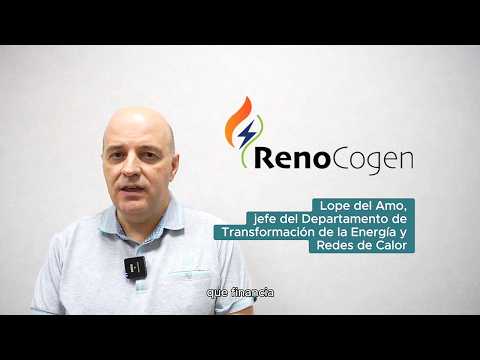
Segunda convocatoria de RENOCOGEN: ayudas para plantas de cogeneración y tratamiento de residuos
Full timeline
0.0–300.0
Renocogen is a financial support program for installing renewable energy production plants, with a focus on cogeneration plants currently using fossil fuels. The second convocatoria has a budget of 50 million euros to facilitate the transition to renewable energy sources.
- RENOCOGEN is a financial support program aimed at installing energy production plants that utilize renewable energy sources
- The second convocatoria allows project submissions until March 2, focusing on cogeneration plants that currently rely on fossil fuels
- This initiative will facilitate the replacement of fossil fuel-based plants with renewable energy plants
- Eligible renewable sources include biomass, solar energy, hydroelectric energy, and wind energy for both electrical and thermal energy production
- The convocatoria has a budget of 50 million euros, which will enhance the production capacity of renewable energy
- This funding aims to advance ecological waste management and contribute to reducing carbon emissions