Energy / Asia
China's Green Innovations
Chinese scientists are developing innovative technologies aimed at transforming food production and health diagnostics. An app that analyzes tongue images is set to enhance self-diagnosis and promote collaboration between users and healthcare professionals.
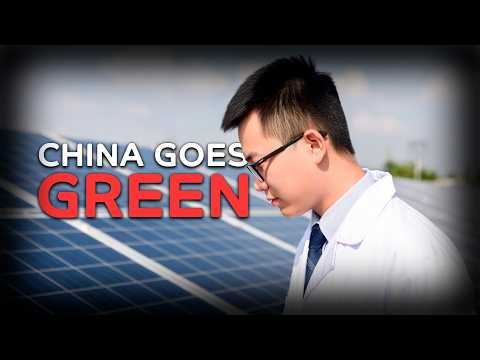
Source material: Smart Planet | Green China: Technology, Energy and the Future of Sustainability
Summary
Chinese scientists are developing innovative technologies aimed at transforming food production and health diagnostics. An app that analyzes tongue images is set to enhance self-diagnosis and promote collaboration between users and healthcare professionals.
An app is being developed to connect users with doctors while digitizing traditional Chinese medicine for health management. Researchers are also creating a solar energy mechanism to optimize plant growth, enhancing agricultural productivity.
A new optical film technology allows 10% of sunlight necessary for plant growth to pass through while reflecting 90% to generate electricity. This innovation, combined with a solar tracking system that increases energy output by 20%, could significantly enhance agricultural productivity and energy efficiency in China.
The integration of electric vehicles with smart technology is poised to revolutionize energy consumption and urban transportation. SAIC Motor Company's prototype showcases advanced autonomous features that promise to enhance road safety and efficiency.
Perspectives
Analysis of China's green innovations and their implications.
Pro-innovation
- Highlights advancements in technology for food production and health diagnostics
- Proposes the integration of traditional Chinese medicine with modern applications
- Showcases solar energy innovations that optimize plant growth
- Emphasizes the potential of electric vehicles to revolutionize urban transportation
- Presents cleaner coal technology as a viable transitional energy source
- Advocates for the sponge city initiative to address urban flooding and drought
Skeptical of effectiveness
- Questions the validity of traditional Chinese medicine in modern diagnostics
- Raises concerns about the long-term viability of cleaner coal as a solution
- Critiques the assumption that smart vehicles will seamlessly alleviate traffic congestion
- Challenges the effectiveness of the sponge city concept without considering infrastructure readiness
Neutral / Shared
- Acknowledges the need for a balance between economic growth and environmental sustainability
- Recognizes the importance of integrating advanced technologies with community engagement
Metrics
other
5,000 years of history years
historical context of traditional Chinese medicine
This highlights the long-standing cultural significance of TCM in China.
5,000 years of history.
energy_efficiency
10%
percentage of solar energy needed for plant growth
This efficiency could significantly reduce energy waste in agriculture.
Actually, it just lead about 10% solar energy.
energy_generation
90%
percentage of sunlight not needed by plants that can be used for energy generation
Utilizing this energy could enhance sustainability in agricultural practices.
the remaining 90% of the sunlight that the plants don't need for an incredibly simple energy generating function.
energy_output_increase
20%
increase in energy output compared to standard solar panels
This increase could significantly enhance the efficiency of solar energy use in agriculture.
The tracking system can give us 20% more power compared with traditional solar panel.
traffic congestion
up to 80 kilometers away km
distance affected by a single inconsistent driver
This highlights the potential scale of traffic issues caused by human error.
One inconsistent driver, breaking and accelerating, can cause a domino effect, capable of causing massive traffic congestion behind it up to 80 kilometers away.
vehicles affected
two to 3,000 vehicles
number of vehicles wasting time and electricity
This indicates the significant impact of driver behavior on overall traffic efficiency.
The impact could be two to 3,000 vehicles wasting huge volumes of time and electricity.
energy_consumption
70%
China's power consumption from coal
This highlights the urgent need for alternative energy solutions to mitigate pollution.
70% of China's power consumption comes from the stuff.
emissions
below 20 milligrams per cubic meter
emissions from the coal power plant
This level of emissions is significantly lower than the national standard for gas turbines.
the emission of the unit even lower than gas turbine
Key entities
Timeline highlights
00:00–05:00
Chinese scientists are developing innovative technologies aimed at transforming food production and health diagnostics. An app that analyzes tongue images is set to enhance self-diagnosis and promote collaboration between users and healthcare professionals.
- Chinese scientists are pioneering technologies that could transform food production, positioning the country as a leader in tackling global challenges
- Combining traditional Chinese medicine with modern technology offers a novel approach to health diagnostics, enhancing personal well-being
- An innovative app enables users to assess health conditions by analyzing tongue images, empowering individuals to engage with health experts
- The apps advanced algorithm improves self-diagnosis accuracy by correlating user data with a comprehensive medical database
- Developers aim to create a robust online community for sharing health insights, promoting collaboration among users and healthcare professionals
- This project merges ancient wisdom with technology, highlighting the potential for innovative solutions to enhance health and environmental sustainability
05:00–10:00
An app is being developed to connect users with doctors while digitizing traditional Chinese medicine for health management. Researchers are also creating a solar energy mechanism to optimize plant growth, enhancing agricultural productivity.
- The app connects users with appropriate doctors for further assistance, improving access to professional medical guidance
- By digitizing traditional Chinese medicine, the app aims to create a comprehensive approach to health management, potentially transforming personal health practices
- China is committed to leading global sustainability efforts through innovative technologies that address environmental issues
- Researchers at the University of Science and Technology of China are developing a mechanism that optimizes plant growth using solar energy, enhancing agricultural productivity
- This system employs a specialized film to filter sunlight into specific spectrums for different plants, maximizing growth while reducing energy waste
- Professor Liu Wen emphasizes the role of data in refining plant growth strategies, allowing for tailored technology that meets the light spectrum needs of various plants
10:00–15:00
A new optical film technology allows 10% of sunlight necessary for plant growth to pass through while reflecting 90% to generate electricity. This innovation, combined with a solar tracking system that increases energy output by 20%, could significantly enhance agricultural productivity and energy efficiency in China.
- This technology uses optical film to transmit only 10% of sunlight necessary for plant growth while reflecting 90% to generate electricity, enhancing energy efficiency in agriculture
- Chinas ability to quickly adopt new technologies positions it to effectively implement innovations that could transform agricultural productivity and energy generation
- The solar tracking system of this machine increases energy output by 20% compared to standard solar panels, enabling concurrent plant cultivation beneath them
- Successful integration of this technology into an energy distribution system is essential; without proper storage and distribution, solar powers intermittent nature may result in energy loss
- The Internet of Energy concept could create a network for energy generation and consumption, improving resource sharing and optimizing energy use across agriculture and transportation
- Linking electric vehicles with smart agriculture could establish a unified energy and food distribution network, supporting Chinas sustainability objectives
15:00–20:00
The integration of electric vehicles with smart technology is poised to revolutionize energy consumption and urban transportation. SAIC Motor Company's prototype showcases advanced autonomous features that promise to enhance road safety and efficiency.
- Integrating electric vehicles with smart technology is set to create a more efficient energy model, transforming energy consumption and management
- SAIC Motor Companys prototype vehicle showcases advanced sensors and autonomous driving, promising enhanced road safety and efficiency
- Driverless cars have the potential to alleviate traffic congestion by minimizing the inconsistencies of human driving, which could reduce time wasted and lower CO2 emissions
- The development of a digital brain for vehicles could significantly impact urban planning and transportation, aligning with sustainability objectives
- Experts stress the need to balance environmental, social, and economic factors in urban design, as improving walkability can enhance quality of life and reduce environmental impact
- The successful adoption of smart vehicles depends on their cost-effectiveness and necessary design improvements, which are critical challenges to address
20:00–25:00
Enhancing walkability in urban areas improves community engagement and public health. The rise of autonomous vehicles, driven by advanced technologies, promises to revolutionize energy efficiency and safety in transportation.
- Enhancing walkability in urban areas fosters community engagement and improves public health, necessitating a broader approach to personal transport that includes diverse mobility options
- The rise of autonomous vehicles is driven by their advanced capabilities, which not only offer convenience but also enhance energy efficiency and safety on the roads
- Technologies like LiDAR enable autonomous cars to generate precise 3D maps, significantly improving navigation safety and allowing vehicles to adapt to their surroundings effectively
- Adopting fully autonomous driving will require a cultural shift in how people perceive and trust technology, with gradual integration of driver assistance features potentially easing this transition
- As autonomous vehicles gain traction, traditional fossil fuel-powered cars may become outdated, compelling the automotive industry to innovate or risk decline
- Chinas dependence on coal for energy, which constitutes 70% of its power supply, presents a critical environmental issue, highlighting the urgent need for alternative energy solutions to mitigate pollution
25:00–30:00
Wei Zongfeng is leading efforts at the Wai Gao Chao coal power plant to significantly reduce emissions while maintaining coal as a key energy source for China. His innovative technology has achieved emissions below 20 milligrams per cubic meter, showcasing the potential for cleaner coal energy.
- Wei Zongfeng is leading efforts at the Wai Gao Chao coal power plant to make coal energy cleaner by significantly reducing emissions while keeping coal as a key energy source for China
- The plant has achieved emissions below 20 milligrams per cubic meter, demonstrating that innovative technology can make coal much cleaner than traditional gas turbines
- Weis strategy focuses on retrofitting existing coal plants with advanced technologies to improve efficiency and reduce pollution, showcasing the adaptability of current infrastructure
- While renewable energy is crucial, Wei recognizes that coal will continue to play a major role in Chinas energy landscape, providing a necessary interim solution to environmental challenges
- This initiative highlights the responsibility of developing nations like China to find a balance between economic growth and environmental sustainability through innovative energy solutions
- Weis commitment to emission reduction is aimed at ensuring a sustainable future for upcoming generations, addressing critical global climate issues