Business / Media
Business signals: regulation, strategy, macro links, and market structure. Topic: Media. Updated briefs and structured summaries from curated sources.
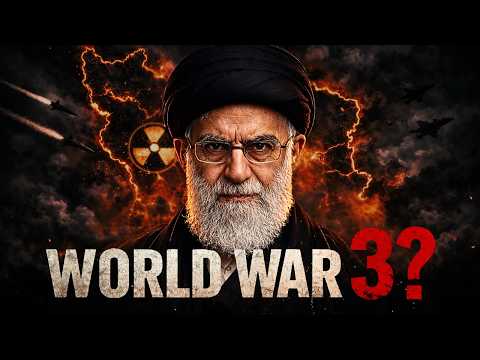
Iran declared WAR : Why did America Kill Iran's Supreme Leader?
Full timeline
0.0–300.0
The United States and Israel have initiated coordinated military strikes on Iran, leading to significant retaliatory actions from Iran against multiple Gulf nations. This escalation has resulted in the deaths of key Iranian military leaders and a declaration from Iran that all U.S.
- The United States and Israel launched coordinated strikes on Iran, marking a significant escalation in military operations in the region. This included the deployment of fighter jets, missiles, and drones following a massive military buildup
- In retaliation, Iran launched attacks on multiple Gulf nations, including the UAE, Qatar, Kuwait, Bahrain, and Saudi Arabia, signaling a severe response to the strikes against it. Irans military actions included targeting luxury hotels in Palm Jumeirah and launching ballistic missiles at four major American military bases
- The situation escalated further with the reported deaths of key Iranian military leaders, including the Minister of Defense and the head of military intelligence. Iran has vowed to conduct a devastating operation in response to the attacks, declaring all U.S. and Israeli assets in the region as legitimate targets
300.0–600.0
The International Atomic Energy Agency has reported that Iran is approaching 90% enriched uranium, raising global concerns about its potential to develop a nuclear bomb. This situation has prompted heightened alertness from countries like Israel and the United States, which have historically acted decisively against nations pursuing nuclear capabilities.
- The International Atomic Energy Agency has reported that Iran is approaching 90% enriched uranium, raising global concerns about its potential to develop a nuclear bomb. This situation has prompted heightened alertness from countries like Israel and the United States, which have historically acted decisively against nations pursuing nuclear capabilities
- Irans Supreme Leader has labeled Israel a cancerous tumor that must be eradicated, indicating offensive intentions behind Irans nuclear ambitions. This poses a significant threat to Israel, which is geographically vulnerable to a nuclear strike
- Iran has established a network of support for militant groups like Hezbollah and Hamas, surrounding Israel and keeping it on high alert. This strategic positioning reinforces the urgency of preventing Iran from acquiring nuclear weapons
- The Strait of Hormuz is a critical maritime route for global oil supply, with 20% of the worlds daily crude oil passing through it. If Iran were to block this route, it could lead to skyrocketing oil prices and threaten the global economy
600.0–900.0
Iran has intensified military actions against American military sites and civilian areas in the Gulf region, raising regional tensions. The Crown Prince of Saudi Arabia has indicated that Saudi Arabia would pursue nuclear capabilities if Iran acquires a nuclear weapon.
- Iran has escalated military actions by attacking American military sites and civilian areas in the UAE, Saudi Arabia, Qatar, Kuwait, and Bahrain, raising tensions across the Middle East
- The Crown Prince of Saudi Arabia has indicated that if Iran acquires a nuclear weapon, Saudi Arabia will pursue one as well, reflecting concerns about a regional arms race
- The possibility of a united Middle Eastern alliance to counter Irans aggression is increasing, but intervention from Russia and China could escalate the conflict into a larger global war
- The speaker warns of the dire consequences of a potential nuclear war, emphasizing the need for a peaceful resolution to the ongoing tensions

Indian Business Debate by Think School. Dropping soon!
Full timeline
0.0–300.0
India's news channels often prioritize sensationalism over critical issues, neglecting topics like air pollution. The Indian Business Debate aims to foster more meaningful discussions and provide accurate information to the public.
- India faces significant challenges, particularly with its news channels. These channels often prioritize sensationalism over meaningful discussions
- Many news outlets focus on trivial matters. They neglect pressing issues like air pollution that affect the well-being of the population
- The introduction of the Indian Business Debate aims to shift the narrative. It seeks to promote more substantive discussions that matter to the nation
- The team behind the debate emphasizes the importance of cutting-edge research. They aim to provide accurate and relevant information to the audience
- This initiative encourages viewers to seek better content. It prioritizes facts and constructive dialogue over mere entertainment
- Promoting the Indian Business Debate calls for a more informed public discourse. It aims to engage the public in meaningful discussions in India

How could advertisements change ChatGPT?
Full timeline
0.0–300.0
OpenAI's advertising principles emphasize long-term value over short-term engagement, which could benefit consumers and support AI development. However, there are concerns about the feasibility of these principles in light of financial incentives that prioritize engagement.
- The advertising principles announced by OpenAI are viewed positively, particularly the focus on long-term value rather than optimizing for time spent on chat activity. This approach is seen as beneficial for consumers, as it could lead to free and useful technology while supporting continuous investment in AI ecosystems
- There is uncertainty about whether OpenAI can maintain their stated principles, such as answer independence and not optimizing for engagement. These principles appear to conflict with short-term financial incentives that encourage maximizing engagement and advertising space, raising questions about the feasibility of their implementation
- The potential for advertising to impact mental health is a concern, suggesting that while advertisements may provide financial support for AI development, they could also have negative consequences for users. The balance between monetization and user well-being remains a critical question as the landscape of AI advertising evolves

Il Post: perché è diverso dagli altri, con Francesco Costa
Full timeline
0.0–300.0
Il Post aims to create a distinct form of journalism that emphasizes community engagement and a unique approach. The speaker expresses a willingness to pay for information, highlighting a shift in the incentive structure of journalism.
- Il Post aims to create a different form of journalism, utilizing a unique language and method that distinguishes it from others. The speaker acknowledges that while they respect traditional journalism, they believe their approach is fundamentally different and more community-oriented
- The speaker expresses a willingness to pay for information, even when it is not required, suggesting that this willingness is tied to personal satisfaction and the value of the information provided. There is an implication that the new incentive for journalism is not merely to generate clicks, but to foster a deeper connection with the audience
- There is a sense of responsibility associated with the new model of journalism, which the speaker finds gratifying. The discussion raises questions about how to effectively evaluate the worth of information and what criteria will convince audiences to support this model financially

Francesco Costa sull’informazione oggi: “L’obiettività non esiste più”
Full timeline
0.0–300.0
Francesco Costa discusses the evolution of journalism in a polarized society, highlighting the need to honor journalists for their storytelling role. He reflects on his career and the challenges of adapting business models in a competitive media landscape.
- Francesco Costa discusses the changing landscape of journalism in a polarized world, suggesting that the evolution is not solely due to journalists themselves but also reflects broader societal shifts. He emphasizes the importance of honoring journalists for their role in storytelling amidst these changes
- Costa reflects on his journey in journalism, indicating that his work on the post newsletter and the challenges of maintaining a newspaper in a competitive environment are critical to its survival. He expresses uncertainty about the effectiveness of current business models in journalism, hinting at a need for adaptation
- The conversation touches on the impact of American culture, particularly through the lens of the TV series The West Wing, which Costa associates with ideals of American democracy. He speculates on the nostalgia for past administrations and how they contrast with current political realities, raising questions about the influence of media portrayals on public perception
300.0–600.0
Francesco Costa discusses the evolving challenges of maintaining objectivity in journalism amidst modern technology and audience dynamics. He emphasizes the importance of historical context in understanding American political narratives.
- Francesco Costa reflects on the challenges of maintaining objectivity in journalism, suggesting that the concept may no longer exist in the current media landscape. He implies that the relationship between journalists and their audience has evolved, potentially complicating the pursuit of unbiased reporting
- Costa expresses uncertainty about how to realistically portray political narratives in media without the influence of modern technology, such as cell phones and social media. He raises questions about the feasibility of creating authentic representations of political events in a world that has changed significantly since the early 2000s
- He speculates on the importance of understanding historical context when studying American politics, suggesting that the connections between events are crucial for grasping the complexities of the narrative. Costa indicates that the American experience, while full of challenges, offers valuable lessons in nation-building and governance that are worth exploring
600.0–900.0
Francesco Costa reflects on his complex relationship with American culture, acknowledging both shared values and significant differences. He discusses the challenges journalists face in conveying reality amidst a politically charged and often misleading environment.
- Francesco Costa expresses a complex relationship with America, acknowledging both commonalities and significant differences. He feels a strong connection to American culture but also recognizes the dangers and complications that come with it. This duality raises questions about the nature of cultural identity and belonging
- Costa discusses the challenges faced by journalists in conveying reality, emphasizing the difficulty of presenting facts without bias. He implies that the current political climate offers rich material for analysis, yet acknowledges the struggle to provide clarity amidst misinformation. This raises doubts about the effectiveness of journalism in fostering understanding
- He speculates on the future of journalism, suggesting that the current moment may be particularly interesting for analysis. Costa points out that while there is a demand for information, the challenge lies in delivering it accurately and meaningfully. This uncertainty about the role of journalists in a rapidly changing landscape highlights the complexities of their responsibilities
900.0–1200.0
Francesco Costa discusses the increasing subjectivity in journalism, noting that journalists often feel compelled to take sides due to the overwhelming amount of information available. He expresses concern about the future of journalism, particularly in light of technological advancements and changing business models.
- Francesco Costa discusses the current state of journalism, asserting that it has become more subjective and that journalists are often forced to take sides in their reporting. He implies that this shift is a response to the overwhelming amount of information available and the need for journalists to stand out in a crowded market
- There is a sense of nostalgia for traditional journalism, with Costa noting that many people long for the days when news was delivered by a few credible sources. He raises doubts about the ability of modern journalism to maintain credibility in an environment where anyone can publish content, suggesting that the sheer volume of competitors complicates the landscape
- Costa speculates that the rise of artificial intelligence and changing business models in journalism may further challenge the profession. He expresses uncertainty about the future of journalism, questioning how it can adapt to these technological advancements while still upholding ethical standards
1200.0–1500.0
Francesco Costa discusses the fragmentation of the media landscape due to radicalization and the emergence of micro-communities. He speculates that traditional journalism may need to shift towards paid models for sustainability as free access becomes less viable.
- Francesco Costa discusses the current state of information, asserting that polarization has evolved into a radicalization with numerous micro-communities, complicating the media landscape. He implies that traditional journalism struggles to engage with these diverse voices, leading to a fragmented audience that consumes content differently than before
- Costa speculates that the shift towards paid models in journalism may be necessary for sustainability, as free access to information is becoming less viable. He raises doubts about the effectiveness of traditional advertising models, suggesting that the reliance on clicks has distorted the quality of content and the business model of media companies
- He expresses uncertainty about the future of information consumption, noting that while people are eager for content, the challenge lies in monetizing that interest effectively. Costa indicates that the success of platforms like The Post may depend on their ability to adapt to changing audience expectations and the evolving digital landscape
1500.0–1800.0
The speaker highlights a shift in journalism towards a value-driven model where audiences are expected to pay for quality content. This evolution emphasizes the importance of community engagement and the unique connection fostered through mediums like podcasts.
- The speaker discusses the shift in the incentive structure for journalism, suggesting that the traditional click-based model is no longer effective. Instead, there is a need for a value-driven approach where people are willing to pay for quality content. This implies a growing responsibility among content creators to deliver meaningful information that justifies the financial support from their audience
- There is an assertion that the relationship between content creators and their audience has evolved into a community-based model. The speaker emphasizes the importance of belonging and engagement, indicating that subscribers receive exclusive content and privileges. This raises questions about the sustainability of such models and whether they can effectively support journalism in the long term
- The speaker speculates on the potential of podcasts as a medium that fosters a deeper connection with listeners. They suggest that the personal touch of hearing someones voice can create a unique bond, which may enhance the effectiveness of communication. However, there is uncertainty about whether this connection can translate into broader support for journalism and whether it can compete with traditional media
1800.0–2100.0
Francesco Costa discusses the evolving landscape of journalism, particularly the rise of podcasting as a more personal medium compared to traditional journalism. He highlights the challenges of maintaining journalistic identity and authority in an environment where audience familiarity with podcast hosts may overshadow the anonymity of traditional authors.
- Francesco Costa discusses the challenges of podcasting compared to traditional journalism, suggesting that while podcasts require less investment, they also create a more personal connection with the audience. He implies that this connection may lead to a greater recognition of podcast hosts over traditional newspaper authors, raising questions about the identity and visibility of journalists in the digital age
- There is an acknowledgment of the ambiguity within the media landscape, where the public may know podcast hosts like Costa better than the authors of unsigned articles. This raises doubts about the value of anonymity in journalism and whether it diminishes the perceived authority of the writers behind the content
- Costa expresses a sense of privilege in being able to engage with audiences through various media formats, yet he also reflects on the complexities of fame and recognition. He speculates that while some may view him as a public figure, he does not feel famous, which could influence how he interacts with his audience and manages his public persona
2100.0–2400.0
The speaker reflects on the vulnerability felt in their relationship with the audience, acknowledging the overwhelming nature of social media interactions. They express concerns about the shift from genuine connections to algorithm-driven content, questioning the authenticity of shared experiences.
- The speaker expresses a feeling of vulnerability in their relationship with the audience, acknowledging the privilege of having such a connection while also feeling overwhelmed by the volume of comments and messages received. They imply that the nature of social media creates a distance that complicates this relationship, leading to a need for self-protection from online aggressiveness
- There is a suggestion that the current dynamics of social media have shifted from genuine connections to algorithm-driven interactions, which may result in a loss of relevance and personal touch. The speaker reflects on how social media was once a tool for maintaining friendships but has now become a platform where curated versions of life are presented, raising questions about authenticity
- The speaker contemplates the implications of sharing personal experiences publicly, indicating that every post can be seen as a statement or position, even when that is not the intention. They express uncertainty about the balance between personal expression and public perception, suggesting that the act of sharing can inadvertently lead to judgments and expectations from the audience
2400.0–2700.0
Francesco Costa discusses the increasing relevance of the United States in journalism, noting a growing interest and investment in news and media. He reflects on his career shift towards independent projects like newsletters and podcasts, highlighting the evolving landscape of media consumption.
- Francesco Costa discusses the evolving landscape of journalism and the increasing relevance of the United States in this context. He notes that there is a growing interest in the topic, particularly as investments in news and media increase. This shift may indicate a transformation in how information is consumed and valued
- Costa reflects on his career trajectory, suggesting that his decision to focus on independent projects like newsletters and podcasts was a pivotal moment. He implies that the timing of his move to the United States coincided with significant political events, which may have influenced his work. This raises questions about the impact of external circumstances on personal career choices
- There is a sense of uncertainty regarding the future of media formats, as Costa mentions the blending of video and audio content. He speculates that the traditional podcast format may become less relevant as video content gains prominence. This could lead to a redefinition of how audiences engage with media, potentially affecting the viability of audio-only platforms
2700.0–3000.0
Francesco Costa discusses the emergence of a younger audience in America, influenced by platforms like YouTube, which may alter news consumption. He reflects on his social media strategy, expressing uncertainty about effectively leveraging Instagram despite significant growth.
- Francesco Costa discusses the evolution of public opinion in America, suggesting that a new, younger audience is emerging, which he attributes to platforms like YouTube. He implies that this shift may indicate a change in how news is consumed and understood, contrasting it with traditional media
- Costa expresses uncertainty about his own social media strategy, noting that he experienced significant growth on Instagram but questions whether he is leveraging the platform effectively. He reflects on the potential opportunities that other platforms might offer, indicating a desire to explore different avenues for content distribution
- He shares his experiences traveling across America, particularly highlighting his admiration for New Mexicos natural beauty and cultural significance. Costa raises questions about the diverse landscapes and histories within Texas, suggesting that there is much to discover and understand about the regions cultural and geographical complexities
3000.0–3300.0
Francesco Costa discusses the complexities of American identity, emphasizing the stark contrasts between regions like Texas and Oregon. He questions the ability to generalize America, highlighting the diverse social interactions and cultural dynamics across the country.
- Francesco Costa discusses the complexities of American identity, suggesting that America cannot be generalized as a single entity. He highlights the stark contrasts between different regions, such as Texas and Oregon, where political and cultural dynamics can shift dramatically within short distances
- Costa raises questions about the nature of social interactions in America, noting a cultural tendency towards friendliness and openness, particularly in Texas. He contrasts this with experiences in Italy, where such interactions might be perceived differently, indicating a cultural divide in social norms
- The conversation touches on the challenges of understanding America as a whole, with Costa expressing uncertainty about the ability to capture the full spectrum of American experiences. He implies that one may encounter vastly different realities depending on where they are, suggesting that the perception of America is influenced by geographical and social contexts

How FOMO is Different from Regret, and Why FOMO is about Social Situations
Full timeline
0.0–300.0
FOMO is characterized as the anxiety of missing social experiences, particularly those shared with friends, rather than mere regret over an event. Social media exacerbates FOMO by allowing individuals to witness events they did not attend, intensifying feelings of exclusion.
- FOMO is defined as the anxiety related to missing social experiences, particularly those shared with friends, rather than just regret over missing an event
- Social media amplifies FOMO by allowing individuals to see posts from events they did not attend, increasing feelings of exclusion
- FOMO is more prevalent in social contexts, where the absence from a group event leads to feelings of missing out on social bonding
- The distinction between FOMO and regret is highlighted by the fact that one can feel FOMO even for negative events, such as missing a funeral where friends bond
- FOMO is characterized more as an anxiety than a fear, as it involves cognitive processes about what one imagines they are missing
- The research on FOMO has taken a long time to publish, indicating the complexity and depth of the studies conducted