StartUp / Fintech
Monitor fintech startups, digital finance innovation, payments, banking disruption and emerging financial technology business models.
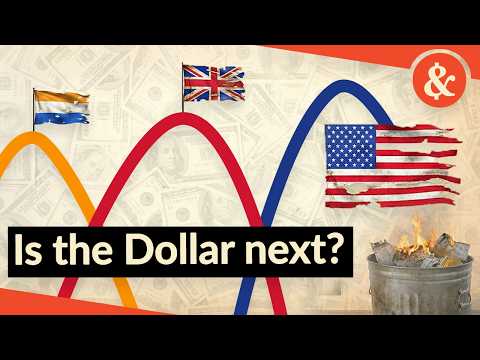
Is the Dollar finally on the way out?
Summary
Historical patterns indicate that no currency remains dominant indefinitely, with the US dollar currently facing scrutiny as its status is questioned. The decline of previous reserve currencies, such as the Dutch-guilder and the British pound, provides a framework for understanding potential vulnerabilities in the dollar's future. Factors such as exorbitant privilege and economic overreach have historically led to the downfall of dominant currencies, raising concerns about the dollar's sustainability amidst rising national debt and geopolitical shifts.
The Dutch Republic's experience illustrates how overextension and complacency can undermine financial systems. Despite initial advantages, the Dutch faced a decline due to mismanagement and external pressures, paralleling the current situation of the US dollar. The US benefits from a similar exorbitant privilege, allowing it to borrow at low rates, yet faces increasing challenges from rising powers and potential alternatives to its currency.
The British pound's rise and fall further exemplify the dynamics of currency dominance. Britain's ability to maintain its status through strategic decisions, such as increasing interest rates, contrasts with the current lack of a clear alternative to the dollar. The emergence of the US dollar as a dominant currency post-World War II highlights the importance of geopolitical context in determining currency strength.
The dollar's current dominance is underpinned by the US government's ability to influence global finance, yet this status is not guaranteed. Political decisions, such as tariffs and reserve freezes, can erode trust in the dollar, leading to potential volatility and a loss of exorbitant privilege. The historical context suggests that without addressing emerging challenges, the dollar's future may mirror the decline of previous dominant currencies.
Perspectives
Analysis of the US dollar's future in the context of historical currency dominance.
Pro Dollar
- Highlights the dollars historical resilience and potential for recovery
- Emphasizes the importance of US consumer spending in maintaining dollar dominance
- Argues that the absence of a clear alternative currency supports the dollars status
Anti Dollar
- Warns of the risks associated with excessive national debt and government overreach
- Questions the sustainability of the dollar amidst rising geopolitical challenges
- Critiques the potential for emerging currencies to disrupt the dollars dominance
Neutral / Shared
- Discusses historical parallels between the dollar and previous reserve currencies
- Explores the implications of exorbitant privilege on economic stability
- Analyzes the impact of political decisions on the dollars perceived safety
Metrics
interest_rate
10-12%
interest rates for French provinces
High costs of borrowing hindered French economic growth.
the unreliable French 10-12%.
debt
some of the highest debts in the world USD
current US national debt
High debt levels can undermine economic stability and investor confidence.
Despite having some of the highest debts in the world
interest_rate
close to 2%
real interest rates for US borrowing
Low interest rates can encourage borrowing but may also signal underlying economic issues.
the US can borrow at real interest rates that are close to 2%
debt_duration
over a century paying back their international debts years
duration of Dutch debt repayment
Long debt repayment periods can hinder economic growth and recovery.
They spent well over a century paying back their international debts
borrowing_cost
3%
British borrowing costs during the Napoleonic era
Lower borrowing costs can enhance a nation's ability to finance military and economic endeavors.
Britain could now borrow at 3%
debt
Sky High debt USD
Britain's debt after World War I
High debt levels can undermine currency stability and trust.
as Britain exited the First World War with Sky High debt
interest rates
Sky High interest rates %
Interest rates set by Britain to defend the pound
High interest rates can depress economic growth.
These Sky High interest rates depressed Britain's economy for much of the 1920s
borrowing
trillions from its empire USD
Borrowing by the UK during the war
Borrowing from the empire indicates reliance on colonial resources.
allowed the UK to borrow trillions from its empire during the war
Key entities
Timeline highlights
00:00–05:00
The discussion highlights the historical context of currency dominance, particularly focusing on the rise and fall of the Dutch-guilder and its implications for the US dollar. It emphasizes the concept of 'exorbitant privilege' and its consequences on economic stability and inequality.
- The segment primarily promotes subscription services and membership benefits related to economic research and analysis
05:00–10:00
The Dutch economy suffered significant decline after the fourth Anglo-Dutch war, leading to the bankruptcy of the East India Company and a loss of trust in the Bank of Amsterdam. The current state of the US dollar mirrors this historical experience, as the US benefits from exorbitant privilege amidst rising national debt and government intervention.
- The Dutch economy faced severe setbacks after the fourth Anglo-Dutch war, resulting in the East India Companys bankruptcy and a decline in trust towards the Bank of Amsterdam, which devalued their currency
- Despite its decline, the Dutch financial system persisted by diversifying investments, notably in the French crown, but the eventual overthrow of the French king contributed to the Dutch Republics collapse
- The French revolutionary forces took control of the Dutch Republic in 1795, transferring financial power to London and establishing it as the new financial center, which left the Dutch in enduring debt and stagnation
- The current state of the US dollar reflects the Dutch experience, as the US benefits from exorbitant privilege amid high national debt, yet rising government intervention and financial bubbles threaten this stability
- While the US does not face invasion risks like the Dutch Republic, the absence of a clear alternative currency creates uncertainty about the dollars future in the global economy
- The British pounds ascent during the Napoleonic era demonstrates how a nation can exploit its financial strength for military and economic gains, as Britains ability to borrow at lower rates enabled it to finance coalitions against France
10:00–15:00
The discussion explores the historical context of currency dominance, particularly the British pound's rise and fall compared to the US dollar. It highlights the implications of exorbitant privilege and the economic consequences of overextension and complacency in financial systems.
- The segment primarily promotes subscription services and membership benefits related to economic research and analysis
15:00–20:00
The historical decline of the British pound illustrates the potential vulnerabilities of dominant currencies, particularly in the context of exorbitant privilege. The US dollar's current status may face similar challenges as excessive spending and geopolitical shifts raise concerns about its long-term viability.
- Post-World War II, Britains heavy borrowing diminished its global financial influence, paving the way for the US dollar to become the leading reserve currency backed by gold
- Britain retained some financial control through the sterling area, which included former colonies holding reserves in pounds, aiding in the management of war debts despite currency depreciation
- The British pounds decline reflected a century of economic stagnation, struggling against the US and other European economies, with major currency crises underscoring its weakened status
- Britains experience illustrates that viable currency alternatives can affect strength; while the dollar appeared stable in 1913, policy shifts allowed it to overtake the pound by the 1920s
- Although the pound saw a brief revival, its decline was unavoidable, raising concerns about the US dollars future, which has historically shown resilience against challenges
- Since 1944, the US dollar has maintained dominance through financial power and military expenditure, but excessive spending and gold outflows have sparked worries about its long-term viability
20:00–25:00
The Reagan administration successfully aligned allied currencies with the US dollar, marking a significant shift in global finance. The dollar's dominance is now challenged by China's industrial growth, yet it remains attractive due to substantial US consumer spending.
- The Reagan administration successfully aligned allied currencies with the US dollar, emphasizing the strategic role of currency alignment in global finance
- The 1971 suspension of the dollars convertibility to gold marked a permanent shift, allowing the dollar to operate independently of gold backing
- The US government mandates tax payments in dollars, fostering trust and making the dollar a preferred currency for international transactions
- The transition from a lending model to a spending model for the dollar has altered global economic dynamics, with countries now lending to the US
- Chinas industrial growth presents a challenge to the dollars dominance, but the dollar remains attractive due to significant US consumer spending
- The USs ability to maintain its economic privilege depends on foreign investment, but recent actions like freezing reserves have raised concerns about the dollars stability
25:00–30:00
The dollar's dominance is crucial for the U.S. economy, influencing international relations and shaped by political decisions.
- The dollars dominance is vital for the U.S. to maintain its status as the largest global economy, influencing international economic relations
- The future of the dollar is significantly shaped by the decisions of current and future U.S. leaders, highlighting the importance of political stability
- Limited data on fiat reserve currencies complicates predictions, emphasizing the need for historical analysis by economists to understand currency trends
- The dollars current decline may be driven more by foreign investors hedging than by direct selling, which is crucial for understanding its future
- The Economist offers insights into the implications of a weaker dollar, aiding in the comprehension of the broader economic landscape
- A special discount for The Economist encourages viewers to stay informed about global economic changes, enhancing their understanding of financial complexities