StartUp / Cleantech
Follow cleantech startups, climate innovation, energy transition ventures and green technology business signals through curated structured summaries.
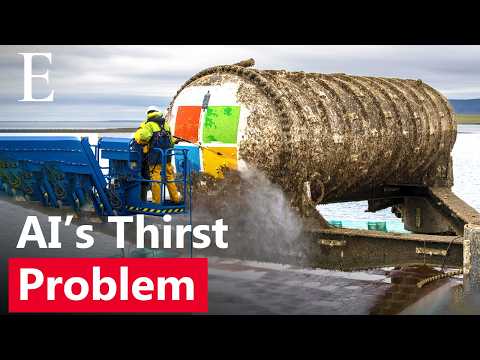
How Data Centers Are Wiping Out Our Drinking Water
Summary
Data centers consume significant amounts of water, with a single facility using up to 4 million gallons daily for cooling. This high demand for water is driven by the need to manage the heat generated by servers, which are essential for AI operations. As AI technology continues to grow, the electricity demand from these data centers is projected to increase dramatically, potentially raising their water consumption as well.
The semiconductor manufacturing process further exacerbates the water issue, as it requires ultra-pure water for cleaning silicon wafers. This stage of production can consume thousands of liters of water, contributing to the overall water footprint of AI. In some regions, the water used for data centers and semiconductor production is leading to social tensions, particularly in areas already facing water scarcity.
Major tech companies are responding to these challenges by committing to water neutrality, aiming to replenish more water than they consume. Initiatives such as recycling water and exploring alternative cooling methods are being implemented, but these efforts currently represent a small fraction of the overall infrastructure. The relationship between AI and water resources is becoming increasingly critical as the digital sector's demand for electricity and water continues to rise.
As AI models expand, the energy and water requirements are expected to double, raising concerns about sustainability. The construction of data centers in water-stressed areas poses ethical questions about resource allocation, especially when local communities struggle to access sufficient water. Balancing technological advancement with environmental responsibility is essential for the future of AI.
Perspectives
short
Proponents of AI Development
- Highlight the potential of AI to transform the economy and everyday life
- Propose water neutrality initiatives to mitigate environmental impact
- Implement recycling projects to reduce water consumption in data centers
- Explore innovative cooling methods to lessen water use
- Claim that AI can drive efficiency in various sectors
Critics of AI's Water Footprint
- Argue that semiconductor manufacturing significantly increases water usage
- Question the sustainability of allocating water to digital infrastructure
- Point out social tensions arising from water scarcity in tech hub regions
- Reject the notion that water neutrality can be easily achieved
Neutral / Shared
- Acknowledge that water is essential for cooling data centers
- Recognize the increasing electricity demand from AI technologies
- Note that water scarcity is a growing concern in many regions
Metrics
water_consumption
4 million gallons
daily water consumption of a single data center
This highlights the significant water footprint of data centers amidst rising AI demands.
A single data center can consume up to 4 million gallons of water per day to stay cool.
water_per_query
519 milliliters
water consumption per 100-word AI prompt
This indicates the cumulative water impact of billions of AI queries daily.
Researchers at the University of California Riverside estimate that each 100-word AI prompt consumes approximately 519 milliliters of water.
electricity_consumption
4 percent %
current share of U.S. electricity demand from data centers
This percentage is expected to triple, indicating a growing energy and water crisis.
Today, data centers make up about 4 percent of U.S. electricity demand.
global_electricity_consumption
2 percent %
global electricity consumption attributed to data centers
This highlights the significant environmental impact of data centers on a global scale.
the data centers that supported already account for nearly 2 percent of global electricity consumption.
water_loss
500,000 liters
daily water loss through evaporation in large facilities
This loss exacerbates local water scarcity issues.
a fraction turns into vapor, with losses in large facilities exceeding 500,000 liters daily.
projected_water_use
1,000 billion liters
annual water use for cooling and electricity generation by AI data centers by 2028
This projection underscores the urgent need for sustainable practices in AI development.
Morgan Stanley projection predicted annual water use for cooling and electricity generation by AI data centers could reach around 1,000 billion liters by 2028.
water_consumption
300,000 gallons
average data center daily cooling water use
This highlights the significant water usage of data centers compared to residential needs.
the average data center could use 300,000 gallons of water to cool itself
water_consumption
10 million liters
total consumption in some complexes
This indicates the extensive water footprint of data centers.
total consumption can exceed 10 million liters per day
Key entities
Timeline highlights
00:00–05:00
Data centers can consume up to 4 million gallons of water daily for cooling, significantly impacting water resources as AI demand rises. The projected energy demands from AI technology could increase by up to 400 percent, intensifying pressure on water resources.
- Data centers can use up to 4 million gallons of water daily for cooling, creating significant challenges as AI demand increases
- Each AI query indirectly consumes water, with estimates indicating that a 100-word prompt uses around 519 milliliters, worsening water scarcity as daily queries multiply
- Much of the water evaporated during cooling does not return to the local water cycle, exacerbating water stress in already vulnerable regions
- Projected energy demands from evolving AI technology could increase by up to 400 percent, intensifying pressure on water resources and highlighting the need for sustainable practices
- Electricity generation for data centers, especially in thermal power plants, has a considerable water footprint, which will grow as AIs energy requirements rise
- The dependence on potable water for cooling systems creates competition with human and agricultural needs, emphasizing the critical link between technology and resource management
05:00–10:00
Water demand in data centers is projected to more than double by 2030, exacerbating water scarcity in stressed regions. The semiconductor manufacturing process consumes nearly 20 percent of ultra-pure water in some Asian tech hubs, significantly increasing AI's indirect water footprint.
- Water demand in data centers is expected to more than double by 2030, worsening water scarcity in already stressed regions
- The semiconductor manufacturing process consumes nearly 20 percent of ultra-pure water in some Asian tech hubs, significantly increasing AIs indirect water footprint
- In areas with limited water resources, the growth of data centers has sparked social unrest as communities challenge the sustainability of water use for digital infrastructure
- Tech companies are pursuing water neutrality, aiming to replenish more water than they consume, but current recycling efforts only address a small portion of global water usage
- Innovative cooling methods, like immersion cooling and leveraging cold climates, are being investigated to reduce water consumption as digital sector demands rise
- The digital sectors potential to consume 8 percent of global electricity underscores the critical need for effective water management in sustainable AI development