StartUp / Biotech
Track biotech startups, life science innovation, health technology ventures and scientific commercialization trends with structured business briefings.
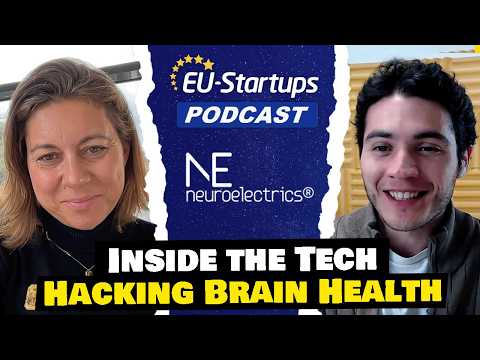
Inside the Tech Hacking Brain Health - Interview with the CEO & co-founder of Neuroelectrics
Summary
Neuroelectrics, founded in 2011, specializes in non-invasive brain stimulation technology aimed at treating neurological disorders. The company has expanded its reach globally, emphasizing the importance of scientific rigor in its development process. Initially focused on epilepsy, Neuroelectrics has invested significantly in clinical trials, demonstrating a 50% reduction in seizures for epilepsy patients after 10 days of stimulation.
The company aims to improve healthcare access through remote patient monitoring, particularly in underserved areas. Collaborations with organizations like NASA have provided insights into cognitive fatigue, showcasing the versatility of their technology. Despite the challenges of scaling in different regions, Neuroelectrics is committed to addressing significant health issues in Africa and beyond.
Neuroelectrics highlights the potential of Spanish tech companies to scale globally, emphasizing the importance of niche leadership over sheer size. The conversation around gender diversity in tech is evolving, with increasing nominations for women in startups, yet media coverage remains skewed towards male achievements. The reliance on funding figures assumes that financial investment directly correlates with success in neurotech, overlooking critical variables such as market readiness and regulatory hurdles.
A new European fund aims to raise over 100 million dollars to enhance private investment in DeepTech, addressing the funding gap with the US. Neuroelectrics is focused on providing global health solutions for conditions like epilepsy and depression while emphasizing the importance of retaining talent in Europe. The assertion that a new European fund will effectively stimulate DeepTech investment assumes that financial resources alone can bridge the gap with the US.
Perspectives
Interview with Ana Maiques, CEO of Neuroelectrics, discussing neurotechnology and global expansion.
Neuroelectrics
- Develops non-invasive brain stimulation technology for neurological disorders
- Demonstrates a 50% reduction in seizures for epilepsy patients after clinical trials
- Aims to improve healthcare access through remote monitoring in underserved areas
- Collaborates with NASA to study cognitive fatigue in astronauts
- Expands operations into Africa to address significant health challenges
Challenges in Neurotech
- Faces diverse regulatory and market access challenges when scaling in different regions
- Funding environment in Europe lags behind the US, impacting growth potential
- Media coverage of gender diversity in tech remains skewed towards male achievements
- Assumes financial investment directly correlates with success, overlooking market dynamics
Neutral / Shared
- Highlights the potential of Spanish tech companies to scale globally
- Emphasizes the importance of niche leadership over sheer size in tech
Metrics
founding_year
2011
year of establishment
Establishing a timeline for the company's development and growth.
Neuroelectrics was founded in 2011 in Spain
applications
Parkinson's, Alzheimer's
targeted neurological conditions
Indicates the scope and impact of the technology on healthcare.
specifically with applications to Parkinson's, Alzheimer's
investment
25 million dollars USD
investment in clinical trials
This significant investment underscores the company's commitment to developing new therapies.
we've been spending the last four years and 25 million dollars in doing a US and European clinical trial
reduction
50%
reduction in seizures after stimulation
A 50% reduction indicates a potentially effective therapy for epilepsy patients.
we demonstrated that we can reduce scissors 50%
countries_operating
75 countries
number of countries where Neuroelectrics sells its technology
This indicates strong global demand for their solutions.
we sell in 75 countries
countries_operated
75 units
number of countries where Neuroelectrics operates
This indicates the company's global reach and potential market.
we do sell in 75 countries
funding
over 150 million USD
total funding allocated to new neurotech companies
This funding indicates growing interest in the neurotech sector, though Spain's share is minimal.
over the past year we saw over 150 million in funding go to new companies that are kind of involved in neuro tech.
funding
750 USD
fund raised in Madrid
This indicates growing financial support for tech initiatives in Europe.
A colleague of mine, Harriars and Pee, so just raised in in Madrid that fund of $750.
Key entities
Timeline highlights
00:00–05:00
Neuroelectrics, founded in 2011, specializes in non-invasive brain stimulation technology aimed at treating neurological disorders. The company is expanding its reach and emphasizes the importance of scientific rigor in its development process.
- Neuroelectrics, founded in 2011, focuses on non-invasive brain stimulation to provide personalized treatments for brain disorders
- The technology has applications in various neurological conditions, highlighting its potential impact on healthcare
- Ana Maiques emphasizes the need for scaling DeepTech companies in Europe to access capital and talent for competing in neurotechnology
- COVID-19 accelerated the adoption of remote brain treatment and telemedicine, opening new avenues for patient care
- Neuroelectrics collaborates with NASA to measure cognitive fatigue in pilots, showcasing its technologys versatility
- Maiques is involved with EsTech, which aims to improve conditions for startups in Spain and foster innovation
05:00–10:00
Neuroelectrics has developed non-invasive brain stimulation technology aimed at treating various neurological conditions, initially focusing on epilepsy. The company has invested significantly in clinical trials, demonstrating a 50% reduction in seizures for epilepsy patients after 10 days of stimulation.
- Neuroelectrics was founded to develop non-invasive brain stimulation, initially targeting epilepsy and now addressing various neurological conditions
- The neurotechnology field has evolved significantly, attracting mainstream interest and investment, making it a hot topic in tech
- Non-invasive brain stimulation uses electrodes to modulate neuron excitability, offering a safer alternative to invasive procedures
- Clinical trials showed a 50% reduction in seizures for epilepsy patients after 10 days of stimulation, validating Neuroelectrics therapy
- The company invested 25 million dollars in clinical trials to develop a new therapy for epilepsy that currently does not exist
10:00–15:00
Neuroelectrics has developed a non-invasive brain stimulation therapy approved for diagnostics in the US and Europe, enabling remote patient monitoring. The company aims to expand its technology to small hospitals and primary care centers to improve healthcare access, particularly in underserved areas.
- Neuroelectrics developed a non-invasive brain stimulation therapy approved for diagnostics in the US and Europe, enabling remote patient monitoring
- The technology allows small hospitals to diagnose neurological conditions on-site, improving access to care
- Collaboration with NASA studied cognitive fatigue in astronauts, showcasing the technologys versatility
- The pandemic accelerated telemedicine adoption, leading to FDA approval for home applications, boosting market presence
- Healthcare access remains limited for underserved populations, especially in rural areas
- Africa faces a critical shortage of neurologists, with only 0.3 per million people, highlighting the need for remote solutions
15:00–20:00
Neuroelectrics is expanding its operations into Africa to address significant health challenges and improve healthcare access. The company faces diverse regulatory and market access challenges when scaling in different regions, particularly between the US and Europe.
- Neuroelectrics is expanding into Africa to address severe health issues and improve access to care
- Scaling in the US involves navigating diverse health systems and regulatory paths, unlike Europe
- Maiques emphasizes adapting strategies to effectively reach patients across different regions
- The lack of funding in Europe is a significant barrier for startups trying to scale
- Maiques is involved with EsTech to help Spanish companies learn effective scaling strategies
- Neuroelectrics operates in 75 countries, with a growing presence in Asia
20:00–25:00
S-Tech highlights the potential of Spanish tech companies to scale globally, emphasizing the importance of niche leadership over sheer size. Maiques advocates for diversity in tech leadership, particularly in promoting gender equality in STEM fields.
- S-Tech showcases diverse Spanish tech companies scaling globally, highlighting local talent and innovation
- Filming exemplifies how niche companies can lead in specific markets, emphasizing quality over scale
- Maiques advocates for diverse entrepreneurs beyond the Silicon Valley archetype to enrich tech leadership narratives
- Gender equality in STEM is a focus for Maiques, inspiring young girls through her leadership in a male-dominated field
- The anecdote of a pregnant female Minister of Defense in Spain challenges societal norms and promotes diversity in leadership
- Maiques joined S-Tech to promote diversity and serve as a role model for aspiring female leaders in tech
25:00–30:00
Neuroelectrics is a leading neurotech company in Spain, highlighting the country's limited presence in the sector despite over 150 million in funding allocated to new neurotech companies. The conversation around gender diversity in tech is evolving, with increasing nominations for women in startups, yet media coverage remains skewed towards male achievements.
- Neuroelectrics is one of the few significant neurotech companies in Spain, reflecting the countrys limited presence in the sector despite emerging players like Inbrain
- Over 150 million in funding has been allocated to new neurotech companies, yet Spains share remains minimal
- The conversation around gender diversity in tech is growing, but media coverage still favors male achievements
- The number of women nominated in startups is increasing, indicating untapped female talent in the ecosystem
- There is a call for greater visibility of successful women in various fields to inspire future generations
- Broader representation in tech, including race and gender, is crucial for fostering innovation and addressing biases