StartUp / Ai Startups
Track AI startups, new venture creation, founder strategy, product direction and investment signals across the fast-moving artificial intelligence sector.
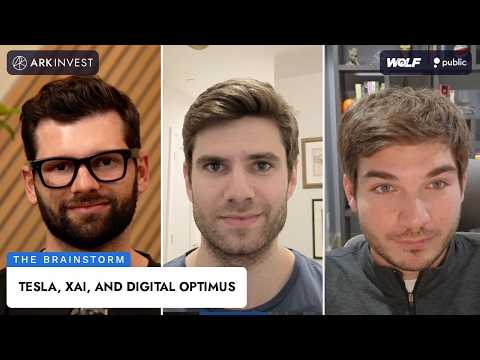
Tesla, xAI, And Digital Optimus | The Brainstorm EP 123
Summary
xAI is undergoing significant restructuring following Tesla's investment, aiming to enhance its market effectiveness. Despite rapid advancements, xAI currently ranks fourth among AI labs and has yet to produce a competitive product focused on real-world utility. The company is leveraging Tesla's AI 4 chip to address compute shortages while facing challenges in productization and distribution strategies.
Tesla is developing smaller AI models on its AI 4 chip for edge computing, aiming to enhance efficiency and reduce costs. The integration of AI in humanoid robots and a hybrid architecture for complex tasks may provide Tesla with a competitive advantage in the AI landscape. However, the reliance on smaller models for edge computing assumes that they can effectively handle complex tasks, which may not hold true in all scenarios.
Tesla plans to develop and sell its own chips, which may allow SpaceX to utilize them for satellite technology. This initiative could enhance the technological capabilities of both companies significantly. The assumption that developing chips will automatically lead to successful integration into SpaceX's satellite systems overlooks critical variables such as market demand and the technical feasibility of these chips in real-world applications.
xAI, a subsidiary of SpaceX, is planning to launch AI compute satellites to enhance industry hosting capabilities. The collaboration between Tesla, SpaceX, and xAI aims to create a unique ecosystem that optimizes resource use and develops advanced AI products. The reliance on external entities to productize AI raises questions about xAI's long-term viability and its ability to compete without a robust internal strategy.
Perspectives
Analysis of xAI's strategy and challenges in the AI landscape.
Proponents of xAI's Strategy
- Highlight restructuring efforts to enhance market effectiveness
- Emphasize leveraging Teslas AI 4 chip to address compute shortages
- Argue that smaller AI models can enhance efficiency in edge computing
Critics of xAI's Approach
- Question the effectiveness of restructuring without addressing productization
- Critique the assumption that chip development will ensure successful integration
- Highlight the risks of depending on external entities for productization
Neutral / Shared
- Acknowledge the rapid advancements in xAIs capabilities
- Recognize the potential for collaboration between Tesla, SpaceX, and xAI
Metrics
ranking
fourth among AI labs rank
current position in AI lab rankings
Ranking indicates competitive standing in a rapidly evolving industry.
I think we often describe the top four AI labs as being open AI and thropic, Google and XAI.
investment
Tesla makes an investment in XAI USD
financial backing from Tesla
Investment signifies confidence in xAI's potential for future growth.
Tesla makes an investment in XAI.
compute_density
the most GPUs per employee
compute density per employee at xAI
High compute density can enhance model training capabilities.
Elon claimed rightfully that he had, you know, you as an employee at XAI would have the most GPUs per employee
RAM_per_chip
eight gigabytes of RAM each GB
RAM capacity of the AI 4 chip
Adequate RAM is crucial for processing complex AI tasks.
the AI 4 chip has, it's two actual dies on the chip that have eight gigabytes of RAM each.
cost
$10 billion USD
annual cost to rent AI compute
This highlights the significant financial burden of AI compute, emphasizing the need for cost-effective solutions.
you basically have to rent it for $10 billion a year rough numbers
gross_margin
70 plus percent %
Nvidia's gross margin
High gross margins indicate substantial profits for Nvidia, which Tesla aims to reduce by developing its own chips.
Nvidia has like 70 plus percent gross margin
cost_percentage
75%
percentage of AI compute costs attributed to Nvidia chips
Reducing reliance on Nvidia could significantly lower Tesla's operational costs.
if you look at kind of the cost of Nvidia chips in that mix it's you know what Frank 75% or something
revenue
nine billion USD
annualized revenue from Anthropic
This revenue indicates strong demand for compute resources in the AI sector.
Anthropic signed up what it was like nine billion and additional annualized revenue over like two months
Key entities
Timeline highlights
00:00–05:00
xAI is undergoing a significant restructuring following Tesla's investment, aiming to enhance its market effectiveness. Despite rapid advancements, xAI currently ranks fourth among AI labs and has yet to produce a competitive product focused on real-world utility.
- xAI is restructuring with Teslas investment to enhance effectiveness and meet market demands
- Elon Musks tweets signal a strategic shift at xAI, focusing on Teslas chips and productivity
- xAI ranks fourth among AI labs but lacks a competitive product despite rapid advancements
- Real-world utility is now prioritized over model performance for revenue generation
- Competitors like Codex and Anthropic have successfully transitioned models to practical applications, unlike xAI
- Vertical integration is crucial for success in AI, as seen with competitors like Anthropic
05:00–10:00
xAI is restructuring to enhance effectiveness and meet market demands, but it lacks the long-term R&D focus of competitors. The company is leveraging Tesla's AI 4 chip to address compute shortages while facing challenges in productization and distribution strategies.
- xAI is restructuring to enhance effectiveness and meet market demands, but it lacks the long-term R&D focus of competitors
- Elon Musks strategy leverages Teslas AI 4 chip for latent compute resources, presenting both opportunities and risks
- xAIs focus on real-world feedback is critical, yet it has not achieved the same utility as competitors like Codex and Claude
- The compute shortage poses challenges, but Teslas infrastructure may enable distributed computing solutions
- xAIs current offerings are less monetizable, highlighting the need for effective productization and distribution strategies
10:00–15:00
Tesla is developing smaller AI models on its AI 4 chip for edge computing, aiming to enhance efficiency and reduce costs. The integration of AI in humanoid robots and a hybrid architecture for complex tasks may provide Tesla with a competitive advantage in the AI landscape.
- Tesla is training smaller models on its AI 4 chip for edge computing, maximizing efficiency while offloading tasks to cloud resources
- The digital optimist model aims for lightweight autonomy but may struggle with complex tasks
- Elon Musk is integrating AI in humanoid robots, enhancing Teslas offerings in both AI and robotics
- Teslas distributed fleet provides a unique edge in AI compute, reducing costs compared to traditional data centers
- Developing its own chips allows Tesla to lower costs associated with Nvidia, enhancing its competitive edge
- Collaboration between Tesla and SpaceX may merge AI efforts, leveraging both companies technological strengths
15:00–20:00
Tesla plans to develop and sell its own chips, which may allow SpaceX to utilize them for satellite technology. This initiative could enhance the technological capabilities of both companies significantly.
- Tesla plans to develop and sell its own chips, potentially enabling SpaceX to use them for satellites. This could enhance both companies technological capabilities
20:00–25:00
xAI, a subsidiary of SpaceX, is planning to launch AI compute satellites to enhance industry hosting capabilities. The collaboration between Tesla, SpaceX, and xAI aims to create a unique ecosystem that optimizes resource use and develops advanced AI products.
- xAI, a SpaceX subsidiary, plans to launch AI compute satellites, enhancing industry hosting capabilities
- SpaceX will offer launch services to competitors, strengthening its market position
- Teslas custom chips could serve dual purposes in vehicles and space applications
- xAI has the talent and channels to develop AI products leveraging Tesla and SpaceX resources
- The integration of Tesla, SpaceX, and xAI could create a unique ecosystem optimizing resource use
- Chips in transportation may be underutilized, presenting opportunities for additional computational tasks
25:00–30:00
The information provided is intended for informational purposes only and should not be the basis for investment decisions. ARC disclaims any obligation to update forward-looking information and emphasizes the uncertainty of investment forecasts.
- The information is for informational purposes only; investors must assess suitability independently
- Statements reflect beliefs of ARC and guests, not endorsements to buy or sell securities
- Historical results do not predict future performance; risks may lead to differing actual results
- ARC has no obligation to update forward-looking information, highlighting investment forecast uncertainty
- ARC and clients may have financial interests in discussed securities, necessitating independent research
- Certain information is sourced from reliable sources, but ARC does not guarantee its accuracy