Society / Social Change
Advocacy for Girls' Education
The reflects on her childhood belief that changing the world was straightforward, only to confront the harsh realities of activism after the Taliban took control of her town. She became an activist at a young age, advocating for girls' education and facing life-threatening consequences for her efforts. Surviving an assassination attempt, she gained international attention but soon realized that effecting change required persistent advocacy and collaboration.
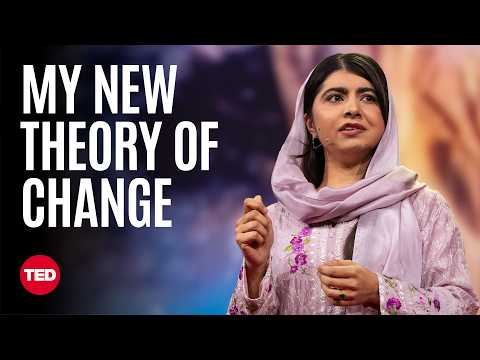
Source material: What I Got Wrong About Changing the World | Malala Yousafzai | TED
Summary
The reflects on her childhood belief that changing the world was straightforward, only to confront the harsh realities of activism after the Taliban took control of her town. She became an activist at a young age, advocating for girls' education and facing life-threatening consequences for her efforts. Surviving an assassination attempt, she gained international attention but soon realized that effecting change required persistent advocacy and collaboration.
The return of the Taliban in 2021 shattered her optimism, revealing the stark reality that many Afghan girls were denied education and basic rights. Despite feeling overwhelmed, she emphasizes the importance of taking action, starting with supporting underground schools and collaborating with others to amplify the voices of Afghan women. Her work includes producing films and advocating for the Afghan women's national football team, showcasing resilience against oppression.
The stresses the need for ambition in the face of adversity, recognizing that the fight against gender apartheid is ongoing and complex. She highlights the absence of international laws to hold perpetrators accountable, which complicates advocacy efforts. Her commitment to ensuring that such injustices do not continue for future generations drives her activism.
Acknowledging that progress is not guaranteed, she calls for collective action and a shift from passive hope to active creation of change. The 's journey illustrates the challenges faced by activists and the necessity of perseverance in the fight for girls' education and rights.
Perspectives
short
Advocacy for Girls' Education
- Highlights the importance of activism in the face of oppression
- Emphasizes the need for collective action to combat gender apartheid
- Proposes supporting underground education initiatives for Afghan girls
- Argues for the necessity of international accountability for human rights abuses
- Calls for ambition and resilience in advocacy efforts
Oppression by the Taliban
- Denies women and girls access to education and public life
- Imposes a system of gender apartheid restricting womens rights
- Legalizes violence against women, exacerbating their oppression
- Attempts to erase womens presence in society through oppressive decrees
- Undermines international commitments to girls education
Neutral / Shared
- Acknowledges the complexity of advocacy and the challenges faced by activists
- Recognizes the need for a multifaceted strategy to effect change
Metrics
age
15 years old years
age when the speaker was shot by the Taliban
This highlights the extreme risks faced by young activists.
Simply, for the crime of speaking out, the Taliban tried to kill me. Shooting me in the face at Point Blank range. I was 15 years old.
school_access
not allowed to attend school past sixth grade grades
current restrictions on girls' education in Afghanistan
This underscores the urgent need for advocacy in the face of oppressive policies.
Today in Afghanistan, girls are not allowed to attend school past sixth grade.
other
legal for men to beat their wives and daughters
Taliban's legal decrees
This reflects the institutionalization of gender-based violence.
this year, in 2026, the Taliban decreed that it is legal for men to beat their wives and daughters.
other
millions of women and girls
impact of Taliban's policies
This indicates the widespread nature of the oppression.
a gender apartheid on millions of women and girls.
Key entities
Timeline highlights
00:00–05:00
The speaker's journey from naive belief in simple solutions to understanding the complexities of advocacy illustrates the challenges faced by activists in oppressive regimes. The Taliban's return to power in Afghanistan has raised serious concerns about the commitment to girls' education and the effectiveness of international support.
- The speaker initially thought that addressing issues would lead to change, a belief shaped by her isolated upbringing in Pakistan. This perspective changed dramatically when the Taliban banned girls from school, prompting her activism for educational rights
- After surviving an assassination attempt by the Taliban for her advocacy, her story gained international attention, enabling her to discuss girls education with global leaders. This experience highlighted the dangers faced by activists in oppressive regimes
- She realized that creating change requires ongoing advocacy and teamwork, rather than merely pointing out problems. This understanding transformed her view of hope into a belief in gradual progress, despite the challenges
- The Talibans return to power in Afghanistan in August 2021 shattered her faith in global leaders commitment to girls education. This event raised serious concerns about the effectiveness of international support for educational initiatives
- Discussions with Afghan activists revealed a disconnect between public statements and the harsh realities they face. The current restrictions on girls education in Afghanistan emphasize the urgent need for continued advocacy
05:00–10:00
The Taliban's decrees have established a system of gender apartheid, severely restricting women's rights and freedoms in Afghanistan. Despite these challenges, there is a commitment to advocate for Afghan girls' education and rights through various initiatives.
- The Talibans recent decrees have institutionalized gender apartheid, allowing men to legally beat their wives and daughters while prohibiting women from pursuing education and careers. This oppressive system has stripped millions of women and girls of their rights and freedoms
- Despite the loss of optimism after the fall of Afghanistan, the speaker remains committed to advocating for Afghan girls. She feels a deep connection to their struggles and is determined to help them continue their education
- The speaker emphasizes the importance of taking action, even in the face of overwhelming challenges. By supporting underground schools, she aims to provide Afghan girls with opportunities to learn, despite the risks involved
- Collaboration with others has led the speaker to unexpected avenues, such as producing films that highlight the resilience of Afghan people. These projects aim to raise awareness and connect the global community to the plight of women and girls in Afghanistan
- The speaker urges the need for ambitious goals, arguing that significant challenges require bold responses. She highlights the lack of international laws against gender apartheid and the necessity for accountability for those perpetuating these abuses
- The movement to include gender-based abuses in the UNs crime against humanity treaty is crucial for creating change. The speaker has joined this campaign to advocate for the rights of women and girls worldwide
10:00–15:00
The speaker emphasizes the long-term commitment required to combat the Taliban's injustices against girls and the necessity of collective action for meaningful change. She reflects on her personal journey, acknowledging the complexities of advocacy and the importance of perseverance.
- The fight for justice against the Taliban may take years, but it is essential to prevent future crimes against girls globally. This commitment reflects a dedication to ensuring that no generation suffers the same fate
- Reflecting on her younger self, the speaker emphasizes the importance of perseverance in the face of complex challenges. She acknowledges that while changing the world is difficult, giving up is not an option
- The speaker admits to not having all the solutions for creating change, highlighting the uncertainty of progress. This underscores the idea that collective action is necessary, as no single individual can alter history alone
- By starting with small actions, collaborating with others, and maintaining ambition, hope can transform from a passive feeling into an active force. This approach empowers individuals to take initiative rather than waiting for change to happen
- The speakers journey illustrates that meaningful change requires a multifaceted approach, combining personal commitment with community efforts. This realization is crucial for fostering resilience and driving progress
- Ultimately, the message is clear: hope is not merely a sentiment but a proactive endeavor that can be cultivated through collective efforts. This perspective encourages ongoing engagement in the fight for justice and equality