Society / Relationships
Intelligence and Relationship Choices
Intelligent individuals often find themselves in unhealthy relationships due to subconscious beliefs about their self-worth. Schopenhauer's concept of 'the will' suggests that many choices in love are driven by unconscious forces rather than rational thought. This leads to a cycle where individuals ignore warning signs and remain in relationships that confirm their negative self-image.
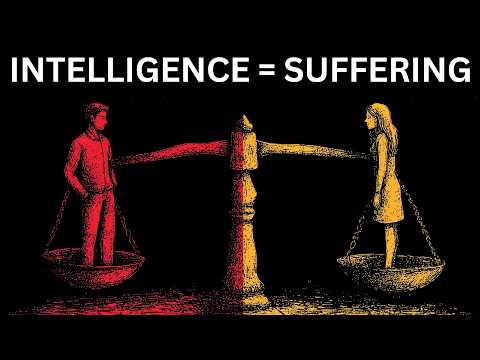
Source material: Why Intelligent People Attract the Worst Partner | Schopenhauer
Summary
Intelligent individuals often find themselves in unhealthy relationships due to subconscious beliefs about their self-worth. Schopenhauer's concept of 'the will' suggests that many choices in love are driven by unconscious forces rather than rational thought. This leads to a cycle where individuals ignore warning signs and remain in relationships that confirm their negative self-image.
The inner critic prevalent among intelligent people exacerbates their struggles in relationships. This critic fosters feelings of inadequacy and the imposter phenomenon, where achievements are attributed to external factors rather than personal merit. Such self-doubt can distort perceptions of love, making genuine affection feel undeserved.
Childhood experiences shape an individual's attachment style, influencing their relationship expectations into adulthood. Many carry these patterns, often unconsciously selecting partners who reflect their early emotional templates. This can lead to a preference for partners who reinforce negative self-perceptions, perpetuating cycles of unworthiness.
Research indicates that individuals with low self-esteem create conditions that attract unhealthy relationships. They may misinterpret kindness from caring partners as insincerity, leading to withdrawal and self-sabotage. This dynamic reinforces their belief that they do not deserve genuine affection.
Perspectives
Analysis of intelligent individuals' relationship dynamics.
Intelligent Individuals
- Struggle with subconscious beliefs about self-worth
- Experience an inner critic that distorts perceptions of love
- Carry childhood attachment styles into adult relationships
- Create conditions that attract unhealthy partners
- Misinterpret genuine affection as insincerity
Unhealthy Relationship Dynamics
- Reinforce negative self-perceptions
- Lead to cycles of unworthiness and self-sabotage
- Create emotional patterns that are difficult to break
- Result in withdrawal from caring partners
- Encourage preference for partners who confirm negative beliefs
Neutral / Shared
- Understanding emotional mechanisms is crucial for change
- Recognition of patterns is insufficient without confronting beliefs
- Self-reflection is necessary for personal growth
Metrics
other
70%
adults experiencing the imposter phenomenon
This statistic highlights the prevalence of self-doubt among adults, particularly affecting high achievers.
70% of adults will experience this at some point in their lives.
other
between a quarter and a third %
high achievers living with the imposter phenomenon
This indicates a significant portion of high achievers struggle with chronic self-doubt.
somewhere between a quarter and a third live with it not as an occasional feeling but as a chronic condition.
other
15-year study tracking over 6,000 couples units
the number of couples studied
This large sample size provides significant insights into relationship dynamics.
15-year study tracking over 6,000 couples found something that removes all remaining comfort.
other
Low self-esteem in one partner predicted lower relationship satisfaction for both.
the impact of low self-esteem on relationship satisfaction
This indicates that individual self-worth affects the overall health of relationships.
Low self-esteem in one partner predicted lower relationship satisfaction for both.
Key entities
Timeline highlights
00:00–05:00
Intelligent individuals may remain in unhealthy relationships due to a subconscious belief that they deserve poor treatment, which leads them to ignore warning signs. Schopenhauer's concept of 'the will' suggests that our conscious choices in love are often governed by unconscious forces that prioritize desire over personal happiness.
- Intelligent individuals may end up in unhealthy relationships due to a subconscious belief that they deserve poor treatment, causing them to ignore warning signs and prolong their stay
- Schopenhauer posited that our conscious mind does not govern our major decisions in love; instead, an underlying force called the will often leads us to partners that validate our negative self-perceptions
- This will operates outside of our awareness, making it challenging to see its impact, as it prioritizes desire over our happiness and growth
- Desire is tied to suffering, creating a painful sense of lack that fuels a cycle of dissatisfaction, especially in romantic endeavors
- For intelligent people, the intricacy of their thoughts can complicate romantic choices, as they seek deeper connections that may entrap them in more complex patterns set by the will
- Schopenhauers theories suggest that what appears to be a conscious choice in love is frequently an unconscious program, highlighting the need for intelligent individuals to identify the patterns that keep them in unsatisfying relationships
05:00–10:00
Intelligent individuals often struggle with self-doubt and the imposter phenomenon, which distorts their perception of love and achievement. This internal conflict can lead them to sabotage healthy relationships in favor of those that reinforce their negative self-image.
- Intelligent individuals often grapple with a persistent inner critic that heightens their self-doubt, distorting their view of achievements and relationships, which can lead them to feel unworthy of love
- The imposter phenomenon affects many high achievers, making them attribute their successes to external factors, which fosters a mindset that discounts their accomplishments while internalizing failures as evidence of inadequacy
- When receiving genuine affection, intelligent people may struggle to accept it, feeling undeserving, which can result in sabotaging healthy relationships in favor of those that confirm their negative self-image
- Schopenhauers concept of the will operates unconsciously, influencing romantic decisions in ways that often hinder personal growth, leading intelligent individuals to choose partners who reinforce their self-doubt instead of those who provide real support
- Childhood experiences shape an individuals internal working model, creating unconscious preferences for specific relationship types, which can dictate romantic choices long before they are consciously recognized
- Recognizing the connection between intelligence, self-doubt, and relationship choices is essential for breaking the cycle of unhealthy partnerships, empowering individuals to make more conscious and fulfilling decisions in love
10:00–15:00
Children develop a love template based on early caregiver interactions, influencing their relationship expectations into adulthood. Many adults carry these attachment styles, leading to partner choices driven by ingrained emotional patterns rather than conscious decisions.
- Children form a love template based on early caregiver interactions, which shapes their relationship expectations and can lead to unhealthy patterns later in life
- Many adults carry childhood attachment styles into their romantic lives, suggesting that partner choices are often driven by ingrained emotional patterns rather than conscious decisions
- Individuals with anxious attachment styles may view their partners as more valuable, fostering feelings of inferiority and a fear of abandonment rooted in their perceived unworthiness
- Research indicates that those with negative self-perceptions tend to select partners who reinforce these views, as confirming a negative self-image feels more comfortable than accepting positive recognition
- Anxious attachment dynamics can lead to behaviors that alienate healthy partners, such as an excessive need for reassurance, ultimately sabotaging the potential for positive relationships
- The emotional templates established in childhood often lead intelligent individuals to choose familiar but unsuitable partners, perpetuating feelings of unworthiness and unhealthy relationship dynamics
15:00–20:00
Intelligent individuals often select partners that reinforce their negative self-image, perpetuating unhealthy relationship cycles. Low self-esteem can lead to withdrawal from caring partners, as they view kindness as insincere due to a belief that they do not deserve genuine affection.
- Intelligent individuals often struggle with self-worth, leading them to select partners who reinforce their negative self-image, which perpetuates unhealthy relationship cycles
- Those with low self-esteem may withdraw from caring partners, viewing kindness as insincere due to a belief that they do not deserve genuine affection
- Testing a partners commitment through crises and demands for reassurance can exhaust relationships, driven by an expectation of abandonment that undermines happiness
- Low self-esteem in one partner can diminish relationship satisfaction for both, indicating that internal struggles significantly affect partner selection and dynamics
- Emotional inconsistency from a damaging partner can feel familiar to those with anxious attachment styles, creating a false sense of depth that obscures healthier relationship dynamics
- Self-awareness alone does not disrupt unhealthy relationship patterns, as individuals often revert to familiar dynamics despite recognizing their issues
20:00–25:00
Understanding one's pain is crucial for confronting emotional struggles, as it allows for clearer insight into destructive patterns. Recognizing inherited beliefs about self-worth can facilitate personal growth and healthier relationship choices.
- Schopenhauer emphasized that understanding your pain provides clarity but does not eliminate it, which is essential for confronting emotional struggles honestly
- He noted that the intellect can perceive reality without distortion, allowing for the possibility of slowing down destructive patterns and facilitating change
- The belief in deserving suffering often arises from inherited ideas rather than personal choice, making it crucial to recognize this belief to escape unhealthy relationship dynamics
- Instead of questioning why a partner mistreated you, reflect on what you believe you deserve in love, as this introspection is key to personal growth
- Identifying the beliefs that drive your choices is the first step to breaking negative cycles, as awareness is a necessary foundation for change
- While Schopenhauers view may seem pessimistic, he acknowledged that insight can lead to transformation, encouraging individuals to question their self-worth to reshape their relationship narratives