Society / Crime
Singapore's Safety and Social Order
Singapore is often regarded as one of the safest countries globally, with 98% of residents feeling secure walking alone at night. This perception is supported by strict laws and enforcement that contribute to the country's low crime rates. However, achieving this level of safety has involved significant trade-offs, including the acceptance of harsh penalties and restrictions on individual freedoms.
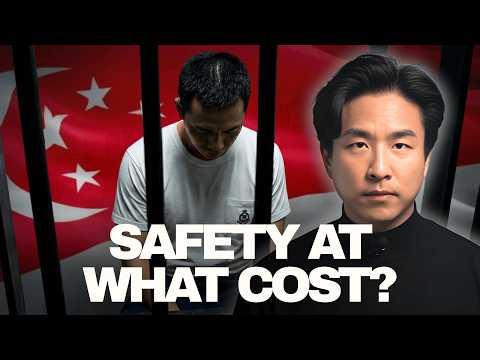
Source material: What’s the Real Price of Singapore’s Safety? | AB Explained
Summary
Singapore is often regarded as one of the safest countries globally, with 98% of residents feeling secure walking alone at night. This perception is supported by strict laws and enforcement that contribute to the country's low crime rates. However, achieving this level of safety has involved significant trade-offs, including the acceptance of harsh penalties and restrictions on individual freedoms.
Historically, Singapore faced severe social unrest in the mid-20th century, which prompted the establishment of strict laws under the leadership of Lee Kuan Yew. The vulnerability thesis posits that Singapore's small size and lack of resources necessitate a strong state to maintain order and attract foreign investment. This led to the introduction of national service and a rejection of Western liberal democratic models in favor of a communitarian approach.
The government's strict laws, including the death penalty for drug trafficking, are framed as essential for maintaining public safety. The legal framework presumes guilt for certain drug quantities, reflecting a zero-tolerance stance on crime. This approach has drawn international criticism, particularly regarding human rights issues, yet the government maintains that such measures are necessary for societal stability.
Judicial caning serves as a severe punishment in Singapore, emphasizing deterrence and public order. The legal system is designed to enforce compliance through harsh penalties, which the government argues are necessary to prevent chaos. However, this reliance on fear raises questions about the long-term sustainability of such a model, especially in the context of changing societal values.
Perspectives
Analysis of Singapore's safety and social order, highlighting trade-offs and challenges in replicating its model.
Proponents of Singapore's Model
- Argues that strict laws ensure safety and low crime rates
- Highlights the effectiveness of harsh penalties in deterring crime
- Claims that a strong state is necessary for societal stability and economic growth
- Proposes that national service fosters a shared identity among diverse populations
- Emphasizes the importance of public order for attracting foreign investment
Critics of Singapore's Model
- Questions the sustainability of strict laws without public trust
- Critiques the human rights implications of harsh penalties like the death penalty
- Denies that fear alone can maintain social order in the long term
- Highlights the potential for societal pushback against perceived overreach
- Warns that economic disparities can undermine the social contract
Neutral / Shared
- Acknowledges Singapores historical context of social unrest
- Recognizes the trade-offs involved in achieving high levels of safety
- Notes the differences in political culture between Singapore and Western countries
Metrics
crime
almost unheard of
knife crimes in Singapore
This indicates a significant level of public safety.
Knife crimes are almost unheard of.
crime
so rare that when they do happen, they actually make the news
random bar fights
This highlights the low incidence of public disturbances.
Even random barfights between drunk people in public are so rare that when they do happen, they actually make the news.
airport_awards
world's best airport at record 13 times as of 2025 times
awards for Singapore's airport
This reflects the high standards of cleanliness and service in Singapore.
which has been named the world's best airport at record 13 times as of 2025.
social_unrest
four people were killed people
Hockley bus riots
This indicates the potential for violence in labor disputes.
Four people were killed, including two police officers, an American journalist and a 16-year-old student.
housing
mass public housing units
government's housing initiative
This initiative aimed to provide affordable housing and improve living conditions.
the government launched a home ownership scheme, building massive amounts of high-rise public housing
population
16,000 people homeless people
impact of the Bukitosui fire
This disaster highlighted the urgent need for improved housing solutions.
leaving about 16,000 people homeless overnight
unemployment
plummeted units
the impact of foreign investment on job creation
A significant drop in unemployment indicates economic growth and stability.
Unemployment plummeted.
SARS_deaths
33 deaths
the number of deaths due to SARS in Singapore
The death toll underscores the severity of the outbreak.
33 deaths.
Key entities
Timeline highlights
00:00–05:00
Singapore is characterized by a high level of safety, with 98% of residents feeling secure walking alone at night. This perception is supported by strict laws and enforcement that contribute to the country's low crime rates.
- In Singapore, it is common to leave personal belongings unattended in public spaces without fear of theft. This level of safety contrasts sharply with experiences in the United States and parts of Europe
- The perception of safety in Singapore raises questions about the cultural and legal frameworks that support it. Strict laws, heavy enforcement, and harsh punishments contribute to the countrys low crime rates
- Singapores reputation for safety includes unique laws that may seem extreme to outsiders, such as caning and the death penalty for certain drug offenses. These measures are often viewed as necessary trade-offs for maintaining public order
- A significant majority of Singapore residents feel safe walking alone at night, with 98% reporting a sense of security. This statistic reflects the effectiveness of the countrys safety measures and societal norms
- The low crime rates in Singapore lead to curiosity about the role of law enforcement. With minimal violent crime, the polices responsibilities may appear limited compared to those in other countries
- The discussion around Singapores safety also touches on the implications for other nations. Countries seeking similar levels of safety must consider whether they are willing to accept the associated trade-offs
05:00–10:00
Singapore has achieved a remarkable level of safety and cleanliness, with knife crimes being almost nonexistent and public disturbances extremely rare. This transformation follows a history of social unrest in the mid-20th century, leading to the establishment of strict laws and social order.
- Knife crimes are almost nonexistent in Singapore. Even random bar fights are so rare that they make the news when they occur. This level of safety is striking compared to many Western cities
- Singapores cleanliness is evident from the moment one arrives at its airport. It has been named the worlds best airport multiple times. The city is largely free of litter, graffiti, and unpleasant odors in public spaces
- In the 1950s and 1960s, Singapore experienced significant social unrest and violence. Events like the Maria Harto riots and the Hockley bus riots highlighted the underlying racial, political, and religious tensions in society at that time
- The racial riots of 1964 occurred during a religious procession and resulted in numerous deaths and injuries. These incidents led to curfews being imposed, underscoring the fragility of social order in a diverse society like Singapore
- After gaining independence in 1965, Singapores leadership recognized the need for strict social order to prevent chaos. This realization led to the development of the vulnerability thesis, which emphasizes the countrys inherent fragility due to its small size and lack of resources
- The vulnerability thesis posits that Singapores small population and diverse makeup make it susceptible to social unrest. Therefore, strong state control and social order are deemed necessary for the nations survival
10:00–15:00
Singapore's stability is largely attributed to its strict laws and social order, which are essential for attracting foreign investment. The introduction of national service aimed to foster a shared identity among its diverse population while ensuring safety and economic growth.
- Singapores lack of natural resources necessitates strict order to maintain stability and attract investment. Lee Kuan Yew believed that safety and efficiency would encourage multinational corporations to invest in Singapore
- To foster a shared identity among its diverse population, Lee introduced national service shortly after independence. This mandatory military conscription required all young men to train and serve together, regardless of their backgrounds
- Lee Kuan Yew rejected the Western liberal democratic model, arguing that it would lead to chaos in a developing Asian society. He advocated for a Communitarian Asian values model that prioritized social harmony and economic survival
- The social contract in Singapore involved citizens surrendering certain civil liberties in exchange for safety and economic growth. This arrangement required trust in the government to maintain order and make decisions for the public good
- The 1968 general election marked a pivotal moment for Singapores political landscape. With the main opposition party boycotting the election, Lees Peoples Action Party won all parliamentary seats, allowing for unopposed governance
- Lee Kuan Yew understood that fear alone could not sustain compliance among the population. He addressed the housing crisis by launching a home ownership scheme that provided affordable public housing
15:00–20:00
Singapore's strict laws and enforcement stem from a historical context of chaos in the 1950s and 60s, aimed at attracting foreign investment and ensuring stability. The social contract involves citizens surrendering certain civil liberties in exchange for safety and economic growth, supported by a tough legal system that emphasizes deterrence and enforcement.
- Singapores strict laws and enforcement originated from a historical context of chaos and instability in the 1950s and 60s. Lee Kuan Yew believed that maintaining order was essential for attracting multinational corporations and ensuring the countrys survival
- To foster a shared identity among citizens, Lee implemented national service. This required all young men to serve together, regardless of race or religion, aiming to unify a divided population and strengthen national cohesion
- Lee rejected the Western liberal democratic model. He argued that prioritizing individual rights could lead to chaos in a developing society, promoting a Communitarian Asian values model that emphasized social harmony and economic survival
- The social contract in Singapore involved citizens surrendering certain civil liberties in exchange for safety, economic growth, and efficient public services. This arrangement required citizens to trust the government to make decisions for the greater good
- The government enforced strict laws to maintain order, including bans on chewing gum and anti-spitting regulations. These laws were designed to prevent public health issues and protect national infrastructure
- The legal system in Singapore is built on deterrence and enforcement, with severe penalties for violations. The belief is that consistently applying harsh penalties will discourage individuals from breaking the law
20:00–25:00
Singapore maintains strict laws, including the death penalty, to ensure safety and deter drug trafficking. The legal framework presumes trafficking for certain drug quantities, reflecting the government's zero-tolerance stance on crime.
- Singapores leaders assert that the death penalty is crucial for maintaining safety in the country. While many nations are reconsidering capital punishment, Singapore remains steadfast in its approach
- The modern drug laws in Singapore emerged in the 1970s due to a heroin epidemic among young citizens. The government viewed this crisis as an existential threat to the nations workforce and economy
- Under the Misuse of Drugs Act, possession of certain quantities of drugs presumes trafficking, leading to severe penalties. This legal framework aims to deter drug syndicates from operating in Singapore
- The thresholds for drug possession are significantly lower than in many Western countries, framing them as wholesale quantities. This strict approach is intended to prevent widespread addiction and crime
- Recent cases have drawn international criticism regarding the application of the death penalty. The government has responded by emphasizing the need for strict laws to deter drug trafficking
- Caning remains a controversial punishment in Singapore, with its use expanded to include various offenses. New amendments will introduce mandatory caning for certain scam-related crimes, reflecting the governments zero-tolerance stance
25:00–30:00
Judicial caning in Singapore is a severe punishment reserved for men under 50, causing significant injury and extreme pain. The legal framework emphasizes maintaining public order at the expense of individual rights, raising questions about its applicability in Western contexts.
- Judicial caning in Singapore is a severe punishment reserved for men under 50, while women are exempt. The process involves strapping the prisoner to a frame and exposing their buttocks for the caning
- The cane used for punishment is about 1.2 meters long and can cause significant injury. It can rip the skin and leave permanent scars, with offenders often experiencing extreme pain, sometimes leading to vomiting or fainting
- By law, all strokes must be delivered in a single session. If a prisoner is deemed unfit to continue, the remaining strokes are converted into additional imprisonment, making the punishment excruciating and serving as a warning to others
- The case of an American teenager drew global attention when he was sentenced to caning for vandalism in Singapore. Despite international pressure, Singapore reduced his sentence but maintained the punishment, reinforcing its strict legal stance
- Singapores laws emphasize maintaining public order at all costs, often at the expense of individual rights. The country operates under a single-party system, with the ruling party in power since 1959, limiting democratic processes
- The discussion raises questions about whether Singapores strict enforcement model could be applied in Western countries facing rising social unrest. It challenges the notion of free rides in governance and highlights the trade-offs required for safety and order