Society / Civilizational Shift
Quantum Computing and Consciousness
Hartmut Neven discusses the potential of quantum computing to enhance artificial intelligence by solving problems beyond the reach of classical computers. He emphasizes the transition from Boolean logic to quantum physics, which allows for more complex operations and faster processing.
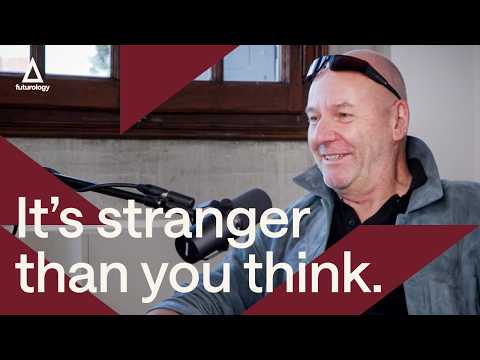
Source material: Welcome to the Multiverse with Google Quantum AI’s Hartmut Neven | The Futurology Podcast
Summary
Hartmut Neven discusses the potential of quantum computing to enhance artificial intelligence by solving problems beyond the reach of classical computers. He emphasizes the transition from Boolean logic to quantum physics, which allows for more complex operations and faster processing.
Neven reflects on his academic journey and contributions to face recognition technology, highlighting both advancements and challenges in the field. He notes the difficulties in conveying quantum physics concepts, particularly the contrast between straightforward linear time evolution and the unpredictable behavior of quantum systems.
Neven explores the development of deep neural networks, emphasizing their effectiveness in image recognition, such as identifying objects like cats. He introduces adversarial patterns, which are subtle modifications to images that can confuse neural networks, leading to incorrect classifications that remain undetectable to humans.
Neven discusses the complexities of the measurement problem in quantum mechanics and advocates for the many-worlds interpretation as a more coherent framework. He believes advancements in quantum computing will bolster the credibility of this interpretation.
Perspectives
short
Quantum Computing Advocates
- Claims quantum computing can solve complex problems beyond classical capabilities
Skeptics of Quantum Consciousness Link
- Questions the empirical support for linking quantum mechanics directly to consciousness
Neutral / Shared
- Acknowledges the ongoing debate about the implications of quantum mechanics for consciousness
- Recognizes the need for experimental validation of theories linking quantum processes to conscious experience
Metrics
other
2012
the year deep neural networks became successful
This marks a significant milestone in AI development
At that time, this was maybe around 2012 or so.
other
10,000
the number of output nodes in the simplest encoding
This illustrates the complexity of neural network outputs
let's say 10,000 output nodes in the simplest encoding
other
first algorithm around 2007
Neven's contributions to quantum computing
This marks a significant milestone in the application of quantum computing to machine learning
you made this first algorithm around 2007
other
20%
personal interest project at Google
This indicates the level of personal investment Neven has in exploring consciousness
this is more of my personal interest that Google because it's a 20% project
Key entities
Timeline highlights
00:00–05:00
Hartmut Neven discusses the potential of quantum computing to enhance artificial intelligence by solving problems beyond the reach of classical computers. He emphasizes the transition from Boolean logic to quantum physics, which allows for more complex operations and faster processing.
- Hartmut Neven, leader of Google Quantum AI Lab, explores how quantum computing can enhance artificial intelligence by tackling problems that classical computers cannot solve
- He explains that quantum computing represents a transition from traditional Boolean logic to quantum physics, enabling more complex operations and faster processing for specific algorithms
- The discussion addresses the difficulties in conveying quantum physics concepts, particularly the contrast between straightforward linear time evolution and the unpredictable behavior of quantum systems
- Nevens research merges engineering with philosophical questions about reality, as he strives to develop a large-scale, practical quantum computer
05:00–10:00
Hartmut Neven discusses the intersection of quantum computing and artificial intelligence, emphasizing its potential to solve complex problems. He reflects on his academic journey and contributions to face recognition technology, highlighting both advancements and challenges in the field.
- Hartmut Neven has a diverse academic background in physics, neuroscience, and philosophy, with a masters thesis on the primary visual cortex and a PhD focused on autonomous mobile robots
- In his early career, Neven made significant advancements in face recognition technology, leading a team that excelled in DARPA competitions and showcased advanced image recognition capabilities
- Despite scientific progress, face recognition technology faced practical challenges during Nevens early work, including high false positive and negative rates that limited its application
- Nevens visual search team developed adversarial algorithms in collaboration with Christian Szegedy, highlighting the critical role of optimization in machine learning
10:00–15:00
Hartmut Neven discusses the advancements in deep neural networks and their effectiveness in image recognition, particularly in identifying objects. He highlights the challenges posed by adversarial patterns that can mislead neural networks, emphasizing the need for improved understanding and training methods.
- Hartmut Neven explores the development of deep neural networks, emphasizing their effectiveness in image recognition, such as identifying objects like cats
- He introduces adversarial patterns, which are subtle modifications to images that can confuse neural networks, leading to incorrect classifications that remain undetectable to humans
- Nevens team, in collaboration with Christian Szegedy, tackled a global optimization problem to find the minimal pixel alterations required to change a neural networks output, yielding valuable insights into neural network functionality
- The outcomes of this research have significant implications for enhancing neural network training and understanding the limits of classification accuracy, potentially shaping future advancements in artificial intelligence
15:00–20:00
Hartmut Neven reflects on his foundational experiences with quantum mechanics during his studies in Paris, emphasizing the clarity of the French educational system. He discusses the conflicts in quantum mechanics related to measurement definitions and their implications for advancements in quantum computing and artificial intelligence.
- Hartmut Neven shares his early experiences with quantum mechanics during his studies in Paris, where he learned foundational principles in theoretical physics
- He appreciates the clarity of the French educational system in teaching quantum mechanics, which allowed him to understand key concepts without being bogged down by philosophical issues
- Neven discusses a significant conflict in quantum mechanics related to the definition of measurement, noting how varying interpretations can create contradictions in time evolution within closed systems
- He underscores the necessity of grasping these foundational ideas as they are crucial for advancements in quantum computing and their potential effects on consciousness and artificial intelligence
20:00–25:00
Quantum mechanics operates at all scales, challenging the notion that its effects are limited to the microscopic realm. The concept of superposition illustrates that physical systems can exist in multiple configurations until an observation is made, leading to the collapse of the wave function.
- Quantum mechanics influences systems at all scales, challenging the belief that its effects are confined to the microscopic realm
- Superposition allows a physical system to exist in multiple configurations simultaneously, which is essential for understanding quantum behavior
- An analogy likening quantum superposition to a radio tuning into various stations illustrates the complexities of observation in quantum mechanics, though it may not fully encapsulate the phenomenon
- The difference between classical configurations and quantum states highlights that quantum systems can represent multiple states until an observation occurs, resulting in the collapse of the wave function
- The nature of measurement in quantum mechanics raises important questions about what defines an observation and its impact on the state of a system
25:00–30:00
Hartmut Neven discusses the complexities of the measurement problem in quantum mechanics and advocates for the many-worlds interpretation as a more coherent framework. He believes advancements in quantum computing will bolster the credibility of this interpretation.
- The measurement problem in quantum mechanics complicates the understanding of time evolution, as it adds to doubts about what constitutes a measurement when all components involved are also physical objects
- Hartmut Neven supports David Deutschs many-worlds interpretation of quantum mechanics, arguing it offers a more consistent framework than traditional interpretations that depend on wave function collapse
- Neven suggests that the many-worlds formulation, which posits that all possible outcomes exist simultaneously, challenges intuitive perceptions of reality while providing a logically coherent view of quantum phenomena
- He believes that advancements in quantum computing will enhance the credibility of the many-worlds interpretation, as these technologies are fundamentally based on quantum mechanics principles
- Neven is in the process of writing a paper titled Evidence for Many Worlds, which aims to further validate the many-worlds theory in the context of quantum computing