Politics / United Kingdom
United Kingdom politics page with daily media monitoring across BBC News, The Telegraph, The Economist and The Times, structured summaries of domestic political developments and a country-level press overview.
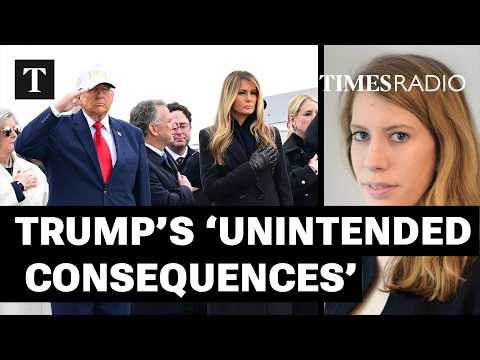
Trump Can’t Control ‘Unintended Consequences’ Of His War Approach | Katy Balls
Summary
Donald Trump's approach to military engagement in the Middle East is characterized by a desire for quick resolutions, yet the complexities of war often lead to unintended consequences. Analysts highlight that Trump may not fully grasp the ramifications of his decisions, particularly regarding Iran's nuclear capabilities and the broader geopolitical landscape.
Evidence suggests that Trump seeks an 'off-ramp' from the conflict, aiming to project control and a swift end to hostilities. However, the realities of military operations and the responses from opposition forces complicate this narrative, raising questions about the feasibility of his objectives.
The influence of Gulf Arab states on Trump's foreign policy decisions is significant, as their interests align with a rapid resolution to the Iranian threat. Trump's legacy ambitions may drive him to prioritize these relationships, potentially at the expense of long-term stability in the region.
Concerns arise regarding the potential backlash from opposition forces, which could undermine any perceived success from military actions. The reliance on Gulf state support as a measure of success may overlook the complex dynamics of local resistance and the international repercussions of military engagement.
Perspectives
Analysis of Trump's military strategy and its implications.
Support for Trump's Military Strategy
- Claims Trump seeks a quick resolution to the conflict
- Highlights Trumps focus on legacy in foreign policy
- Argues Gulf Arab states interests align with Trumps objectives
Criticism of Trump's Control Over Outcomes
- Warns that unintended consequences complicate military engagement
- Questions the feasibility of Trumps desired off-ramp from war
- Denies that Gulf state support guarantees success in the region
Neutral / Shared
- Notes the complexities of military operations in the Middle East
- Acknowledges the potential for backlash from opposition forces
Metrics
military_deployment
5,000 Marines units
number of Marines deployed to the Middle East
This deployment indicates a potential escalation in military involvement.
they have approved to send 5,000 Marines out to the Middle East
soldier_deaths
more deaths this week of American soldiers units
American soldier deaths due to non-combat incidents
Rising soldier deaths raise concerns about military safety and effectiveness.
you have more deaths this week of American soldiers despite not by the Iranians
oil_price
120 dollars USD
projected oil price during potential military engagement
High oil prices could impact global economies and U.S. domestic politics.
boots on the ground on an oil at 120 dollars a barrel
Key entities
Timeline highlights
00:00–05:00
Trump's approach to the conflict in the Middle East reveals the complexities and unintended consequences that arise from military engagement. The situation remains volatile, with significant implications for Iran's nuclear capabilities and the global oil trade.
- Trump cannot control the unintended consequences of his war approach, highlighting the complexity of the Middle East situation
- There is evidence Trump seeks an off-ramp from the conflict, but timing and feasibility are uncertain
- The implications for Irans nuclear capabilities are critical; Trump may not accept a resolution that leaves key materials intact
- Trumps past reluctance for regime change in Iran suggests he may prefer limited achievements over a complete overhaul
- The conflicts economic impact on global oil trade is significant, with Irans disruptions potentially affecting prices
- Trumps declaration of victory may be premature as the situation remains volatile and external factors challenge his confidence
05:00–10:00
Trump's military strategy in the Middle East is heavily influenced by the priorities of Gulf Arab states, which seek a swift resolution to the Iranian threat. His focus on legacy may lead to decisions that prioritize short-term gains over long-term stability.
- Trumps war approach overlooks the oppositions response, complicating the situation
- Gulf Arab states prioritize a swift resolution to eliminate the Iranian threat
- Trump prioritizes Gulf states over European concerns in foreign policy
- He aims for a Middle East legacy, believing he can achieve what past presidents could not
- Despite hesitations, Trump has engaged militarily without election pressures
- The Abraham Accords reflect Trumps vision for his foreign policy legacy