Politics / United Kingdom
Impact of the East-West Pipeline on Global Oil Supply
The closure of the Strait of Hormuz has significantly impacted the global oil supply, trapping 15% of it in the Persian Gulf. In response, Saudi Arabia has increased its utilization of the East-West pipeline, which serves as a crucial workaround for transporting oil to the Red Sea.
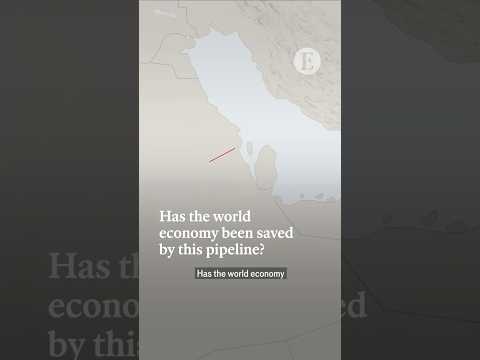
Source material: Has the world economy been saved by this pipeline?
Summary
The closure of the Strait of Hormuz has significantly impacted the global oil supply, trapping 15% of it in the Persian Gulf. In response, Saudi Arabia has increased its utilization of the East-West pipeline, which serves as a crucial workaround for transporting oil to the Red Sea.
Since the onset of the war, the pipeline's capacity has been maximized, allowing for the transportation of 7 million barrels of oil per day. This strategic infrastructure, built during the 1980s, has proven vital in maintaining the flow of oil amid geopolitical tensions.
Despite its importance, the pipeline is not without vulnerabilities. Attacks from Iran and its proxies pose a significant risk, as evidenced by a recent strike that temporarily reduced the pipeline's capacity by 700,000 barrels per day.
Other countries are now considering similar pipeline projects to enhance their oil export capabilities. Iraq, for instance, has sought alternatives to transport oil, while the United Arab Emirates is exploring expansions to its existing pipeline infrastructure.
Perspectives
short
Support for the East-West Pipeline
- Increases oil transport capacity to mitigate supply disruptions
- Serves as a crucial workaround amid geopolitical tensions
- Has helped maintain the flow of oil during the current crisis
- Encourages other nations to consider building similar infrastructure
- Demonstrates the strategic importance of contingency plans in oil supply
Criticism of Reliance on the Pipeline
- Cannot fully substitute for the Strait of Hormuz
- Vulnerable to attacks from Iran and its proxies
- Limited capacity to address the stranded oil supply
- Raises questions about long-term sustainability of alternatives
- Overlooks broader geopolitical dynamics affecting oil security
Neutral / Shared
- Exports from Saudis Red Sea port have significantly increased
- Other countries are exploring pipeline expansions to enhance oil exports
Metrics
deliveries
7 million barrels of oil per day units
daily oil transport via the East-West pipeline
This volume is critical for mitigating the economic impact of the Strait's closure.
transporting 7 million barrels of oil per day
deliveries
1.6 million barrels per day before the war units
previous export levels from Saudi's Red Sea port
This increase highlights the pipeline's strategic importance during the crisis.
Exports have tripled from 1.6 million barrels per day before the war
deliveries
5 million by mid-April units
current export levels from Saudi's Red Sea port
This surge indicates the pipeline's role in maintaining oil supply.
to 5 million by mid-April
deliveries
700,000 barrels per day of capacity units
capacity temporarily reduced due to an attack
This vulnerability underscores the risks associated with relying on the pipeline.
briefly knocking out 700,000 barrels per day of capacity
deliveries
136 million barrels of oil are stuck units
oil stranded due to the Strait's closure
This figure emphasizes the critical need for alternative routes.
an estimated 136 million barrels of oil are stuck
Key entities
Timeline highlights
00:00–05:00
The closure of the Strait of Hormuz has trapped 15% of the world's oil supply, leading Saudi Arabia to increase its use of the East-West pipeline to transport oil. This pipeline, originally built as a contingency, has become crucial for maintaining global oil stability amid ongoing geopolitical tensions.
- The closure of the Strait of Hormuz has significantly impacted global oil supply, trapping 15% of it in the Persian Gulf. Saudi Arabias East-West pipeline serves as a crucial alternative, allowing the country to transport oil and mitigate economic fallout
- Since the onset of conflict, Saudi Arabia has ramped up its use of the East-West pipeline, moving 7 million barrels of oil daily to the Red Sea. This strategic infrastructure is vital for maintaining the stability of the world economy during the crisis
- Originally constructed in the 1980s as a contingency plan, the East-West pipelines importance has surged due to the current geopolitical tensions. The ongoing situation underscores the pipelines role in safeguarding oil exports amid threats to traditional shipping routes
- Despite its advantages, the pipeline is not without vulnerabilities, as evidenced by an attack from Iran that temporarily reduced its capacity. The potential for further disruptions from Iran-backed groups in the region poses ongoing risks to global oil transport
- Other countries are now looking to replicate Saudi Arabias strategy by developing their own pipeline systems. Iraq, for instance, has struggled to establish a reliable pipeline to Jordan, while the UAE is considering expanding its own pipeline capacity
- While the East-West pipeline provides a temporary solution, it cannot fully replace the need for the Strait of Hormuz to be operational. With an estimated 136 million barrels of oil still stranded, the situation highlights the critical need for alternative routes in an increasingly volatile environment