Politics / United Kingdom
United Kingdom politics page with daily media monitoring across BBC News, The Telegraph, The Economist and The Times, structured summaries of domestic political developments and a country-level press overview.
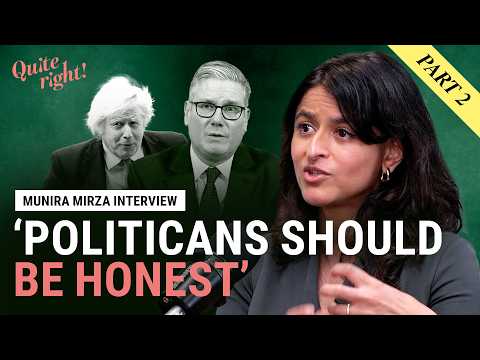
‘MPs are just not good enough’ – Munira Mirza on Boris, Starmer and Britain's leadership crisis
Summary
Boris Johnson's leadership is characterized by a mix of personal flaws and systemic issues, particularly regarding immigration and governance. Critics argue that the Human Rights Act and the Equality Act hinder effective decision-making, complicating the government's ability to address pressing issues. Johnson's lack of decisiveness on key matters is highlighted as a significant shortcoming, reflecting broader challenges within the Conservative Party.
The discussion reveals a conflicted view of Johnson, acknowledging his capabilities while criticizing his evasiveness and failure to act decisively. The internal dynamics of the Conservative Party are seen as a barrier to effective governance, with factions often unable to agree on critical policies. The need for strong leadership that can unify differing views within the party is emphasized as essential for progress.
Reform proposals, including the repeal of the Human Rights Act, are debated, with concerns raised about the potential consequences of such actions. The conversation underscores the importance of understanding the historical context of legislation and the need for a well-thought-out implementation plan to avoid unintended negative outcomes. The Labour Party's legislative framework is also scrutinized for its impact on governance.
Civic Future, an initiative aimed at attracting talented individuals into politics, is introduced as a response to the perceived inadequacies of current political leadership. The program seeks to train and prepare capable individuals for public service, addressing the gap in political engagement and the quality of candidates entering government roles. The strong interest in the fellowship program indicates a desire for change among skilled individuals.
Perspectives
Analysis of leadership challenges in Britain, focusing on Boris Johnson and the Conservative Party.
Support for Reform and Leadership Improvement
- Critiques the Human Rights Act and Equality Act as barriers to effective governance
- Emphasizes the need for decisive leadership within the Conservative Party
- Advocates for Civic Future to attract and prepare talented individuals for public service
- Calls for Fixed Britain to develop implementation plans for political proposals
- Highlights the importance of honesty and clarity in political communication
Criticism of Current Political Leadership
- Questions the effectiveness of Boris Johnsons leadership due to personal flaws
- Critiques the Labour Partys lack of planning and preparation for governance
- Challenges the assumption that simply repealing legislation will improve governance
- Notes the internal conflicts within the Conservative Party as a barrier to progress
- Highlights the need for a more engaged and proactive approach from political leaders
Neutral / Shared
- Acknowledges the complexities of governance and the influence of systemic issues
- Recognizes the strong interest in public service among skilled individuals
- Notes the historical context of legislation affecting current governance challenges
Metrics
other
high surge in migration numbers
refers to immigration management failures
This indicates a significant governance issue regarding immigration policy.
it wasn't an intentional policy to have such a high surge in migration numbers.
other
two or three different parties
number of factions within the Conservative Party
Understanding the number of factions helps assess the complexity of decision-making.
I think about two or three different parties and one.
other
the most important issue
perception of policy importance among MPs
Identifying perceived priorities can reveal misalignments in party focus.
this is not the most important issue.
other
the system doesn't work, systems broke
general assessment of the governance system
This highlights a perceived failure in the current political framework.
the system doesn't work, systems broke
other
the human rights act, the Equality Act are products of a way of thinking
origin of the Human Rights Act and Equality Act
Understanding their origins is crucial for evaluating their impact on governance.
the human rights act, the Equality's Act, are products of a way of thinking
other
the fundamental problem is that lots of the legislation that now hinders government is legislation that was brought in b
impact of Labour's legislation on current governance
This suggests a need to reassess past legislative decisions.
lots of the legislation that now hinders government is legislation that was brought in by Labour after 1997
other
15 years
duration of case law influenced by the Equality Act
This highlights the long-term impact of the legislation on judicial processes.
there's a lot of case law that has come out of the equality act as well for the last 15 years.
applications
several hundred units
number of applications for the fellowship program
It demonstrates significant interest in public service among talented individuals.
we had several hundred applications for 14 places in the first year.
Key entities
Timeline highlights
00:00–05:00
Boris Johnson is portrayed as a flawed leader, struggling with decisiveness on critical issues, particularly regarding migration. The Human Rights Act is seen as a significant barrier to effective governance, compounded by concerns over the quality of MPs in Parliament.
- Boris Johnson is described as a better man than his critics acknowledge, yet he has significant flaws, particularly a lack of decisiveness on key issues
- The Human Rights Act is identified as a major obstacle to effective governance, with suggestions that even Tony Blair might privately regret its implementation
- The caliber of MPs in Parliament is criticized as being insufficient, indicating a broader issue with the quality of political leadership in Britain
- Concerns are raised about the Home Office and the Office for National Statistics failure to accurately count incoming migrants, leading to policy missteps
05:00–10:00
Boris Johnson's leadership is characterized by a mix of articulate communication and evasiveness, complicating evaluations of his effectiveness. Failures in immigration management are attributed to systemic issues within the Conservative Party rather than solely to his decisions.
- Boris Johnson is recognized for his ability to articulate issues, but he is also seen as evasive and unserious at critical moments, complicating assessments of his leadership
- Failures in managing immigration numbers are attributed to mismanagement and a lack of proper data from the Home Office, rather than intentional policy decisions
- While Boris Johnson is held responsible for his premierships failures, systemic issues within the Conservative Party and Cabinet contributed to a lack of decisiveness on key issues
- The pandemic forced many decisions that may be regretted in hindsight, and there is a reluctance to engage in a power assassination of Boris Johnson, acknowledging his complexities
10:00–15:00
Delays in decision-making within the government were attributed to conflicts among factions and a lack of effective arbitration by number 10. The Conservative Party's internal disagreements hindered decisive action on key issues, particularly regarding contentious policies.
- Delays in decision-making within the government stemmed from conflicts between factions, with number 10 failing to arbitrate effectively. This lack of agreement within the Conservative Party hindered decisive action on key issues
- Expecting superhuman virtues from Prime Ministers is unrealistic, as they operate within a complex system. The attitudes and habits of party members significantly influence governance outcomes
- The Conservative Party faced fundamental issues regarding policies like self-identification, which were developed under Theresa May. The Prime Minister struggled to unify party members with opposing views on these contentious policies
- Leadership requires assertive communication and justification of decisions to both the party and the public. The failure to decisively reject certain policies exemplifies a lack of effective leadership
- Significant legislative frameworks such as the Equality Act and the Human Rights Act remain problematic. These laws have contributed to adverse outcomes and need thorough reevaluation
15:00–20:00
The Human Rights Act and the Equality Act are criticized for their adverse effects on the UK's governance, particularly in relation to immigration policies. The Labour Party's legislative framework since 1997 is seen as a significant barrier to effective policy implementation by the current government.
- The Human Rights Act and the Equality Act require a deeper understanding of their origins and implications, as simply removing them is insufficient. There is a lack of thorough analysis regarding their adverse effects on the UKs legal and political landscape
- The Labour Partys post-1997 legislation has created a framework that hinders effective governance, complicating the current Labour governments policy implementation. Tony Blair has criticized the consequences of the Human Rights Act, particularly regarding migration, acknowledging its problematic aspects
- Reforms call to repeal or amend the Human Rights Act and the Equality Act supports the argument that these laws obstruct necessary governmental action
20:00–25:00
The Equality Act and the Human Rights Act, while originally intended to promote fairness, have complicated government decision-making and created significant governance issues. Reformers must provide detailed implementation plans to avoid unintended negative consequences when addressing these legislative challenges.
- The original intentions behind the Equality Act and the Human Rights Act were well-meaning, but they have created significant problems within the system, complicating government decision-making
- Reformers advocating for the repeal of problematic legislation must present detailed implementation plans to avoid unintended negative consequences
- A lack of clear principles and leadership within the current government hinders effective change and creates significant governance issues
- The importance of radical candor in politics is emphasized, suggesting that honesty and directness about beliefs and policies could help rebuild public trust
25:00–30:00
Munira Mirza emphasizes the need for improved leadership in politics to earn public trust and attract talented individuals into government roles. Her initiative, Civic Future, aims to train and prepare capable people for public service, addressing the gap in political engagement.
- Munira Mirza argues for improved leadership in politics, emphasizing that leaders with clear direction can earn public trust. She contrasts this with the current climate where many leaders conceal their true beliefs
- Her initiative, Civic Future, aims to attract talented individuals into government roles, addressing the gap where capable people avoid politics due to its perceived shortcomings. The organization runs fellowship programs that provide training in economics and public policy
- Civic Future promotes values like free speech and the belief in the nation-state, encouraging healthy debate among participants from various political backgrounds. Mirza notes that political parties often fail to engage talented individuals, making party meetings feel bureaucratic and uninviting