Politics / United Kingdom
United Kingdom politics page with daily media monitoring across BBC News, The Telegraph, The Economist and The Times, structured summaries of domestic political developments and a country-level press overview.
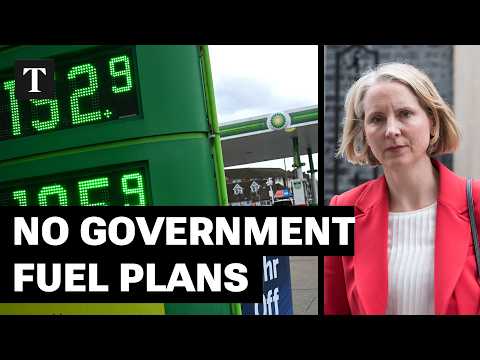
No UK Fuel Contingency Plans For Iran Conflict | Environment Secretary
Summary
The UK government asserts that fuel supply remains stable despite rising prices and international tensions. Environment Secretary Emma Reynolds emphasizes that citizens should continue their normal refueling habits, contrasting this with Ireland's cautionary approach to potential oil shortages.
Reynolds highlights the government's commitment to providing targeted support for those in need, particularly regarding energy costs, while avoiding blanket assistance that could exacerbate national debt. She acknowledges rising food prices and the importance of maintaining domestic food production.
Concerns about food security are raised, particularly regarding imports from countries with lower standards. The government is working on plans to enhance domestic agricultural production, but critics argue that these measures lack urgency.
Reynolds defends the government's approach to managing rising costs and energy supply, stating that ongoing discussions with energy suppliers aim to prevent market abuse. However, the public's perception of government responsiveness to the cost of living crisis remains a concern.
Perspectives
short
UK Government
- Maintains that fuel supply is stable and advises normal refueling habits
- Commits to targeted support for those in need regarding energy costs
- Emphasizes ongoing discussions with energy suppliers to prevent market abuse
- Focuses on enhancing domestic food production to address food security concerns
- Defends the independent process for determining MPs salaries amidst public scrutiny
Critics of Government Policy
- Questions the adequacy of government measures in addressing rising fuel prices
- Highlights the urgency of food security issues and the need for immediate action
- Criticizes the perception of inequity with MPs receiving pay increases during a cost of living crisis
- Challenges the governments confidence in fuel supply stability amid geopolitical tensions
- Calls for a more transparent and responsive approach to public concerns about rising costs
Neutral / Shared
- Acknowledges rising prices for fuel and food as a significant concern for the public
- Recognizes the importance of maintaining a stable energy supply in the context of international conflicts
Metrics
debt
£100 billion GBP
government debt servicing
High debt servicing costs limit the government's ability to provide broad financial support.
£100 billion, just to service government debt
support
£53 million GBP
targeted support for heating oil
Targeted support aims to assist those most in need without burdening the overall budget.
the Prime Minister pledged £53 million for people who are reliant on heating oil
fuel_price
one panned 80 a litre GBP
current diesel price
Rising fuel prices can impact consumer behavior and economic stability.
diesel in particular going up, one panned 80 a litre in many places
imports
up 8%
chicken imports from countries with lower standards
Increased imports may compromise food safety and security.
chicken imports rather into this country are up 8% in a year.
salary
5%
pay hike for MPs
This contrasts sharply with the pay increases for essential workers like nurses.
MPs are getting a 5% pay hike.
salary
3.3%
pay increase for nurses
This highlights the disparity in pay increases between MPs and essential workers.
Nurses are getting around 3.3%.
Key entities
Timeline highlights
00:00–05:00
The UK government is maintaining its current fuel consumption advice despite international tensions, reflecting confidence in supply stability. In contrast, Ireland is preparing for potential oil shortages and advising citizens to reduce fuel usage.
- The UK government is not advising changes to fuel consumption despite ongoing conflicts in the Middle East. This decision reflects confidence in current fuel supply stability and aims to prevent panic buying among drivers
- Emma Reynolds, the Environment Secretary, emphasized that drivers should continue their normal refueling habits. This approach is supported by organizations like the AA and RAC, which advocate for calm and routine behavior
- Ireland, in contrast, is preparing for potential oil shortages and is advising its citizens to reduce fuel usage. This highlights a significant difference in governmental responses to the same regional crisis
- The UK is actively engaging in international efforts to de-escalate the conflict, recognizing the potential domestic pressures that prolonged instability could create. This proactive stance aims to mitigate any future impacts on fuel supply and prices
- Reynolds noted that while some countries are advising citizens to cut back on fuel consumption, the UK will not follow suit. This decision underscores a belief in the resilience of the UKs fuel supply chain
- The conversation around fuel usage is becoming increasingly relevant as global tensions rise. The governments stance may influence public behavior and perceptions regarding fuel availability in the coming weeks
05:00–10:00
The UK government maintains that fuel supply remains stable despite international tensions, contrasting with Ireland's cautionary measures. Environment Secretary Emma Reynolds emphasizes ongoing efforts to enhance domestic food production while addressing rising fuel prices and potential supply issues.
- The UK government is not currently worried about fuel supply, asserting that it remains stable despite ongoing conflicts in the Middle East. This stance contrasts with the Irish governments proactive measures to advise citizens on reducing fuel consumption
- Emma Reynolds, the Environment Secretary, emphasized that UK drivers should continue their normal refueling habits, as advised by organizations like the AA and RAC. This approach aims to prevent panic buying and maintain market stability
- Concerns have been raised about rising fuel prices and potential future supply issues, prompting questions about the governments communication with the public. Reynolds insists that there are no immediate supply problems and that the government is focused on diplomatic resolutions to the conflict
- The government is under scrutiny for its handling of food security, particularly regarding increasing imports of chicken from countries with lower standards. Reynolds highlighted ongoing efforts to enhance domestic food production and improve planning processes for the agricultural sector
- Despite acknowledging the urgency of food security, the government faces criticism for not acting swiftly enough to address existing problems. Reynolds reassured listeners of the governments commitment to increasing domestic food production as a matter of national security
- A contingency planning meeting is scheduled with energy producers to discuss market integrity and prepare for various scenarios. The outcome of this meeting is expected to shape the governments response to potential future challenges in the energy sector
10:00–15:00
The UK government is monitoring energy supply and urging the public to maintain normal refueling habits despite rising costs. Concerns about equity arise as MPs receive a pay increase while many citizens face financial struggles.
- The UK government is actively monitoring energy supply amid rising costs and potential crises. They emphasize that there are currently no supply issues, urging the public to maintain normal refueling habits
- Concerns have been raised about the fairness of MPs receiving a significant pay increase while many citizens face financial struggles. The Environment Secretary defends the independent process that determines MPs salaries, asserting that it is essential for public trust
- Emma Reynolds highlights the governments commitment to supporting those at the lower end of the income spectrum. However, she acknowledges that middle-income individuals may not receive the same level of support, raising questions about equity
- The government is planning for various scenarios regarding energy supply and costs, indicating a proactive approach to potential challenges. This includes ongoing discussions with energy producers to prevent market abuse and ensure stability
- Reynolds expresses her determination to enhance domestic food production in response to rising import levels and food security concerns. She emphasizes the importance of increasing local agricultural output to reduce reliance on imports from countries with lower standards
- The Environment Secretary reassures the public that the government is taking food security seriously, linking it to national security. She outlines efforts to work closely with the farming sector to develop growth plans for poultry and horticulture