Politics / United Kingdom
Keir Starmer's Leadership and UK Political Division
The UK government faces criticism for its inaction during international crises, particularly as leaders vacation while tensions escalate. Keir Starmer's attempts to rebrand himself as a global statesman amid declining Labour poll numbers are perceived as desperate and ineffective. His recent trip to the Middle East is viewed as an effort to project leadership, despite lacking substantial influence over ongoing conflicts.
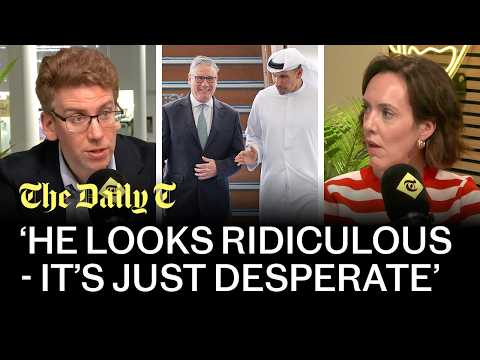
Source material: Why Starmer's desperate ‘global statesman’ rebrand isn't fooling anyone | The Daily T
Summary
The UK government faces criticism for its inaction during international crises, particularly as leaders vacation while tensions escalate. Keir Starmer's attempts to rebrand himself as a global statesman amid declining Labour poll numbers are perceived as desperate and ineffective. His recent trip to the Middle East is viewed as an effort to project leadership, despite lacking substantial influence over ongoing conflicts.
Public sentiment reflects a growing disillusionment with political leaders, as many question their commitment and effectiveness during critical times. Labour's polling struggles indicate a fragmented political landscape, with rising support for smaller parties like the Greens and Reform. The perception of Labour's inability to address pressing domestic issues further complicates Starmer's rebranding efforts.
The government's response to international threats, particularly from Russia, raises concerns about national defense capabilities. Critics argue that the justification for limited military engagement serves as a distraction from pressing domestic challenges. The reliance on declassified information to explain military inaction suggests a lack of transparency and accountability.
Public opinion in the UK is increasingly polarized, with significant divisions over key policy issues such as welfare and military spending. A notable 64% of the population expresses skepticism about the political system's ability to address current challenges, driving many towards smaller, radical parties as alternatives to mainstream options.
Perspectives
Analysis of political dynamics and public sentiment in the UK.
Critics of Starmer and Labour
- Accuses Starmer of attempting a desperate rebranding as a global statesman
- Questions the effectiveness of Labours leadership during international crises
- Highlights the disconnect between Starmers actions and public expectations
- Criticizes the governments inadequate response to Russian threats
- Points out the fragmentation of political support among voters
Supporters of Starmer and Labour
- Argues that Starmers engagement with international leaders is necessary for maintaining Britains influence
- Claims that Labours focus on foreign affairs is a strategic move to address domestic criticisms
Neutral / Shared
- Notes the rising support for smaller parties amid public disillusionment
- Observes the generational divide in opinions on key policies
- Mentions the upcoming local elections as a potential turning point for political dynamics
Metrics
polling
Labour never here care has jetted after the Middle East
Labour's polling situation
Indicates Labour's struggle to maintain support ahead of elections.
Labour never here care has jetted after the Middle East
public_sentiment
people don't generally want to see the UK participate very heavily in this war
Public opinion on UK involvement in the Iran conflict
Highlights the potential backlash against Labour's foreign policy stance.
people don't generally want to see the UK participate very heavily in this war
polling
16%
Labour's polling compared to the Greens
Indicates Labour's declining support amidst rising competition.
the latest U-Gov polling has labored with the Greens on 16%
polling
19%
Conservative polling
Shows limited movement in Conservative support, impacting electoral dynamics.
Conservatives haven't moved much there on 19%
polling
24%
Reform Party polling
Highlights the Reform Party's lead and potential influence on election outcomes.
reform as ever in the lead on 24%
polling
32 seats
Projected seats for Labour
Suggests a significant reduction in Labour's parliamentary representation.
Labour reduced to a hilarious run for about 32
polling
three-quarters of us think Britain is more divided in 2026 than 2016 %
public perception of division in Britain
This indicates a significant increase in societal division, which could impact future elections.
According to exclusive polling for the telegraph, Britain is now more divided than it was in the aftermath of Brexit.
public_skepticism
64%
percentage of the population expressing doubts about politicians
This disillusionment could significantly affect future elections.
64% have very little faith in our politicians to fix any of these issues.
Key entities
Timeline highlights
00:00–05:00
The UK government is criticized for vacationing during escalating international tensions, particularly regarding threats from Donald Trump against Iran. Keir Starmer's trip to the Middle East is seen as an attempt to rebrand himself as a global statesman amid Labour's declining poll numbers ahead of local elections.
- The UK government faces criticism for vacationing while international tensions escalate, particularly with Donald Trumps threats against Iran, raising concerns about leadership during crises
- Keir Starmers trip to the Middle East is perceived as a desperate rebranding effort to position himself as a global statesman amid Labours declining poll numbers ahead of local elections
- Labours messaging highlights Starmers involvement in international diplomacy, despite his limited role in ceasefire talks, aiming to set him apart from non-government party leaders
- The partys recent election broadcast shifted focus from local issues to Starmers views on the Iran conflict, suggesting a strategy to enhance his image by leveraging current events
- Starmers stance against British involvement in the Iran conflict aligns with public sentiment against military engagement, potentially appealing to voters cautious about foreign conflicts
- The Labour Party anticipates significant challenges in the upcoming local elections, emphasizing the urgency of Starmers rebranding efforts and the potential impact on the partys future
05:00–10:00
Keir Starmer's vacation during a significant international crisis raises questions about his leadership commitment. Labour's polling indicates a struggle against rising parties, suggesting potential electoral losses due to fragmentation.
- Keir Starmers vacation during a significant international crisis adds to doubts about his commitment to leadership responsibilities, suggesting a disconnect with urgent political issues
- Starmers recent party broadcast attempts to frame him as a global leader, but this strategy may alienate voters seeking genuine engagement rather than political theatrics
- Labours polling shows it is struggling against rising parties like the Greens and Reform Party, indicating a potential loss of seats in the upcoming elections due to political fragmentation
- The criticism surrounding Starmers and Defence Secretary John Healeys holidays highlights a perceived inconsistency in Labours message about political accountability, complicating their credibility
- The rise of new parties such as Restore Britain could disrupt traditional voting patterns, potentially preventing any party from gaining enough seats to form a stable government
- Healeys press conference on military operations coincided with reports of Russian warships near British waters, raising concerns about national security and public trust in Labours defense capabilities
10:00–15:00
The UK government is criticized for its inadequate response to a Russian warship escorting a tanker, raising concerns about national defense capabilities. John Healy's justification of limited military presence in the Middle East is perceived as a distraction from pressing issues at home.
- The UK government is facing criticism for its inaction against a Russian warship escorting a tanker through the channel. This raises concerns about the countrys ability to defend its waters effectively
- John Healy attempted to justify the governments limited military presence in the Middle East by highlighting other operations in the Arctic. However, this may come off as a desperate attempt to distract from the lack of action in more pressing situations
- There is a perception that the British military is not doing enough to address the threat posed by Russian activities. This perception could undermine public confidence in the governments defense capabilities
- The government is now trying to navigate complex international law issues regarding the seizure of sanctioned oil tankers. This legal wrangling may hinder timely responses to clear threats from foreign powers
- The situation in Lebanon complicates the governments stance on international conflicts, particularly regarding Israels actions. The ambiguity surrounding ceasefire agreements could lead to further instability in the region
- Keir Starmers position appears increasingly precarious as he faces scrutiny for not addressing significant international law breaches. His credibility may suffer if he fails to take a strong stance on these pressing issues
15:00–20:00
The Prime Minister's engagement with Middle Eastern leaders aims to maintain Britain's influence in the region amid strained UK-US relations. Critics argue that this focus on international affairs detracts from addressing pressing domestic issues, potentially undermining public support.
- The Prime Ministers engagement with Middle Eastern leaders aims to maintain Britains influence in the region. This is crucial as the UKs relationship with the US is under strain, and regional alliances are more important than ever
- Critics argue that the Prime Ministers efforts in the Middle East do not address pressing domestic issues, such as rising living costs. This disconnect could undermine public support and perceptions of effective governance
- The upcoming NATO summit will be a significant moment for UK-US relations, especially given the current tensions. The Prime Ministers absence from direct meetings with Trump adds to doubts about the strength of their alliance
- Polling indicates that Britain is experiencing greater division now than in the aftermath of Brexit. This division reflects deep-seated concerns over various political issues, including crime and immigration, which could impact future elections
- The publics perception of the governments effectiveness is increasingly negative, particularly regarding its handling of international affairs. This sentiment could lead to a loss of confidence in leadership as local elections approach
- A broader issue of Britains diminishing global influence, as the country struggles to assert itself on the world stage. Without a strong military presence, the UK risks being sidelined in international negotiations
20:00–25:00
Public opinion in the UK is increasingly polarized, with significant divisions over welfare and military spending. A notable 64% of the population expresses skepticism about the political system's ability to address current challenges.
- Public opinion in the UK is increasingly polarized, with citizens divided over whether to prioritize welfare or military spending. This division highlights a broader trend of societal polarization
- Many people feel alienated from their country due to immigration, with over half stating they no longer recognize Britain. This sentiment is especially strong among older voters, revealing generational differences
- Political disagreements are causing individuals to lose friendships, indicating a decline in community cohesion. This trend suggests that political polarization is impacting personal relationships
- Regional identities are shifting, with Scots and Welsh individuals feeling a stronger connection to each other than to the English. This reflects a growing sense of regional nationalism and a fracturing of national unity
- There is widespread skepticism about the political systems ability to tackle current challenges, with 64% of the population expressing doubts about politicians. This disillusionment could significantly affect future elections
- The rise of social media has intensified adversarial public interactions, leading to a decline in civility. This change in communication may be reshaping political debates in everyday life
25:00–30:00
Public disillusionment with politicians is growing, with 64% believing they cannot address the country's issues. This sentiment is driving many towards smaller, radical parties as they seek alternatives to mainstream options.
- The publics disillusionment with politicians is growing, with 64% believing that they cannot address the countrys issues. This sentiment is driving many towards smaller, radical parties as they seek alternatives to the mainstream options
- There is a widespread consensus that the political system in Westminster is failing, even among strong supporters of various parties. This breakdown in trust suggests a significant shift in how citizens view political efficacy and representation
- Voters are increasingly frustrated with the inability of established parties to resolve pressing issues like immigration and economic control, which were central to the Brexit debate. This frustration indicates that Brexit has not delivered the promised solutions, leaving many feeling more divided
- The current political landscape reflects a sense of hopelessness, exacerbated by perceived failures of the Conservative government. This has led to a growing sentiment that even competent leaders like Keir Starmer are unable to improve the situation
- The decline in quality of life since the financial crisis has contributed to a pervasive sense of national malaise. As people grapple with economic challenges, their faith in political leadership continues to erode
- The generational gap in political attitudes is evident, with younger voters expressing skepticism towards traditional parties. This shift could reshape future electoral dynamics as younger demographics seek new voices and solutions