Politics / United Kingdom
US-Iran Negotiations and UK Political Dynamics
Ongoing negotiations between the US and Iran regarding the Strait of Hormuz are marked by heightened tensions and strategic maneuvering. Iran's aggressive actions in the waterway, including threats to shipping, underscore its leverage in these discussions. The situation is compounded by the complexities of global markets, particularly concerning oil prices and food security.
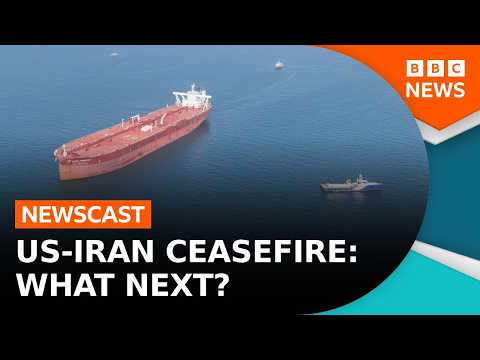
Source material: US-Iran conflict: Is the Strait of Hormuz open? | BBC News
Summary
Ongoing negotiations between the US and Iran regarding the Strait of Hormuz are marked by heightened tensions and strategic maneuvering. Iran's aggressive actions in the waterway, including threats to shipping, underscore its leverage in these discussions. The situation is compounded by the complexities of global markets, particularly concerning oil prices and food security.
In the UK, the political landscape is influenced by the controversy surrounding Peter Mandelson's security vetting. The Prime Minister's handling of this issue raises questions about accountability and transparency within the government. Cabinet Minister Liz Kendall defended the Prime Minister, asserting he was misled about Mandelson's vetting status.
As the Scottish elections approach, voter sentiment reflects uncertainty and confusion, with many expressing indecision about their choices. The Scottish National Party (SNP) aims for an unprecedented fifth consecutive term, while Labour struggles with its national unpopularity despite some improvement in its leader's personal ratings.
Reform UK seeks to gain traction in urban areas by focusing on immigration issues, but faces challenges in resonating with voters. The Green Party, despite its previous government experience, is not experiencing the same popularity as in other regions, indicating a shift in voter engagement.
Perspectives
Analysis of geopolitical and domestic political dynamics.
UK Government Accountability
- Questions arise regarding the Prime Ministers knowledge of Peter Mandelsons vetting status
- Cabinet Minister Liz Kendall defends the Prime Minister, claiming he was misled
Criticism of Government Processes
- Critics argue that the Prime Minister should have proactively sought information about Mandelsons vetting
Neutral / Shared
- Ongoing negotiations between the US and Iran involve complex geopolitical dynamics
- Voter sentiment in Scotland reflects uncertainty ahead of the elections
Metrics
other
47 years
duration Iran has been developing its economic leverage
This long-term strategy indicates a deep-rooted approach to leveraging geopolitical assets
they've spent 47 years working out how to fire it
other
47 year old rivalry years
duration of the rivalry between the US and Iran
Understanding the historical context is crucial for analyzing current tensions
this has been the unfolding of a 47 year old rivalry
other
14 years
Tories' struggle with legacy
The long-standing impact of past governance complicates current electoral efforts
they're still having a hard time because of everything that happened in Westminster over the last 14 years
Key entities
Timeline highlights
00:00–05:00
The discussion centers on the controversy surrounding Peter Mandelson's security vetting and the Prime Minister's knowledge of it. Additionally, the ongoing negotiations between the US and Iran regarding the Strait of Hormuz are highlighted.
- The controversy surrounding Peter Mandelsons security vetting, which the Prime Minister reportedly did not know about, raising concerns about the vetting processs thoroughness
- Cabinet Minister Liz Kendall defended the Prime Minister, claiming he was misled about Mandelsons vetting status, but did not confirm if he had directly asked about it
- The political ramifications of this situation are significant, as the Prime Minister is expected to face questioning from MPs, with a senior official scheduled to provide testimony in a committee meeting
- The conversation also addresses the upcoming elections in Scotland, Wales, and local councils in England, suggesting that these political factors are shaping voter opinions
05:00–10:00
The discussion highlights the controversy surrounding Peter Mandelson's security vetting and the implications for the Prime Minister's accountability. Ongoing negotiations between the US and Iran regarding the Strait of Hormuz are also addressed.
- The lack of communication regarding Peter Mandelsons security vetting status is viewed as a major oversight, undermining the governments credibility
- Cabinet Minister Liz Kendall expressed confidence in her role but showed uncertainty when discussing the vetting issue, highlighting its political sensitivity
- Reports indicate that ministers were misinformed about Mandelsons vetting for several months, resulting in a public relations crisis when the truth emerged
- This ongoing situation raises concerns about the governments competence, as the administration has struggled to manage the repercussions since September
- Helen McNamara, a former head of the vetting unit, criticized the governments failure to effectively address the crisis, pointing to a lack of proactive measures
10:00–15:00
The discussion focuses on the scrutiny surrounding the Prime Minister's decision to appoint a US ambassador amid unresolved security vetting issues. Ongoing negotiations between the US and Iran regarding the Strait of Hormuz are also highlighted.
- The Prime Ministers decision to appoint a US ambassador is under scrutiny due to unresolved security vetting issues, raising questions about government accountability
- Allegations suggest the Prime Minister may have been aware of potential risks related to the ambassadors vetting but chose to proceed with the appointment, indicating possible misjudgment
- Political discussions are focused on whether the Prime Minister misled the public about the vetting process, with indications that he might have known about significant concerns months earlier
- The situation has heightened public skepticism towards political leadership, reflecting broader concerns about trust and honesty among leaders
- As investigations continue, new developments are expected to emerge, potentially altering the narrative and affecting public perception of the government
15:00–20:00
The discussion revolves around the ongoing negotiations between the US and Iran regarding the Strait of Hormuz, highlighting Iran's aggressive actions and the implications for global markets. Additionally, the scrutiny surrounding the Prime Minister's handling of Lord Mandelson's security vetting is examined.
- Iran has resumed aggressive actions in the Strait of Hormuz, threatening shipping with small craft and jet skis after a brief reopening of the waterway
- Ongoing negotiations between the US and Iran involve a blockade of the Strait by the US, while Iran uses its control over the waterway as leverage
- The anticipated outcome of the talks is a framework to extend a soon-to-expire ceasefire, allowing for further discussions over the next 60 days
- Iran aims to weaponize the Strait of Hormuz as a long-term economic strategy, despite having military capabilities that are weaker than those of the US
- The situation in the Strait of Hormuz has major implications for global markets, particularly impacting oil prices and economies reliant on fossil fuels
20:00–25:00
The discussion centers on the ongoing negotiations between the US and Iran regarding the Strait of Hormuz, emphasizing Iran's strategic leverage in these talks. Additionally, the scrutiny surrounding the Prime Minister's handling of Lord Mandelson's security vetting is examined.
- Iran is using the Strait of Hormuz as a strategic leverage point in negotiations with the US, threatening shipping to apply pressure
- The ongoing situation highlights a long-standing rivalry, with Irans actions aimed at maintaining influence during diplomatic discussions
- While a ceasefire is a possibility, the complexities of global food systems and energy prices suggest that the conflicts repercussions will extend beyond any agreement
- Irans maneuvers have significant economic implications, particularly for global oil prices and food security in import-dependent nations
- Concerns about Irans nuclear ambitions persist, given the regimes history of aggression and the potential risks of a nuclear-capable Iran
25:00–30:00
The discussion highlights the uncertainty among Scottish voters ahead of the upcoming elections, with many expressing confusion about their choices. The Prime Minister's handling of Lord Mandelson's security vetting and ongoing US-Iran negotiations over the Strait of Hormuz are also focal points.
- Voter sentiment in Scotland is marked by uncertainty, with many expressing confusion about their choices ahead of the upcoming elections, indicating a disconnect between political parties and the electorate
- The Scottish National Party (SNP) aims for an unprecedented fifth consecutive term, while Labour faces challenges due to its national unpopularity, despite some improvement in its leaders personal ratings
- Reform UK is trying to gain traction in urban areas like Glasgow by focusing on immigration issues, but it struggles to resonate with voters
- The Green Party, which has previously held government positions, is not experiencing the same level of popularity as in other regions of the UK, reflecting a shift in voter engagement
- The Conservative Party is dealing with the impact of its legacy from Westminster, which complicates its campaign efforts in Scotland as it seeks to distance itself from past controversies