Politics / United Kingdom
United Kingdom politics page with daily media monitoring across BBC News, The Telegraph, The Economist and The Times, structured summaries of domestic political developments and a country-level press overview.
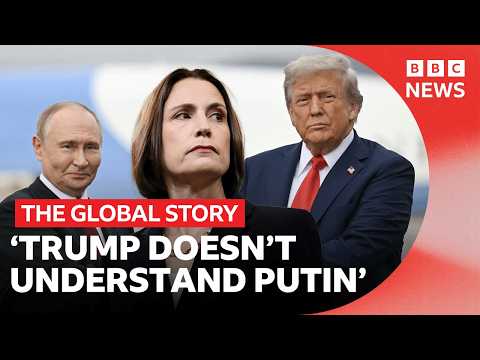
What's going on in the minds of Donald Trump and Vladimir Putin? | The Global Story
Summary
Fiona Hill discusses the intricate dynamics between Donald Trump and Vladimir Putin, particularly in the context of the ongoing war in Ukraine. She emphasizes the challenges of negotiating peace, given the personal ambitions and perceptions of both leaders. Hill's insights reveal the complexities of U.S. policy towards Russia and the historical context of their interactions.
Hill recounts her experiences meeting Putin and the assertive stance he took during significant moments, such as the Munich Security Conference in 2007. She highlights how Putin's confidence grew alongside Russia's economic recovery, leading him to challenge U.S. dominance on the global stage. This shift marked a pivotal moment in U.S.-Russia relations, setting the stage for future conflicts.
In discussing the annexation of Crimea in 2014, Hill reflects on the broader geopolitical implications and the need for a firm U.S. response. She argues that understanding Putin's mindset is crucial for effective diplomacy, advocating for a consistent and clear approach when engaging with him. Hill warns against pandering to Putin, emphasizing the importance of strength in negotiations.
Hill critiques Trump's approach to diplomacy, particularly his lack of preparation and focus on personal rapport with Putin. She notes that Trump's desire for a favorable relationship often overshadows strategic considerations, complicating U.S.-Russia relations. The chaotic Helsinki summit exemplifies the risks of prioritizing personal connections over structured negotiations.
Perspectives
Fiona Hill provides a detailed analysis of U.S.-Russia relations, focusing on the leadership dynamics between Trump and Putin.
Fiona Hill's Perspective
- Highlights the complexities of U.S.-Russia relations
- Critiques Trumps lack of preparation for negotiations
- Emphasizes the need for a firm approach to dealing with Putin
- Warns against viewing the conflict in a vacuum
- Calls for broader European involvement in peace-making efforts
Trump and Putin's Approach
- Prioritize personal relationships over strategic diplomacy
- Engage in negotiations without adequate preparation
- Seek to sideline Ukraine in discussions
- Demonstrate a lack of understanding of each others motivations
- Focus on personal ambitions rather than collective security
Neutral / Shared
- Acknowledge the historical context of U.S.-Russia relations
- Recognize the ongoing complexities of the Ukraine conflict
- Understand the implications of economic factors on political decisions
Metrics
deaths
more than 300 people died people
Chechnya hostage crisis
This tragic event highlights the severity of the conflict and its impact on international relations.
more than 300 people died
economic_growth
the Russian economy is starting to pick up because you have oil prices starting to pick up USD
economic recovery
Rising oil prices contributed to Putin's confidence in challenging U.S. dominance.
the Russian economy is starting to pick up because you have oil prices starting to pick up
military_action
annex Crimea in eastern Ukraine
Putin's military actions
This action marked a significant escalation in Russian aggression.
Putin goes on to annex Crimea in eastern Ukraine.
policy_opposition
opposed arming Ukraine with powerful javelins
Hill's stance on U.S. military support for Ukraine
This opposition reflects concerns about provoking a strong Russian response.
You openly opposed that position at that time.
other
the largest land war in Europe since World War II
current state of the war in Ukraine
This highlights the scale and significance of the conflict in European history.
it's turned out to be the largest land war in Europe since World War II.
Key entities
Timeline highlights
00:00–05:00
Fiona Hill's insights into the interactions between Donald Trump and Vladimir Putin reveal the complexities of U.S. policy on Russia.
- Fiona Hills experience with Trump and Putin offers critical insights into their interactions, shaping U.S. policy on Russia
- Putins first meeting with Hill followed a Chechnya hostage crisis, reflecting the tense atmosphere of his leadership
- During their meeting, Putins hostility highlighted his strategy to assert dominance in international relations
- Hill notes Putins waiting tactic demonstrates his lack of respect for others, part of his narrative control strategy
- Putins 2007 Munich speech marked a shift in Russias foreign policy, challenging U.S. unilateralism
- By 2007, Putins confidence grew as Russias economy recovered, allowing him to challenge U.S. dominance
05:00–10:00
Fiona Hill discusses the complexities of U.S. policy towards Russia, emphasizing the need for a firm approach in engaging with Putin.
- Putins 2007 Munich speech signaled Russias resurgence and warned the U.S. against underestimating its return to power
- Putins annexation of Crimea in 2014 demonstrated his readiness to use military force to assert Russian interests
- Fiona Hill opposed arming Ukraine with javelin missiles, fearing it would provoke a strong Russian military response
- Understanding NATO expansion dynamics is crucial to grasping Putins mindset and potential actions
- Engaging with Putin requires a firm approach; he responds to strength rather than incentives
- Hill joined the Trump administration to influence U.S. policy on Russia after the 2016 election interference
10:00–15:00
Trump's approach to negotiations with Putin is characterized by a lack of preparation, prioritizing personal relationships over strategic discussions. This complicates U.S.-Russian relations and undermines effective diplomacy.
- Trumps lack of preparation for meetings with Putin complicates negotiations, as he prioritizes personal relationships over strategic discussions
15:00–20:00
Fiona Hill highlights the complexities of Trump's relationship with Putin, noting that Trump's trust issues hinder effective communication and strategic diplomacy. The ongoing war in Ukraine complicates Trump's desire for a personal rapport with Putin, as he seeks to sideline Ukraine in negotiations.
- Trumps trust issues limit effective communication, as he only values personal loyalty
- Fiona Hill struggled to influence Trump, who often ignored key advisors like Tillerson and Mattis
- Trumps view of Putin as a peer obscures the complexities of his character and intentions
- The war in Ukraine complicates Trumps desire for a personal relationship with Putin
- Trumps approach sidelines Ukraine, seeing it as an obstacle to his relationship with Putin
- Putin seeks a settlement that effectively cedes Ukraine to him, akin to Belarus
20:00–25:00
A negotiated peace in Ukraine necessitates broader international involvement beyond Trump and Putin, as both leaders fail to grasp the complexities of the conflict. Fiona Hill emphasizes the importance of a collective European effort in peace-making due to vested interests in the issue.
- A negotiated peace in Ukraine requires broader international involvement beyond Trump and Putin, as both leaders overlook the complexities of the conflict
- Fiona Hill stresses the necessity of a collective European effort in peace-making due to vested interests in the issue
- Trumps strategy to exclude Ukraine from negotiations is problematic and fails to grasp Putins motivations
- Putin is determined to gain full control of Ukraine, a reality Trump does not fully understand
- Ukrainians seek a just resolution that ensures protection from future Russian aggression, not just credit for ending the war
- The ongoing conflict demands a nuanced approach that exceeds what Trump and Putin can offer