Politics / United Kingdom
United Kingdom politics page with daily media monitoring across BBC News, The Telegraph, The Economist and The Times, structured summaries of domestic political developments and a country-level press overview.
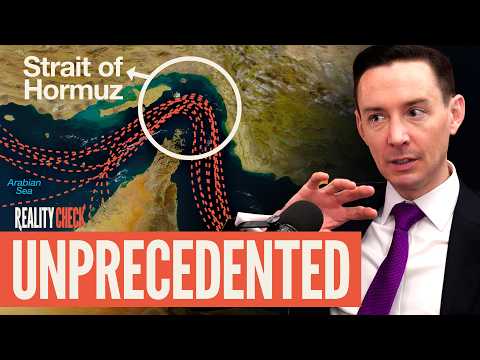
Iran oil crisis could be the worst we've ever seen – former Trump economist Tyler Goodspeed
Summary
Oil prices have surged past $100 per barrel due to the conflict with Iran and the closure of the Strait of Hormuz. This situation raises concerns about potential economic repercussions, as the Strait is crucial for global oil supply. Historical data indicates that energy supply shocks have historically led to economic downturns in both the United States and the United Kingdom.
The UK is heavily reliant on gas imports, which increases its vulnerability to high liquefied natural gas prices. Additionally, petroleum's integral role in everyday products amplifies the economic risks associated with oil price shocks. The reliance on imported liquefied natural gas, which is more expensive than domestic sources, suggests that any geopolitical instability could lead to significant economic repercussions.
The oil crisis is expected to surpass previous tariff debates, drawing attention to oil markets and conflicts in the Middle East. Current oil prices are over $100 per barrel, with potential implications for economic policy and market stability. The assumption that strategic oil reserves can effectively stabilize prices overlooks the complexities of global supply dynamics and geopolitical tensions.
Britain's energy policy is increasingly vulnerable to global shocks, which may delay the Bank of England's inflation target timeline. The government is considering price caps or subsidies, raising concerns about market stability and fiscal sustainability. If the government implements unlimited price caps, it risks repeating past mistakes that alarmed markets and undermined economic stability.
Perspectives
Analysis of the economic implications of the Iran oil crisis.
Proponents of addressing energy vulnerabilities
- Highlight the historical impact of energy supply shocks on economic stability
- Argue for the need to diversify energy sources to mitigate risks
- Emphasize the integral role of petroleum in everyday products and its economic implications
- Warn against the potential consequences of unlimited price caps on market stability
Critics of current energy policies
- Claim that the government has left the UK vulnerable to energy price shocks
- Question the effectiveness of proposed subsidies and price controls
- Doubt the ability of current policies to address underlying economic issues
- Reject the notion that energy price shocks are the sole cause of economic downturns
- Accuse policymakers of misunderstanding the complexities of energy markets
Neutral / Shared
- Acknowledge the historical context of energy price shocks and their economic impacts
- Recognize the challenges of transitioning to a more diverse energy mix
- Note the potential for geopolitical events to disrupt global oil supply
Metrics
price
$100 USD
current price of oil per barrel
High oil prices can lead to increased costs across various sectors.
the price of a barrel of oil has surged past $100
percentage_increase
25%
increase in oil price overnight
A sudden spike in oil prices can trigger economic instability.
A barrel has gone up 25% just overnight alone.
global_supply_percentage
20%
percentage of global oil supply passing through the Strait of Hormuz
Closure of the Strait could lead to significant supply shortages.
this is a straight through which 20% of the world's oil supply passes.
vulnerability
very reliant on gas
UK's energy dependency
This highlights the economic risks tied to energy imports.
you are still very reliant on gas
cost
more expensive
transportation of gas
Higher costs can lead to increased consumer prices.
you need to import it via liquefied natural gas, which is more expensive
energy_intensity
very energy intensive products
products requiring heat
This indicates a broader economic impact from energy price fluctuations.
those are very energy intensive products because they require a lot of heat to produce
price
over $100 a barrel USD
current oil price
High oil prices can lead to increased economic instability and inflation.
we're over $100 a barrel
tariff
implemented tariff shock was quite substantially less
impact of tariffs on trade
Understanding tariff impacts is crucial for assessing trade policy effectiveness.
the implemented tariff shock was quite substantially less than what was initially announced
Key entities
Timeline highlights
00:00–05:00
Oil prices have surged past $100 per barrel due to the conflict with Iran and the closure of the Strait of Hormuz. This situation raises concerns about potential economic repercussions, as the Strait is crucial for global oil supply.
- Oil prices have surged past $100 per barrel due to the conflict with Iran and the closure of the Strait of Hormuz, raising concerns about economic repercussions
- The Strait of Hormuz is vital, carrying 20% of the worlds oil supply; its prolonged closure could lead to unprecedented supply shocks
- Alternative pipelines exist but cannot match the volume of oil typically transported through the Strait, complicating supply further
- Petroleums integration into the economy means elevated prices will impact various sectors, including fuel, clothing, and medical supplies
- Limited substitutes for petroleum, especially heavy fuel oil, could worsen economic challenges if prices remain high
- Britains shift away from fossil fuels has left it vulnerable, questioning the effectiveness of green energy amid crises
05:00–10:00
The UK is heavily reliant on gas imports, which increases its vulnerability to high liquefied natural gas prices. Additionally, petroleum's integral role in everyday products amplifies the economic risks associated with oil price shocks.
- The UK relies on gas imports, increasing vulnerability to high liquefied natural gas prices. Petroleums role in everyday products heightens economic risks from oil price shocks
10:00–15:00
The oil crisis is expected to surpass previous tariff debates, drawing attention to oil markets and conflicts in the Middle East. Current oil prices are over $100 per barrel, with potential implications for economic policy and market stability.
- The oil crisis may surpass previous tariff debates, shifting focus to oil markets and Middle Eastern conflicts
15:00–20:00
Britain's energy policy is increasingly vulnerable to global shocks, which may delay the Bank of England's inflation target timeline. The government is considering price caps or subsidies, raising concerns about market stability and fiscal sustainability.
- Britains energy policy vulnerability risks inflation targets and the cost of living mission
- Ongoing disruptions may delay the Bank of Englands inflation target timeline, exposing energy strategy fragility
- UK politicians underestimate energy vulnerability risks from global shocks, highlighting the need for resilient supply
- Companies must reassess supply unavailability risks due to recent geopolitical events and the pandemic
- UK customers may face delayed impacts of price shocks on energy bills, risking financial strain
- The government considers price caps or subsidies, risking market consequences similar to Trusss mini-budget
20:00–25:00
The closure of the Strait of Hormuz could lead to a recession reminiscent of those experienced in 1973 or 1979, contingent on its duration. This potential disruption raises significant concerns for economic forecasts and stability.
- The closure of the Strait of Hormuz could trigger a recession similar to those in 1973 or 1979, depending on its duration. This disruption poses significant risks to economic forecasts
25:00–30:00
Energy prices have a significant impact on economic stability, as evidenced by the 2008 recession exacerbated by a price shock. The UK has not returned to pre-2008 growth trends, indicating a failure to address underlying economic issues.
- Energy prices critically impact economic stability, as seen in the 2008 recession exacerbated by a price shock
- The UK has failed to return to pre-2008 growth trends, defying historical recovery patterns
- Post-2008 remedies have been ineffective, focusing on economic expansion rather than addressing root causes
- Reforming planning regulations is essential to facilitate construction in the UK
- A return to a sensible regulatory framework is needed to stabilize the financial system and promote growth