Politics / United Kingdom
United Kingdom politics page with daily media monitoring across BBC News, The Telegraph, The Economist and The Times, structured summaries of domestic political developments and a country-level press overview.
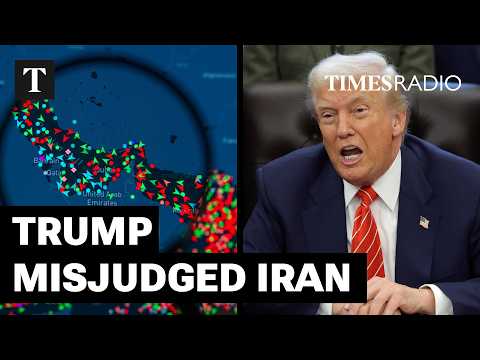
Trump Is Learning 'There Are No Quick Wins With Iran' The Hard Way | Former US Ambassador
Summary
U.S. interests demand that Iran understands it cannot hold the global economy hostage, necessitating extensive negotiations. The current administration has shown a lack of patience for the hard work of diplomacy required in this situation. Recent discussions indicate that while talks may occur, achieving any agreement within a limited timeframe appears unlikely.
President Trump's strategy remains unclear, with historical lessons indicating that quick wins in foreign policy with Iran are unrealistic. The administration's initial assumptions about the conflict's duration and resolution have proven to be overly optimistic, leading to a lack of adequate planning.
Negotiations hinge on the U.S. forming alliances beyond Israel, as reliance on a single ally limits negotiating power. The ongoing conflict has placed significant strain on Gulf States, which face daily threats from Iran, complicating the U.S. position in the region.
The situation demands a painful negotiation process, driven by global economic circumstances and regional partners. Without a clear exit strategy, the U.S. risks allowing Iran to regain leverage in the conflict.
Perspectives
Analysis of U.S. foreign policy regarding Iran and the complexities of negotiations.
U.S. Administration's Position
- Emphasizes the need for long negotiations with Iran to prevent economic hostage situations
- Acknowledges the lack of patience in the current administration for diplomatic efforts
- Recognizes the necessity of forming alliances beyond Israel for effective negotiations
- Identifies the ongoing conflict as a significant strain on Gulf States, complicating U.S. negotiations
- Highlights the unrealistic expectations of a quick resolution to the conflict with Iran
Critique of U.S. Strategy
- Critiques the administrations initial assumptions about the conflicts duration and resolution
- Questions the clarity of President Trumps strategy regarding Iran
- Points out the flawed assumption that effective negotiation can occur without robust regional support
- Notes the painful nature of negotiations required to resolve the conflict
Neutral / Shared
- Mentions the ongoing barrage of attacks on Gulf States as a complicating factor in negotiations
Metrics
other
two to three day days
expected duration of conflict
This reflects a significant miscalculation by the U.S. administration.
the administration apparently went into this war, believing it would be a two to three day four at best effort
other
five days
window for potential talks
This limited timeframe complicates the chances for a meaningful agreement.
talks, which only have a five-day window to take place
other
one ally count
number of allies the U.S. has in the conflict
This indicates a lack of support that could undermine U.S. negotiating power.
the US entered this war with only one ally, Israel
other
a barrage of ballistic missiles and drones every day
the ongoing attacks faced by Gulf States
This constant threat complicates U.S. diplomatic efforts in the region.
a barrage, especially the UAE and Kuwait in second place, a barrage of ballistic missiles and drones every day.
Key entities
Timeline highlights
00:00–05:00
The U.S. administration underestimated the complexity of the conflict with Iran, anticipating a quick resolution that has not materialized.
- The U.S. administration misjudged the conflict with Iran, expecting a swift resolution
- Barbara Leaf stresses that Iran must recognize it cannot disrupt the global economy, requiring a sustained diplomatic effort that the current administration has not yet shown
- While hostilities continue, there are signs that negotiations might happen, but a quick agreement is unlikely due to the lack of direct U.S. communication
- President Trumps political goals are unclear, complicating the situation and obstructing a clear de-escalation strategy
- Irans recent strategy of using its oil exports as leverage represents a notable change, as it has previously threatened such actions without follow-through
- The U.S. entered the conflict with few allies, mainly depending on Israel, which is inadequate for effective negotiations
05:00–10:00
President Trump is facing the reality that quick resolutions in foreign policy, particularly regarding Iran, are unrealistic. The ongoing conflict requires careful negotiations, with significant progress unlikely in the near term.
- President Trump is grappling with the reality that quick resolutions in foreign policy, especially regarding Iran, are unrealistic. This ongoing struggle complicates U.S
- The current conflict necessitates negotiations, but achieving significant progress within a short timeframe seems unlikely, highlighting the complexities of diplomacy in the region
- Gulf States like the UAE and Kuwait are facing increased pressure from daily attacks, straining their relationship with the U.S. These nations are seeking more robust support from America
- The U.S. is confronted with a difficult negotiation process, as there is no clear exit strategy from the ongoing conflict
- Barbara Leaf points out that the U.S. lacks adequate support from regional allies, which is crucial for effective negotiations
- A careful approach is required to prevent Iran from continuing to disrupt the global economy, emphasizing the need for a long-term strategy to address underlying issues