Politics / Turkey
Iran's Geopolitical Situation Post-Hamaney
The geopolitical dynamics involving the USA, Russia, Israel, and the UK are complex and rapidly evolving. Concerns regarding health issues and their relationship to political developments, particularly involving Iran, are increasingly pressing. The discusses the evolving political and economic situation in Iran, highlighting the active role of young people in shaping discourse.
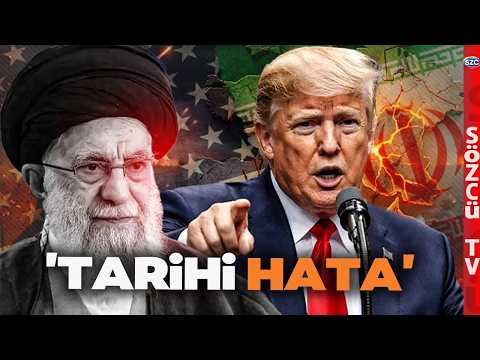
Source material: Hamaney Öldü İran Orta Doğu'yu Ateşe Verdi! Trump'ın Bir Sonraki Hamlesi... Uzman İsim Anlattı
Summary
The geopolitical dynamics involving the USA, Russia, Israel, and the UK are complex and rapidly evolving. Concerns regarding health issues and their relationship to political developments, particularly involving Iran, are increasingly pressing. The discusses the evolving political and economic situation in Iran, highlighting the active role of young people in shaping discourse.
Iran's strategic measures may stem from necessity rather than choice, warning of potential consequences for foreign countries involved. The Iranian populace is increasingly aware of their government's disconnect, with many facing arrests for their actions. Concerns about the government's strategy are growing, as historical parallels suggest a cycle of ineffective governance.
The U.S. aims to control Iran and its energy resources, which is essential for managing international dynamics. The financial burden of military operations, cited as $28,000 per minute, suggests a significant economic strain that could limit U.S. engagement options. Iran's economy is currently facing significant challenges due to ongoing conflicts and external pressures.
There is a concern that prioritizing military expenditures could exacerbate economic instability.
Perspectives
short
Pro-Iranian Perspective
- Highlights the disconnect between the Iranian government and its populace
- Warns of potential consequences for foreign countries involved in Irans strategic decisions
- Argues that Irans actions are influenced by internal dissent and external pressures
Pro-U.S. Perspective
- Claims the U.S. aims to control Iran and its energy resources
- Proposes that military spending is essential despite economic challenges
Neutral / Shared
- Questions the effectiveness of Irans current strategies
- Notes the significant economic strain from military operations
Metrics
arrests
more and more arrested people
number of people arrested for political actions
Increased arrests indicate rising tensions between the government and the populace.
they are getting more and more arrested, they are all arrested.
Key entities
Timeline highlights
00:00–05:00
The geopolitical dynamics involving the USA, Russia, Israel, and the UK are complex and rapidly evolving. Concerns regarding health issues and their relationship to political developments, particularly involving Iran, are increasingly pressing.
- The political dynamics involving the USA, Russia, and their coordination with Israel and the UK suggest a complex geopolitical landscape that is evolving rapidly
- Concerns about the relationship between the current situation and the increase in health cases indicate a pressing need for evaluation and problem-solving
- Irans actions over the last 15 years are questioned, suggesting they will significantly influence future political and economic developments
05:00–10:00
The speaker discusses the evolving political and economic situation in Iran, highlighting the active role of young people in shaping discourse. They suggest that Iran's strategic measures may stem from necessity rather than choice, warning of potential consequences for foreign countries involved.
- The speaker discusses the establishment of a situation in Iran, emphasizing the governments role in shaping the economy and political landscape. They highlight the importance of understanding various political and economic factors in this context
- Young people in Iran are portrayed as active participants in the political discourse, with a desire for discovery and change. Their voices are being heard, indicating a shift in societal dynamics
- The speaker reflects on the strategic measures taken by Iran, suggesting that their tactics may have been forced rather than voluntary. This implies a level of desperation or necessity in their actions
- The speaker warns that foreign countries are in a similar position to Iraq and Iran, hinting at potential consequences if the situation escalates. They emphasize the need for a coherent strategy to navigate these complex geopolitical dynamics
10:00–15:00
The Iranian populace is increasingly aware of their government's disconnect, with many facing arrests for their actions. Concerns about the government's strategy are growing, as historical parallels suggest a cycle of ineffective governance.
- The Iranian people are increasingly aware of their situation, as many are being arrested and targeted by intelligence for their actions. This highlights the disconnect between the government and the populace, where those in power often fail to address the peoples needs
- Concerns are raised about the Iranian governments strategy, perceived as a criminal fantasy. The speaker draws parallels to historical conflicts, suggesting that repeating past mistakes leads to ineffective governance
- The speaker emphasizes a moral motivation crisis within the Iranian government, calling for a change in leadership. The responsibility lies with the government to address ongoing issues and cease aggressive posturing in the region
- The historical context of Irans resistance against foreign influence is crucial for understanding the current geopolitical landscape. Past responses to government actions have shaped the present situation significantly
- The U.S. strategy towards Iran is described as a pressing crisis, with a lack of power within Iranian society posing a significant risk for further instability. If unresolved, the current situation could escalate into a more severe crisis
15:00–20:00
The U.S. aims to control Iran and its energy resources, which is essential for managing international dynamics.
- The U.S. aims to control Iran and its energy resources, which is essential for managing international dynamics. This strategy highlights the geopolitical significance of Irans oil and gas reserves
- The current situation in Iran is dire, with worsening conditions impacting the populace and broader geopolitical stability. Urgent action is needed to address these escalating issues
- The cost of military operations is significant, with a figure of $28,000 per minute indicating the financial burden of ongoing conflicts. This underscores the economic implications of military engagement in the region
- Skepticism surrounds the likelihood of regime change in Iran, as such changes may not align with democratic principles. The focus should be on justice and truth rather than merely altering the regime
- The Iranian government is making significant moves in response to the crisis, indicating a broader strategy to maintain control amid external pressures. These actions reflect the governments attempt to navigate the current geopolitical landscape
20:00–25:00
Iran's economy is currently facing significant challenges due to ongoing conflicts and external pressures. There is a concern that prioritizing military expenditures could exacerbate economic instability.
- The current economic situation in Iran is precarious, struggling under ongoing conflicts and external pressures. The focus should not solely be on military expenditures, as this could further destabilize the economy