Politics / Turkey
Iran's Political Future Post-Hamaney
The death of Iranian leader Ali Hamaney has generated significant media attention and raised concerns about Iran's political future. Analysts indicate that this event may trigger a coup or alter the power dynamics within Iran, amidst ongoing challenges to the regime's policies. Public discontent is growing, suggesting a potential regime change due to dissatisfaction with economic issues.
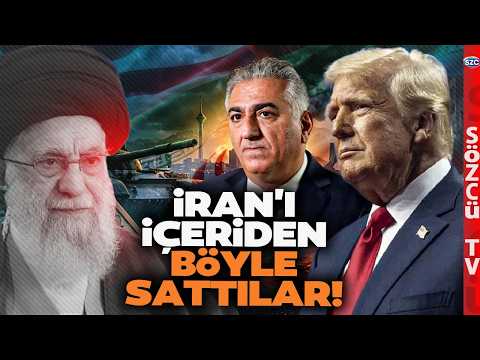
Source material: Hamaney Öldü Rıza Pehlevi Harekete Geçti! Trump'ın Korkunç İran Planı! Aydın Sezer Anlattı
Summary
The death of Iranian leader Ali Hamaney has generated significant media attention and raised concerns about Iran's political future. Analysts indicate that this event may trigger a coup or alter the power dynamics within Iran, amidst ongoing challenges to the regime's policies. Public discontent is growing, suggesting a potential regime change due to dissatisfaction with economic issues.
The Iranian regime's oppressive actions against dissent have led to a belief among citizens that significant change is necessary for the country's future. The current political situation in the Middle East is characterized by instability, affecting not only Israel and Palestine but also extending to Ukraine and Russia. Concerns are rising regarding the U.S. Congress's effectiveness in addressing these geopolitical tensions.
The President of Israel has expressed a readiness to escalate military actions if necessary, reflecting heightened geopolitical tensions. The complexities of relationships between Russia, Turkey, and Israel highlight the challenges of maintaining stability in the region. The political landscape in Iran is shifting, with citizens and the government closely observing potential changes in power dynamics.
There is a growing emphasis on unity among various factions to address internal and external challenges. The Ministry of Defense of Turkey has implemented measures to enhance vigilance among citizens regarding developments in Iran, with significant economic implications. The expectation that citizens will remain passive amidst rising tensions may not hold, as historical patterns suggest a propensity for unrest.
Perspectives
Analysis of Iran's political future and regional dynamics following Hamaney's death.
Pro-Regime Change
- Highlights the potential for a coup following Hamaneys death
- Argues that public discontent is rising due to economic issues
- Claims that unity among factions is necessary for addressing challenges
Pro-Regime Stability
- Denies that Hamaneys death will lead to immediate regime change
- Questions the feasibility of a unified opposition against the regime
Neutral / Shared
- Notes the complexities of geopolitical relationships in the Middle East
- Observes the impact of U.S. Congress on international stability
Metrics
other
Israel has lost its sovereignty in the EU
Israel's relationship with the European Union
This shift could significantly impact regional politics and alliances.
It is said that Israel has lost its sovereignty in the EU.
risk_factors
growing in the past
risk factors affecting the economy
Understanding the growth of risk factors is crucial for economic planning.
there are risk factors, They are growing in the past
Key entities
Timeline highlights
00:00–05:00
The death of Iranian leader Ali Hamaney has generated extensive media attention, particularly from Israeli outlets, and has raised concerns about Iran's political future. Analysts suggest that this event may trigger a coup or alter the power dynamics within Iran, amidst ongoing challenges to the regime's policies.
- The recent death of Iranian leader Ali Hamaney has sparked significant media coverage, particularly from Israeli sources, raising questions about Irans future political landscape. Analysts speculate that this situation could lead to a coup or a shift in power dynamics within the country
- The current regime in Iran faces challenges in its legal and social policies, which may hinder any potential democratic changes. The influence of the United States and Israel is seen as a factor that could destabilize the Iranian regime further
- There are parallels drawn between Irans situation and that of Venezuela, suggesting a sociopolitical movement may emerge in response to the regimes strict policies
05:00–10:00
The death of Iranian leader Ali Hamaney has heightened unrest among the Iranian populace, suggesting a potential regime change due to growing dissatisfaction with economic issues. The Iranian regime's oppressive actions against dissent have led to a belief among citizens that significant change is necessary for the country's future.
- The death of Iranian leader Ali Hamaney has intensified unrest among the Iranian populace, indicating a potential regime change as dissatisfaction with economic issues grows
- The Iranian regimes oppressive actions against dissent have fueled a belief among citizens that significant change is necessary for the countrys future
- There is a perception that the Iranian regime threatens not only its citizens but also neighboring countries, impacting international relations, particularly with the United States and other Muslim nations
- Solidarity among Muslim countries is emphasized as essential to address the challenges posed by the Iranian regime and its policies
- While there are signs that the regimes grip on power may be weakening, uncertainty remains regarding the timeline and nature of any potential regime change
10:00–15:00
The Iranian regime is currently facing significant challenges due to public discontent and accusations from the Iranian President regarding social movements. There is a growing sentiment among the populace that a new common struggle against the regime is necessary, indicating a potential shift towards a more unified opposition.
- The Iranian regime is facing significant challenges, with accusations from the Iranian President regarding social movements and public discontent. There is a growing sentiment among the populace that a new common struggle against the regime is necessary, indicating a potential shift towards a more unified opposition
15:00–20:00
The current political situation in the Middle East is characterized by significant instability, affecting not only Israel and Palestine but also extending to Ukraine and Russia. Concerns are rising regarding the U.S.
- The current political situation in the Middle East is marked by significant instability, with countries like Israel and Palestine facing challenges that could lead to chaos. This instability extends beyond the region, affecting areas such as Ukraine and Russia, indicating a broader geopolitical crisis
- Concerns are rising regarding the U.S. Congresss ability to effectively address these serious issues, which may have far-reaching implications for international relations. The current political climate appears to be the beginning of a larger electoral and political struggle
- The relationship between the European Union and Israel is under scrutiny, as claims suggest Israel has lost some sovereignty within the EU framework. This shift raises questions about the future of EU-Israel relations and its implications for regional politics
- Russias strategic operations concerning Iran are crucial, with recent agreements between Russia and North Korea potentially setting a precedent for similar agreements with Iran. This indicates a possible shift in alliances and military cooperation in the region
20:00–25:00
The political dynamics in the Middle East are influenced by the relationships between Russia, Turkey, and Israel, particularly regarding the Arab world. The complexities of these relationships highlight the challenges of maintaining stability in the region.
- The influence of Russian-speaking Israelis is significant in the context of political and economic dynamics, highlighting challenges faced by the Arab world. This reflects a complex interplay of regional leadership and the strategic operations of Russia concerning Iran
- Turkeys position in the Middle East is complicated by its relationships with Iran and Israel. The desire to maintain stability while navigating these relationships is a critical aspect of Turkeys foreign policy
25:00–30:00
The political landscape in Iran is shifting, with citizens and the government closely observing potential changes in power dynamics. There is a growing emphasis on unity among various factions to address internal and external challenges.
- The situation in Iran is evolving, with potential changes in the regime and speculation about future power dynamics. Citizens and the government are closely monitoring these developments
- The military capabilities of Iran are being assessed in relation to regional conflicts, particularly with the Syrian regime. This strength is viewed as critical in resisting external pressures
- There is a call for cooperation among various factions within Iran to address internal challenges. Unity is emphasized as essential for navigating the complexities of domestic and foreign relations