Politics / Southafrica
Pluralistic review of domestic politics through national press, media commentary and public debate across diverse political perspectives. Topic: Southafrica. Updated briefs and structured summaries from curated sources.
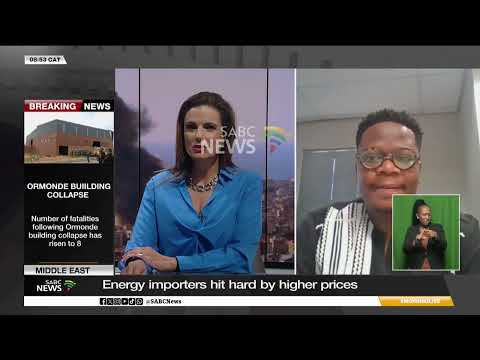
Middle East Conflict | Sifiso Skenjana weighs in on economic implications
Summary
Motorists are facing higher fuel prices due to geopolitical tensions in the Middle East, particularly following attacks on refineries. The Strait of Hormuz is a critical passage for global oil and liquefied natural gas exports, which has significant implications for the economy.
Rising oil prices are expected to increase inflation in South Africa, impacting household expenditure and logistics costs. Geopolitical tensions and disruptions in the Strait of Hormuz exacerbate these economic challenges.
Inflation in South Africa is pressured by rising oil prices, which contribute to about 25% of the variation in inflation. Additionally, challenges such as foot and mouth disease further complicate the food inflation outlook.
The Reserve Bank may need to adjust its monetary policy approach in response to these inflationary pressures and a weakening currency. The economic outlook remains precarious without addressing structural issues in port infrastructure.
Perspectives
Analysis of economic implications from geopolitical tensions.
Proponents of addressing economic impacts
- Highlights rising fuel prices due to geopolitical tensions
- Warns of significant inflationary pressures from rising oil prices
- Argues that the Strait of Hormuz is vital for global oil supply
- Claims that local economic conditions will affect inflation outcomes
Critics of simplistic inflation assumptions
- Questions the direct correlation between oil prices and inflation
- Denies that rising oil prices will uniformly lead to inflation
- Rejects the notion that local economic conditions are irrelevant
- Accuses policymakers of overlooking alternative energy sources
- Challenges the adequacy of current port infrastructure to mitigate inflation
Neutral / Shared
- Notes the historical context of oil price impacts on inflation
- Acknowledges the complexity of global economic interdependencies
- Recognizes the potential for agricultural output to influence prices
Metrics
price_increase
25%
increase in liquefied natural gas prices in the EU
This increase indicates broader economic challenges linked to geopolitical tensions.
we've seen about a 25% hike in prices already going into the EU
oil_flow
20 million barrels
daily oil flow through the Strait of Hormuz
This volume highlights the strategic importance of the Strait for global oil supply.
it's about 20 million barrels going through that straight
other
150 ships units
number of ships stranded due to disruptions
This indicates significant logistical challenges for commodity exports.
I think there are 150 ships that were stranded there.
revenue
$980 billion USD
US military spending
This level of spending could crowd out non-military productivity.
the US, for example, spends about $980 billion just on military spend.
inflation
25%
contribution of oil prices to inflation variation
This highlights the significant influence of oil prices on overall inflation in South Africa.
oil prices contribute to about 25% of variation in our inflation print
Key entities
Timeline highlights
00:00–05:00
Motorists are expected to face higher fuel prices due to geopolitical tensions in the Middle East, particularly following attacks on refineries. The Strait of Hormuz remains a critical passage for global oil and liquefied natural gas exports, with significant implications for the economy.
- Motorists can expect to pay more at the fuel pump this month as prices are set to increase due to rising geopolitical tensions in the Middle East, particularly following attacks on refineries and shipping. The recent disruptions have already led to a 25% increase in liquefied natural gas prices in the EU, indicating broader economic challenges
- The Strait of Hormuz is a critical waterway for global oil and liquefied natural gas exports, with about 20 million barrels passing through it daily. Historical disruptions in this region have shown the significant impact such conflicts can have on global oil supply
- In South Africa, the spike in oil prices is expected to contribute to higher inflation, as oil prices account for 25% of the variation in inflation rates. The local economy faces missed opportunities due to inadequate port infrastructure, limiting benefits from the current geopolitical situation
05:00–10:00
Rising oil prices are expected to significantly increase inflation in South Africa, impacting household expenditure and logistics costs. Geopolitical tensions and disruptions in the Strait of Hormuz are exacerbating these economic challenges.
- Rising oil prices are expected to significantly increase inflation in South Africa, impacting household expenditure and logistics costs. This inflationary pressure is compounded by the current geopolitical tensions and disruptions in the Strait of Hormuz
- About 150 ships are stranded due to disruptions in the Strait of Hormuz, leading to increased costs for commodities. The withdrawal of large insurers following recent attacks has also raised insurance risk premiums
- The lack of investment in port infrastructure has resulted in missed revenue opportunities for South Africa, limiting the ability to reroute ships effectively. This situation exacerbates the economic challenges amid rising global oil prices
- Geopolitical tensions historically have had lasting inflationary impacts, raising concerns about the sustainability of current economic growth forecasts. Supply chain constraints may necessitate downward revisions of these forecasts
- Increased military spending, particularly by the US, could crowd out non-military productivity and dampen long-term growth prospects. This trend is concerning given the rising military expenditures in the region
- The Reserve Bank may struggle to reduce interest rates further due to inflationary pressures and global market conditions. The weakening of the rand and risk-off sentiment for emerging markets could lead to further currency depreciation
10:00–15:00
Rising oil prices contribute to about 25% of the variation in South Africa's inflation, indicating upward pressure on inflation expectations. The Reserve Bank may need to adjust its approach in response to geopolitical tensions and a weakening currency.
- Rising oil prices contribute to about 25% of the variation in South Africas inflation, indicating upward pressure on inflation expectations. The Reserve Bank may need to adjust its approach in response to geopolitical tensions and the potential rebalancing of social order. Additionally, the weakening currency adds further pressure to inflation, potentially leading to a more aggressive monetary policy response