Politics / Russia
Boris Grebenshchikov: Citizenship and Artistic Freedom
Boris Grebenshchikov discusses his recent acquisition of British citizenship and its implications for his life and music career. He emphasizes the importance of individual freedom and the right to choose one's place of residence without external dictation. Grebenshchikov expresses a lack of nostalgia for the Soviet era, focusing instead on living in the present and appreciating current experiences.
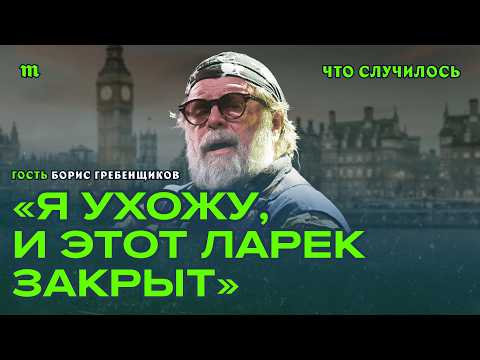
Source material: Boris Grebenshchikov on Changing Citizenship, Politics, and the Meaning of Life
Summary
Boris Grebenshchikov discusses his recent acquisition of British citizenship and its implications for his life and music career. He emphasizes the importance of individual freedom and the right to choose one's place of residence without external dictation. Grebenshchikov expresses a lack of nostalgia for the Soviet era, focusing instead on living in the present and appreciating current experiences.
He reflects on the vibrant music scene in London, noting how it enhances his creativity and connects him with fellow musicians. Grebenshchikov highlights the challenges faced by artists in Russia, particularly after 2022, and the importance of spontaneous performances to engage with audiences.
The musician critiques the increasing restrictions on artistic expression in Russia, drawing parallels between the current political climate and the Soviet era. He stresses the need for public acknowledgment of past injustices to foster genuine change.
Grebenshchikov shares his thoughts on the organic nature of songwriting, advocating for living in the moment and giving rather than accumulating. He believes that true fulfillment comes from sharing experiences and maintaining openness to new information.
Perspectives
Support for Individual Freedom
- Emphasizes the right to live freely without external dictation
- Critiques the increasing restrictions on artistic expression in Russia
Challenges of Political Expression
- Discusses the psychological implications of supporting war
- Highlights the complexities of navigating artistic integrity amidst censorship
Neutral / Shared
- Reflects on the organic nature of songwriting and the importance of living in the present
- Acknowledges the challenges faced by artists in Russia post-2022
Metrics
72 years
Boris Grebenshchikov's age
His age provides context for his long career and perspective on music
At the end of the year, guys, I'm 72.
more than 60 years
Duration of his music career
This highlights his extensive experience in the music industry
There are more than 60 of them.
Key entities
Timeline highlights
00:00–05:00
Boris Grebenshchikov has acquired British citizenship after a lengthy process of over ten years. He emphasizes the importance of individual freedom and expresses a lack of nostalgia for the Soviet era.
- Boris Grebenshchikov emphasizes the importance of individual freedom, arguing that no one should dictate how a person should live or where they should reside
- He identifies more as post-Soviet rather than Soviet or Russian, suggesting that his personal experiences and relationships shape his worldview
- Grebenshchikov has a deep connection to Britain, which began in 1988, influenced by its music and cultural heritage
- He describes the lengthy process of acquiring British citizenship, which took over ten years, marking it as a significant milestone in his life
- The musician expresses a lack of nostalgia for the Soviet era, focusing instead on living in the present and appreciating current experiences
05:00–10:00
Boris Grebenshchikov discusses the impact of his British citizenship on his music career, emphasizing the creative environment in London. He reflects on the evolution of music and the importance of community in artistic expression.
- Boris Grebenshchikov considers London an ideal location for his music career due to the abundance of fellow musicians and resources that enhance his creativity
- He notes that while music can be created anywhere, the unique soulful climate of a location significantly influences the quality of artistic work
- Grebenshchikovs passion for sharing music led to the establishment of his radio show Aerosat over 20 years ago, fostering connections with audiences through his musical explorations
- He highlights generational shifts in music preferences, acknowledging that while his influences are rooted in the 1960s, the fundamental structure of songs has remained consistent over centuries
- The musician expresses enthusiasm for discovering new artists, such as an Irish duo he recently found, underscoring the continuous evolution of music and its influence on his work
10:00–15:00
Boris Grebenshchikov discusses the cultural differences he experiences in London and the challenges of performing in Russia post-2022. He emphasizes the importance of connecting with his audience through spontaneous street performances.
- Boris Grebenshchikov shares his experiences of cultural differences in London, particularly appreciating the friendliness of locals who respond with smiles
- He discusses the challenges of performing in Russia after 2022, noting that his audience largely remains the same, consisting of dedicated fans from his past
- Grebenshchikov emphasizes the value of spontaneous street performances, which he aims to include in his tours to connect with fans more personally
- Despite logistical challenges in different cities, he is committed to engaging with his audience in meaningful ways, regardless of location
15:00–20:00
Boris Grebenshchikov discusses the significance of his British citizenship and its impact on his music career. He emphasizes the importance of personal freedom and the right to live without confinement.
- Boris Grebenshchikov values the appreciation of his music over personal fame, expressing indifference towards his own recognition
- He has no regrets about leaving Russia, believing in the fundamental right to live freely without confinement
- Grebenshchikov critiques the notion of silence in oppressive environments, equating it to self-imprisonment and a loss of personal freedom
- He shares a childhood reading experience that shaped his belief in the importance of a broad worldview and the rejection of confinement
- The musician acknowledges the challenges faced by artists in Russia, contrasting his situation with those who choose to stay, like another artist, while asserting that his choice was essential for his integrity
20:00–25:00
Boris Grebenshchikov discusses the continuity of repression in Russia, drawing parallels between the current political climate and the Soviet era. He emphasizes the need for public acknowledgment of past injustices for genuine change to occur.
- Boris Grebenshchikov observes that the current political climate in Russia mirrors the repressive atmosphere of the Soviet era, where dissent was harshly punished
- He believes that the fundamental essence of Russia has not changed since the Soviet Union, as societal issues and attitudes remain consistent among the people
- Grebenshchikov stresses the significance of freedom of expression, arguing that a government that suppresses literacy views an educated populace as a threat
- He contrasts his experiences in the 1980s with todays environment, noting that while he faced challenges, he was never imprisoned, suggesting a worsening of repression now
- The musician asserts that genuine change in Russia would necessitate a public acknowledgment of past injustices by its leaders, which he feels is currently lacking
25:00–30:00
Boris Grebenshchikov reflects on the liberation he felt after losing his job, allowing him to embrace his true self. He critiques the increasing restrictions on street musicians in Russia, highlighting the absurdity of banning public performances.
- Boris Grebenshchikov describes the sense of liberation he experienced after losing his job, viewing it as a chance to embrace his true self without external obligations
- He highlights the increasing restrictions on street musicians in Russia, pointing out the absurdity of banning public performances and music
- Grebenshchikov expresses doubt about the authenticity of some contemporary Russian musicians, particularly those who adopt a negative identity, which he believes is detrimental
- He shares his disappointment with recent music, noting that he seldom finds anything that excites him, a sentiment shaped by his long career in the industry
- The discussion includes his thoughts on artists like Yulia Chicherina, whom he finds intriguing despite not fully aligning with their artistic choices