Politics / Poland
Pluralistic review of domestic politics through national press, media commentary and public debate across diverse political perspectives. Topic: Poland. Updated briefs and structured summaries from curated sources.
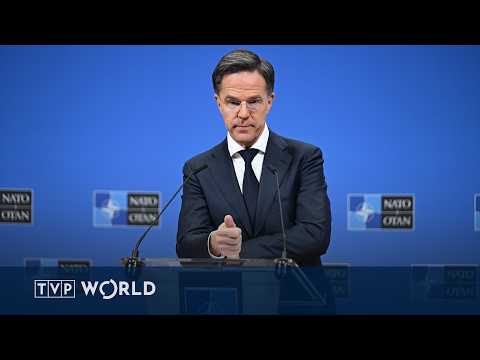
Tension at NATO HQ: Mark Rutte addresses U.S.–Iran controversy | Midday Report
Summary
Mark Rutte presented NATO's annual report, emphasizing the alliance's commitment to preventing Iran from acquiring nuclear capabilities. He addressed European allies' skepticism regarding U.S. military operations in the Middle East, particularly in light of recent comments from U.S. President Donald Trump.
The report highlighted the ongoing tensions surrounding U.S.–Iran relations, with Rutte reaffirming NATO's dedication to regional security. He acknowledged the lack of consensus among European nations regarding their involvement in U.S. operations, particularly concerning the Strait of Hormuz.
Ukrainian President Zelensky's remarks on U.S. pressure regarding the Donbass region underscored the complexities of NATO's security guarantees. The alliance remains committed to supporting Ukraine amid ongoing peace negotiations and regional security threats.
The UK's Prime Minister authorized British forces to independently seize Russian shadow fleet vessels, marking a significant shift in military strategy. This decision reflects a growing urgency to counter Russian aggression and maintain pressure on Moscow.
Perspectives
short
NATO Supporters
- Reaffirms commitment to preventing Irans nuclear capabilities
- Acknowledges European allies skepticism about U.S. military operations
- Commits to supporting Ukraine amid ongoing security threats
- Authorizes UK forces to independently act against Russian aggression
Critics of NATO's Approach
- Questions the effectiveness of NATOs collective defense strategy
- Highlights the lack of consensus among European allies
- Critiques the reliance on military superiority in resolving conflicts
- Raises concerns about the economic impact of military actions
Neutral / Shared
- Notes the ongoing tensions in U.S.–Iran relations
- Observes the impact of the closure of the Strait of Hormuz on global oil markets
- Mentions the significance of the World Cup qualification playoffs for Poland
Metrics
commitment
ensuring that Iran never obtains neither nuclear capabilities nor ballistic missiles
NATO's commitment to regional security
This commitment is crucial for maintaining stability in the Middle East.
the NATO Alliance is committed to ensuring that Iran never obtains neither nuclear capabilities nor ballistic missiles
pressure
the US is continuing to pressure, key of inter-given up the Donbass region
U.S. pressure on Ukraine regarding territorial concessions
This pressure could significantly impact Ukraine's sovereignty and security.
the US is continuing to pressure, key of inter-given up the Donbass region
votes
417 votes units
European Parliament voting on the EU-US trade deal
This indicates significant support for the trade deal despite opposition.
the bulk of those voting against were political allies of the US President Donald Trump
votes
154 against units
European Parliament voting on the EU-US trade deal
This shows the level of dissent within the European Parliament regarding the trade deal.
passing by 417 votes and 154 against
tariffs
up to 50 percent %
tariffs imposed by the US since the deal was signed
High tariffs could jeopardize the trade deal's success and EU-US relations.
some up to 50 percent since the deal was signed back in July
state_of_emergency
state of emergency
Philippines declared a state of emergency due to energy crisis
This indicates severe economic distress and government intervention.
the government there declared a state of emergency
fuel_shortage
90% of it from the Middle East
India's reliance on LPG from the Middle East
This highlights vulnerability to geopolitical tensions affecting energy supply.
India gets 90% of it from the Middle East
energy_consumption
set air conditioning to 26-27 degrees Celsius
Thailand's measures to reduce energy consumption
This reflects governmental efforts to mitigate energy shortages amid crisis.
government officials have been ordered to set air conditioning to 26-27 degrees Celsius
Key entities
Timeline highlights
00:00–05:00
Mark Rutte's annual report highlighted NATO's commitment to preventing Iran from acquiring nuclear capabilities and addressed European allies' skepticism regarding U.S. military operations.
- Mark Rutte faced backlash for his comments on U.S.–Iran relations during his annual report, raising concerns about NATOs unity and its approach to Middle Eastern issues
- Rutte reaffirmed NATOs dedication to preventing Iran from developing nuclear weapons and ballistic missiles, which is essential for regional stability and addressing European allies doubts about U.S. intentions
- The Secretary General noted a communication gap from the U.S. on military operations, which has led to uncertainty among European allies
- Ukraines situation is a key focus for NATO, particularly with President Zelenskys worries about U.S. pressure for territorial concessions in exchange for security guarantees
- Ruttes report detailed NATOs strategies for countering regional security threats, particularly in light of Russias military activities, which are critical for strengthening NATOs collective defense
- The Joint Expeditionary Force summit in Helsinki is designed to improve rapid response capabilities among Northern European allies, addressing security in the Baltic and Arctic regions while supporting Ukraine
05:00–10:00
The UK's Prime Minister has authorized British forces to independently seize Russian shadow fleet vessels, marking a significant shift in military strategy. Ukrainian President Zelensky emphasized the need to maintain pressure on Russia, linking their aggression to oil and gas revenue.
- The UKs Prime Minister has authorized British forces to independently seize Russian shadow fleet vessels, marking a significant shift in military strategy that allows for action without broader NATO consensus
- Ukrainian President Vladimir Zelensky, speaking via video link, stressed the importance of maintaining pressure on Russia, linking their military aggression to revenue from oil and gas
- Canada is considering joining the Joint Expeditionary Force, indicating a growing interest in collaborative defense efforts against regional threats
- A Dutch official acknowledged Polands increasing military significance within NATO and the EU, highlighting its evolving role in European security
- The European Parliament is voting on the EU-US trade deal, facing significant opposition from far-right parties aligned with President Trump, which could impact transatlantic relations
- Iran is reportedly weighing a US peace proposal while publicly denying ongoing negotiations, complicating diplomatic efforts in a volatile political landscape
10:00–15:00
Israel's actions against an Iranian naval commander are heightening tensions in the Middle East, with ongoing military confrontations. The closure of the Strait of Hormuz is causing significant economic disruptions, particularly in Asia, as countries grapple with energy shortages.
- Israels targeting of an Iranian naval commander is escalating tensions in the Middle East, highlighting the regions fragile security and the risk of further military confrontations
- The U.S. is considering options to end the war in Iran, but the Iranian government remains resolute in its position
- The closure of the Strait of Hormuz is disrupting oil exports, leading to states of emergency in countries like the Philippines due to the economic fallout
- India is experiencing public unrest over fuel shortages, with citizens frustrated by long lines at gas stations amid a critical lack of liquefied petroleum gas
- Countries are reducing energy consumption in response to the crisis, with Thailand implementing measures to limit air conditioning use as geopolitical tensions persist
- Polands national football team faces a pivotal match against Albania, with their World Cup aspirations dependent on the games outcome
15:00–20:00
The World Cup qualification playoffs will feature 16 teams competing in single-leg knockout matches. The outcomes are critical for teams like Poland, which faces elimination if they lose their next match.
- The World Cup qualification playoffs will commence with 16 teams in single-leg knockout matches, increasing the stakes for each team involved
- The playoffs begin tonight, with finals set for March 31st, making the outcomes critical for teams seeking World Cup entry
- Polands national team faces immense pressure to win their next match, as a loss would eliminate their chances of qualifying for the World Cup
- The Polish coach has labeled the upcoming game as the most important of his career, underscoring the teams determination and focus
- With several European teams already qualified, the competition for the remaining World Cup spots is intense, showcasing the skill of the participating teams
- Fans are optimistic about the Polish national teams chances in the playoffs, reflecting the deep passion for football within the country