Politics / Poland
Fico's Moscow Trip Challenges
Robert Fico, the Prime Minister of Slovakia, faces significant challenges in attending the Victory Day celebrations in Moscow, largely dependent on Poland's airspace decision. His pro-Russian stance contrasts with leaders like Viktor Orban, who have distanced themselves from Putin, highlighting the political risks associated with such affiliations.
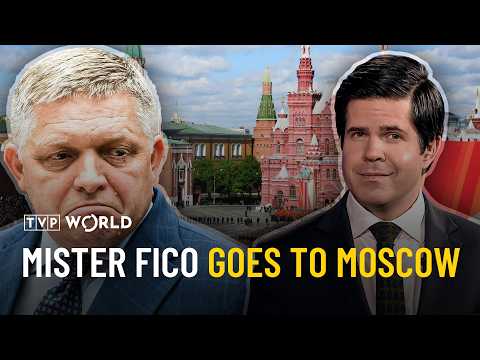
Source material: Fico’s Victory Day trip to Moscow hangs on Poland’s decision | Break the Fake
Summary
Robert Fico, the Prime Minister of Slovakia, faces significant challenges in attending the Victory Day celebrations in Moscow, largely dependent on Poland's airspace decision. His pro-Russian stance contrasts with leaders like Viktor Orban, who have distanced themselves from Putin, highlighting the political risks associated with such affiliations.
The situation illustrates Fico's difficult position as he balances pro-Russian sentiments against the broader European opposition to Kremlin actions. In related developments, Russia is reportedly conducting military training for Ukrainian teenagers in occupied territories, indicating ongoing militarization efforts.
The incorporation of AI-based simulators in these training programs signals a troubling trend in modern warfare, preparing youth for combat with advanced technology. The Kremlin's educational initiatives aim to erase the identity of a generation by promoting military service as inevitable.
Russia is enhancing its global propaganda efforts, particularly in the Global South, by training journalists and media professionals in Moscow on AI-driven narrative generation. This dual emphasis on youth militarization and media manipulation reflects Russia's broader strategy to exert influence and control over both neighboring countries and distant allies.
Perspectives
short
Pro-Russian Stance
- Ficos persistence in wanting to attend the Victory Day celebrations highlights his pro-Russian alignment
- Ficos strategy relies on Polands cooperation for airspace access, indicating a significant political gamble
European Opposition
- European leaders, including Orban, have distanced themselves from Putin, reflecting broader opposition to Kremlin actions
Neutral / Shared
- Russias militarization of youth in occupied territories raises concerns about future combat readiness
- Kremlins use of AI in propaganda efforts aims to enhance the credibility of its narratives through local voices
Key entities
Timeline highlights
00:00–05:00
Robert Fico's planned trip to Moscow for Victory Day is heavily reliant on Poland's decision regarding airspace access. The situation underscores the political complexities surrounding Fico's pro-Russian stance amidst broader European opposition.
- Slovakian Prime Minister Robert Fico faces significant challenges in attending the Victory Day celebrations in Moscow, largely dependent on Polands airspace decision
- Ficos pro-Russian stance contrasts with leaders like Viktor Orban, who have distanced themselves from Putin, highlighting the political risks associated with such affiliations
- The situation illustrates Ficos difficult position as he balances pro-Russian sentiments against the broader European opposition to Kremlin actions
- In related developments, Russia is reportedly conducting military training for Ukrainian teenagers in occupied territories, indicating ongoing militarization efforts
- The incorporation of AI-based simulators in these training programs signals a troubling trend in modern warfare, preparing youth for combat with advanced technology
05:00–10:00
Robert Fico's planned trip to Moscow for Victory Day is contingent on Poland's decision regarding airspace access. This situation highlights the political complexities surrounding Fico's pro-Russian stance amidst broader European opposition.
- The Kremlin is implementing educational programs in occupied Ukrainian territories aimed at militarizing youth, focusing on tactical medicine and weapon handling to prepare them for future combat roles
- This strategy seeks to erase the identity of a generation by promoting the idea that military service is unavoidable, with the intention of creating a new cohort of soldiers by adulthood
- Russia is also enhancing its global propaganda efforts, particularly in the Global South, by training journalists and media professionals in Moscow on AI-driven narrative generation
- The Kremlins approach includes utilizing local voices to spread pro-Russian narratives, thereby increasing the credibility of its propaganda through familiar cultural contexts
- This dual emphasis on youth militarization and media manipulation reflects Russias broader strategy to exert influence and control over both neighboring countries and distant allies