Politics / Poland
Pluralistic review of domestic politics through national press, media commentary and public debate across diverse political perspectives. Topic: Poland. Updated briefs and structured summaries from curated sources.
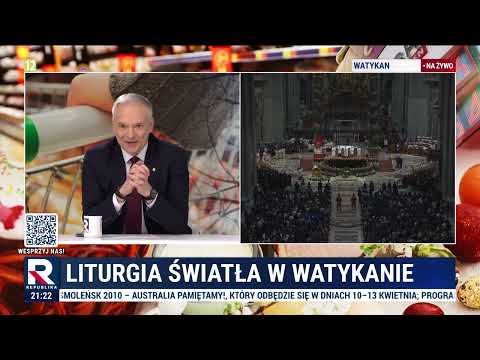
Premier Tusk w prezencie na Wielkanoc podniósł ceny paliw | Rykowski | Republika Wieczór
Summary
The Easter Vigil is a significant event that celebrates the resurrection of Christ, drawing many pilgrims to the Vatican. This year's ceremony is particularly meaningful as it coincides with the anniversary of Christ's crucifixion, prompting deeper reflection among attendees. The event emphasizes the communal aspect of faith, although it may overlook the diversity within Christianity.
Easter encourages reflection on its spiritual significance and the theme of rebirth, resonating with humanity's desire for renewal. This period is important not only for Christians but also aligns with various springtime celebrations across cultures, emphasizing a universal message of hope. However, the assertion that Easter's significance is universally understood overlooks the diverse interpretations of renewal across different cultures and religions.
The political landscape in Poland is increasingly influenced by right-wing movements, raising concerns about the erosion of democratic values. Recent political shifts and anti-Catholic sentiments indicate a growing secularization and challenges to the Church's influence in public life. The Catholic Church has historically been a symbol of resistance against communism in Poland, shaping national identity.
The ongoing scandal involving the Civic Coalition reveals significant vulnerabilities within the coalition, threatening their public image and electoral prospects. The failure to manage the scandal suggests a deeper systemic issue, where the mechanisms of accountability are compromised. Recent revelations of multiple pedophilia cases within the Civic Coalition raise serious concerns about the party's moral integrity.
Perspectives
short
Supporters of the Church and Traditional Values
- Emphasizes the significance of the Easter Vigil as a unifying event for Christians
- Highlights the historical role of the Church in resisting communism in Poland
- Argues that Easter symbolizes hope and renewal for all humanity
Critics of the Church and Political Establishment
- Questions the Churchs relevance in modern society amid rising secularization
- Critiques the Churchs handling of scandals, particularly regarding pedophilia
- Challenges the assumption that all Christian denominations share core beliefs
Neutral / Shared
- Acknowledges the diverse interpretations of Easter across cultures
- Recognizes the complexities of individual belief systems within Christianity
Metrics
other
the most important day in history of church
significance of Good Friday and Easter
This highlights the centrality of these events in Christian belief.
this is the most important, the most important day in history of church
other
anti-Catholic country
challenges faced by Christians in Western Europe
This indicates the societal pressures on religious practices.
I have the impression that there are just the authorities there, anti-Christian, anti-Catholic
other
materialism in the nation is much more fascinating
reaction against materialism
This suggests a search for deeper spiritual connections.
the materialism in the nation is much more fascinating
other
30-40%
percentage of people who still identify as Catholic
This indicates a significant decline in religious affiliation in Poland.
30-40% is not finished.
other
the delivery is really huge
referring to the scale of deliveries by companies
This indicates significant economic activity that could influence political dynamics.
the delivery is really huge
Key entities
Timeline highlights
00:00–05:00
The Easter Vigil is a significant event that celebrates the resurrection of Christ, drawing many pilgrims to the Vatican. This year's ceremony is particularly meaningful as it coincides with the anniversary of Christ's crucifixion, prompting deeper reflection among attendees.
- The Easter Vigil is a key event that embodies joy and anticipation, highlighting the resurrection of Christ as a cornerstone of Christianity
- A live report from the Vatican showcases the large number of pilgrims participating in the Easter liturgy, emphasizing the communal aspect of this significant religious celebration
- The ceremony features various liturgical elements, including the proclamation of light and scripture readings, which reflect the history of salvation and enhance the events spiritual importance
- This years Easter Vigil is especially poignant as it aligns with the anniversary of Christs crucifixion, prompting deeper reflection during Holy Week
- A recent incident involving a burning cross in Warsaw has ignited discussions about the treatment of religious symbols, raising concerns for religious communities in Poland
- The segment calls for unity among Christians globally during this sacred season, suggesting that shared faith can bridge political divides and foster collective celebration
05:00–10:00
Easter is a time that encourages reflection on its spiritual significance and the theme of rebirth, resonating with humanity's desire for renewal. This period is important not only for Christians but also aligns with various springtime celebrations across cultures, emphasizing a universal message of hope.
- Easter is regarded as a profound mystery, encouraging deeper reflection on its spiritual significance and fostering a connection to the holidays essence
- The theme of rebirth during Easter resonates with humanitys enduring desire for renewal, inspiring personal growth and understanding during this sacred time
- Easter marks a significant shift in human thought, transitioning from ancient sacrifice practices to a narrative centered on self-giving love and redemption
- The Easter season holds importance not only for Christians but also coincides with various springtime celebrations across cultures, highlighting a universal theme of hope and renewal
- Hope is a central message of Easter, promising life beyond death, particularly in the context of Christian teachings on resurrection and eternal life
- Engaging with the complexities of Catholicism during Easter can be challenging yet rewarding, deepening ones faith and understanding of the religious experience
10:00–15:00
Easter is a central tenet of Christianity, emphasizing the belief in resurrection as a source of hope. Despite historical divisions, various Christian denominations share core beliefs and commit to celebrating Easter ecumenically.
- Easter is a fundamental aspect of Christianity, with the belief in resurrection being essential for faith and offering hope to believers
- Many find it easier to accept Jesus life and teachings, but the resurrection presents a significant challenge, reflecting the complexities of religious belief
- Despite historical divisions, different Christian denominations share core beliefs, emphasizing a common foundation of faith
- One participant humorously identifies as a Catholic influenced by Lutheran traditions, showcasing the blending of practices within Christianity
- Good Friday is highlighted as a crucial moment in the salvation narrative, marking Christs sacrifice and its importance for understanding Easter
- The group commits to celebrating Easter ecumenically, despite differing calendars, promoting inclusivity and unity among Christian communities
15:00–20:00
The significance of Good Friday and Easter is highlighted as pivotal moments in both church and human history, emphasizing their importance in the Christian faith. There is a growing trend of laypeople discussing religious observances, which allows for broader perspectives on these significant days.
- The significance of Good Friday and Easter is emphasized as pivotal moments in both church history and human history. This connection underlines the importance of these events in the Christian faith
- The speaker reflects on the unity felt with fellow Christians despite not being in full communion with the Catholic Church. This sense of unity is crucial for fostering ecumenical relationships among different Christian denominations
- There is a growing trend of laypeople discussing religious observances, which is seen as a positive shift. This allows for a broader perspective on how these significant days are experienced outside of clerical viewpoints
- The challenges faced by Christians in Western Europe are highlighted, particularly in countries perceived as anti-Catholic. This situation contrasts with the experiences of Polish Catholics, who are actively engaging in traditional religious practices
- The speaker suggests that the rise in participation in demanding religious observances may stem from a reaction against materialism. As people feel spiritually starved by a capitalist society, they seek deeper connections through their faith
- The impact of liberalism on religious affiliation in Poland is noted, with some individuals feeling disconnected from Catholicism yet remaining within its fold. This dynamic indicates a potential shift in how faith is practiced and understood in contemporary society
20:00–25:00
Historically Catholic countries like Spain are experiencing rapid de-Christianization, raising concerns about the loss of cultural and religious values in Europe. Poland, in contrast, has shown resilience against these trends, emphasizing the need to uphold Christian values as part of its identity.
- Historically Catholic countries like Spain are experiencing rapid de-Christianization, raising concerns about the loss of cultural and religious values in Europe
- The decline of Catholic influence in Spain is linked to past political regimes and societal changes, highlighting the need to understand these dynamics to address contemporary challenges for Christianity
- Poland has shown resilience against de-Christianization efforts, particularly in defending the legacy of Pope John Paul II, marking a significant cultural achievement
- A cultural war is underway in Europe, with traditional values increasingly threatened by liberal ideologies, emphasizing the need to preserve Christian values as part of European identity
- Poland is perceived to be lagging behind other European nations in cultural secularization, which may offer a chance to maintain its Christian heritage amid rising liberal pressures
- There is a strong emphasis on the necessity of actively upholding Christian values in response to societal changes, crucial for Polands role as a stronghold of faith
25:00–30:00
The Catholic Church has historically been a symbol of resistance against communism in Poland, shaping national identity. Recent political shifts and anti-Catholic sentiments indicate a growing secularization and challenges to the Church's influence in public life.
- The Catholic Church has historically served as a symbol of resistance against communist rule in Poland, reinforcing national identity and values
- The loss of Pope John Paul II has created a spiritual leadership gap, complicating Polands efforts to maintain its Catholic identity in a secularizing environment
- Political leaders from the Civic Coalition are increasingly expressing anti-Catholic views, reflecting a growing hostility towards religious symbols in Polish society
- Recent church attacks during protests reveal a rising anti-Christian sentiment, questioning the motivations behind targeting these cultural symbols
- A decline in religious oaths among politicians indicates a shift towards viewing faith as a private matter, distancing it from public life
- Despite ongoing challenges, the Church has persisted for over two thousand years, highlighting the global struggle Christians face in defending their beliefs