Politics / Poland
Hungary's Political Landscape and EU Relations
The recent parliamentary elections in Hungary saw a significant voter turnout, with the ruling party claiming victory. The new government aims to address socio-economic issues and represent all Hungarians, particularly those feeling overlooked. However, the reliance on state institutions for party purposes raises questions about the legitimacy of this mandate.
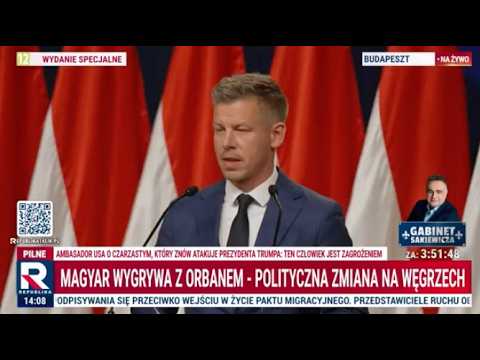
Source material: MAGYAR JAK TUSK?! Wspierany przez Brukselę obiecuje powrót środków z Unii Europejskiej!
Summary
The recent parliamentary elections in Hungary saw a significant voter turnout, with the ruling party claiming victory. The new government aims to address socio-economic issues and represent all Hungarians, particularly those feeling overlooked. However, the reliance on state institutions for party purposes raises questions about the legitimacy of this mandate.
The government emphasizes its commitment to the European Union, asserting that Hungary will fight for its interests within the EU framework. Plans to negotiate for essential funding are highlighted as crucial for economic stability. Yet, the claim of unified representation for all Hungarians may overlook dissenting voices.
The current administration seeks to distance Hungary from the ongoing war in Ukraine, promoting peace and stability as national priorities. The assertion that the Hungarian people desire peace assumes a consensus that may not exist, potentially ignoring varying perspectives within the population.
Direct engagement with citizens is emphasized as a means to restore trust in governance. Criticism is directed at previous leadership for prioritizing external influences over local needs, advocating for a more inclusive governance model. However, the assumption of uniform public interest may overlook dissenting opinions.
Perspectives
short
Hungarian Government
- Claims victory in recent elections with high voter turnout
- Aims to address socio-economic issues and represent all Hungarians
- Emphasizes commitment to the EU and plans to negotiate for funding
- Seeks to distance Hungary from the war in Ukraine, promoting peace
- Highlights direct engagement with citizens to restore trust in governance
- Advocates for a stronger collective European voice within the EU
Critics of the Government
- Questions the legitimacy of the governments mandate due to reliance on state institutions
- Argues that the claim of unified representation overlooks dissenting voices
- Challenges the assumption that the Hungarian people uniformly desire peace
- Critiques the previous leadership for prioritizing external influences over local needs
- Points out potential dissent among EU member states regarding integration priorities
Neutral / Shared
- Acknowledges the challenges of achieving consensus within the EU
- Recognizes the importance of supporting new member states for European unity
Metrics
voter_turnout
80%
percentage of Hungarians who cast their votes
A high turnout indicates strong public engagement and support for the electoral process.
80% of the Hungarians, cast their votes
funding
8,000 billion EUR
essential for the Hungarian economy
This funding is crucial for maintaining economic operations.
we will be able to bring home the 8,000 billion, far from 20 billion euros without which the Hungarian economy cannot work.
volunteers
50,000 units
number of volunteers involved in the political shift
This indicates significant civic engagement in shaping Hungary's future.
the number of volunteers in the Hungarian people is 50,000
visits
700 towns units
number of towns visited by the speaker
This indicates a significant effort to connect with citizens across the country.
I visited 700 towns at the time of the Liberation of the Liberation.
steps
one million steps units
number of steps taken during outreach
This reflects a commitment to physically engage with the populace.
We did one million steps on foot, going through the smallest villages in Hungary.
Key entities
Timeline highlights
00:00–05:00
The ruling party in Hungary has claimed victory in the recent parliamentary elections, with a voter turnout of 80%. The new government aims to address socio-economic issues and represent all Hungarians, particularly those feeling overlooked.
- The ruling party in Hungary has declared victory in the recent parliamentary elections, prompting concerns about the communication strategies used and the necessity for safeguards against such tactics
- Peter-Madiar, the prospective Prime Minister, highlighted the need to tackle propaganda in politics, suggesting that a strategic approach is essential for ensuring transparency
- With 80% voter turnout, there is a strong mandate for change, reflecting a unified commitment among Hungarians, including those abroad, to shape their nations future
- A quick transition is anticipated post-elections, with results expected by May 4th, and the current president is likely to convene a new parliament soon after
- The new government pledges to represent all Hungarians, especially those who feel overlooked, aiming to address the socio-economic issues plaguing the country
- A reference to Lajos Kossuth underscores the principle of governance for the people, which will guide the new administrations focus on inclusivity and collective action
05:00–10:00
The new Hungarian government aims to combat organized crime and restore trust in governance while representing all citizens. It emphasizes Hungary's commitment to the EU and plans to negotiate for essential funding to ensure economic stability.
- The current government aims to combat organized crime and economic offenders. This is crucial for restoring trust and accountability in governance
- The incoming administration will represent all Hungarians, emphasizing a commitment to responsible leadership. This approach is intended to unify the nation and address its challenges
- Hungarys decision to remain part of Europe is reaffirmed, countering efforts by the outgoing government to distance the country from the EU. This choice is significant for Hungarys future and its integration within European structures
- The new government plans to negotiate with EU leaders to secure funding essential for Hungarys functioning. This funding is vital for the countrys economic stability and development
- Respect for Hungarys sovereignty is a priority, with a call for other nations to acknowledge Hungary as a free and independent member of the EU. This stance is important for fostering international relations and cooperation
- The administration is determined to act swiftly in implementing changes and addressing the needs of the Hungarian people. This urgency reflects a commitment to effective governance and responsiveness to public concerns
10:00–15:00
The current Hungarian government aims to distance the country from the war in Ukraine and establish rule of law and democracy. This approach reflects the will of the Hungarian people, who desire peace and stability.
- The current government aims to distance Hungary from the war in Ukraine and maintain peace. This stance is crucial as it reflects the will of the Hungarian people who do not want to be involved in conflict
- Previous leadership instilled fear among citizens about potential military involvement. This fear was unfounded and served as a tool for propaganda rather than a reflection of reality
- The new administration is committed to establishing rule of law and democracy in Hungary. This commitment is essential for restoring trust and stability within the country
- A significant number of Hungarian volunteers played a role in the recent political shift. Their involvement underscores the active participation of citizens in shaping the nations future
- The government plans to introduce anti-corruption laws and align with European prosecutorial standards. This move is vital for Hungarys integration and cooperation within the European Union
- The leadership expresses a desire for mutual respect among European nations regarding Hungarys sovereignty. This respect is necessary for fostering a collaborative and peaceful relationship within the EU
15:00–20:00
The speaker emphasizes the importance of direct engagement with citizens to restore trust in governance. They criticize Viktor Orban for prioritizing external influences over local needs, advocating for a more inclusive governance model.
- The essence of politics should be serving the people, not just engaging in mainstream rhetoric. This approach is crucial for restoring trust and effectiveness in governance
- The speaker emphasizes the importance of direct engagement with citizens, having visited numerous towns and cities to understand their needs. This grassroots connection is vital for developing practical solutions
- Viktor Orban is criticized for betraying the interests of Hungarians by prioritizing external influences over local needs. This has led to a disconnect between the government and the populace
- The speaker asserts that true leadership involves collaboration and transparency with ministers and the public. This shift from a top-down approach to a more inclusive governance model is essential for democracy
- There is a commitment to hold referendums and seek public opinion on important issues, contrasting with the previous governments reluctance to do so. This indicates a move towards more participatory decision-making
- The speaker acknowledges personal growth in understanding the significance of relationships with citizens. This realization is key to fostering a more responsive and accountable government
20:00–25:00
Hungary emphasizes its commitment to the European Union and NATO, viewing membership as crucial for maintaining peace and stability. The speaker highlights the challenges of achieving consensus within the EU and advocates for constructive dialogue to advance Hungary's interests.
- The speaker underscores Hungarys dedication to the European Union and its historical quest for a European identity, which is vital for Hungarys role in safeguarding European borders
- Hungary values the peace achieved through its EU and NATO membership, viewing it as a significant accomplishment that it aims to maintain
- The speaker points out the difficulties in reaching compromises within the EU, drawing on personal diplomatic experience to highlight the need for cooperation among member states
- Hungary is ready to engage in constructive discussions to effectively advocate for its interests within the EU, especially during challenging times
- The speaker expresses concern over the current lack of leadership in the EU on critical matters, indicating that this void could impede future progress
- There is a push to accelerate decision-making processes for countries seeking EU membership, which is framed as advantageous for Hungary and the wider European community
25:00–30:00
Hungary is advocating for a stronger collective European voice to enhance its influence within the EU. The country emphasizes the importance of supporting the integration of new member states for European unity.
- Currently, there is a lack of leadership within the European Union regarding the integration of new member states. This absence hinders the EUs ability to effectively address the needs of aspiring countries
- Hungary aims to amplify its voice in Europe, advocating for a more competitive and united European stance. This approach is crucial for representing both Hungarian citizens and broader European interests
- The speaker emphasizes the importance of Hungarys role in fostering constructive dialogue within the EU. By doing so, Hungary seeks to enhance its influence during challenging times for Europe
- There is a commitment to support the integration of countries wishing to join the EU, which is seen as beneficial for European unity. Delaying this process would negatively impact the aspirations of European citizens
- The speaker expresses a determination to accelerate decision-making processes within the EU. This initiative is vital for restoring Hungarys competitiveness and addressing the challenges faced by the region
- The segment highlights the need for a stronger collective European voice on various issues. Strengthening this voice is essential for ensuring that the interests of all member states, including Hungary, are effectively represented