Politics / Poland
Pluralistic review of domestic politics through national press, media commentary and public debate across diverse political perspectives. Topic: Poland. Updated briefs and structured summaries from curated sources.
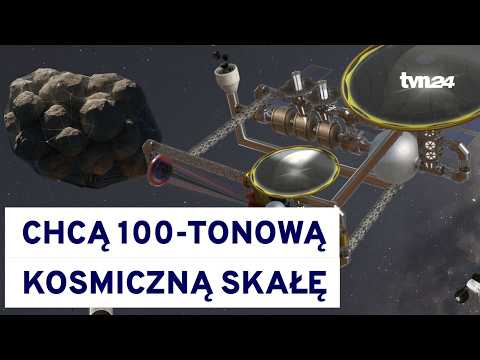
Asteroida w worku. Czy kosmiczne górnictwo ma sens? "Kijek w Kosmosie"
Summary
TransAstra aims to capture a 100-ton asteroid and bring it close to Earth, raising questions about the feasibility of space mining. The Artemis II mission is progressing with significant contributions from women, including Aleksandra Rutczyńska, who is developing radiation protection software for astronaut safety.
The feasibility of capturing and processing resources from asteroids is highly questionable due to technological and financial challenges. Current technology has only been tested on a small scale, and the actual processing of resources remains complex and unproven.
Establishing a permanent human base in space is crucial for the viability of space mining, as current zero-gravity mining costs are prohibitive. The competition for lunar resources between China and the West may drive advancements in space mining technology.
Several companies are exploring asteroid resource extraction, with one asteroid valued at 10,000 quadrillion dollars. Experts express skepticism about the feasibility of such endeavors due to significant physical and geological challenges.
Perspectives
short
Proponents of Space Mining
- Aims to capture a 100-ton asteroid for resource extraction
- Highlights potential advancements in space mining technology
- Explores the economic viability of asteroid mining
- Considers the competition for lunar resources as a driver for innovation
- Discusses the role of women in advancing space missions
Skeptics of Space Mining
- Questions the feasibility of capturing and processing resources from asteroids
- Emphasizes technological and financial challenges in space mining
- Notes that current technology has only been tested on a small scale
- Highlights the complexity of resource processing in zero-gravity environments
- Expresses skepticism about the astronomical valuations of asteroids
Neutral / Shared
- Discusses the Artemis II mission and its significance
- Mentions the role of artificial intelligence in advancing research
Metrics
other
over 50 years
the duration of waiting for the Artemis II mission
This indicates the long-term commitment and planning involved in lunar exploration.
the mission we are waiting for, over 50 years
other
10 times larger times
scale of technology testing
Indicates the scale of challenges faced in technology development.
they will now test because there are 10 times larger
value
10,000,000 quadrillion dollars USD
estimated worth of an asteroid
This valuation highlights the allure of asteroid mining despite its challenges.
One even is worth 10,000,000 quadrillion dollars
Key entities
Timeline highlights
00:00–05:00
TransAstra plans to capture a 100-ton asteroid and bring it close to Earth, raising questions about the feasibility of space mining. The Artemis II mission is progressing with significant contributions from women, including Aleksandra Rutczyńska, who is developing radiation protection software for astronaut safety.
- A company named TransAstra plans to capture a 100-ton asteroid and bring it close to Earth within a few years. This ambitious project adds to doubts about the feasibility and economic viability of space mining
- Dr. Anna Łosiak, a planetary geologist, acknowledges that while the technology exists to achieve this, it would require enormous financial resources
- The Artemis II mission is progressing, with the rocket already at the launch pad and the crew in quarantine. This mission marks a significant step in lunar exploration, with Polands Aleksandra Rutczyńska contributing to the development of radiation protection software
- Rutczyńskas work involves creating a dosimeter to detect harmful cosmic radiation, which is crucial for astronaut safety. The mission aims to ensure that there are no errors, as the stakes are high in lunar exploration
- The Artemis program represents a shift towards gender equality in space exploration, with women now playing key roles alongside men. Kristina Koch is set to be the first woman to land on the Moon in the 21st century, highlighting the progress made since the Apollo era
- The segment emphasizes the importance of international collaboration and unity in facing current global challenges. The success of the Artemis II mission could foster a sense of national and international solidarity
05:00–10:00
The feasibility of capturing and processing resources from asteroids is highly questionable due to technological and financial challenges. Current technology has only been tested on a small scale, and the actual processing of resources remains complex and unproven.
- The feasibility of capturing and processing resources from asteroids is highly questionable. Many companies in the space mining sector have failed within a decade due to technological and financial challenges
- While capturing an asteroid and bringing it close to Earth is theoretically possible, the actual processing of its resources remains a complex issue. This complexity is exacerbated by the lack of essential conditions like gravity and water in space
- Current technology has only been tested on a small scale, with limited success in simulating the necessary processes. The significant hurdles in resource processing mean that even if asteroids can be captured, utilizing their materials effectively is still a distant goal
- The initial steps for such missions involve creating feasibility studies, which have already been published. However, the real challenge lies in the execution of these plans, which have yet to demonstrate practical viability
- The lack of a compelling reason to pursue asteroid mining currently hampers progress in the field. Until a clear and realistic vision emerges, the industry may continue to struggle with its ambitious goals
- Despite the potential for innovation, the reality of space mining is fraught with uncertainty and risk. Investors may soon realize the limitations of current technologies and the impracticality of the proposed missions
10:00–15:00
Establishing a permanent human base in space is crucial for the viability of space mining, as current zero-gravity mining costs are prohibitive. The competition for lunar resources between China and the West may drive advancements in space mining technology.
- Establishing a permanent human base in space is essential for making space mining viable, as the high costs and complexities of zero-gravity mining are not justified without it
- Competition for lunar resources between bases from China and the West could accelerate advancements in space mining technology and resource utilization
- Currently, extracting resources from Earth, including recycling from landfills, remains the most cost-effective option, limiting the incentive to pursue space mining
- NASAs $20 billion plan for a lunar base indicates a growing interest in lunar exploration, but asteroid mining may not be prioritized in the near future due to feasibility concerns
- Processing materials in space presents significant challenges, with current technologies still in testing phases, suggesting that a full-scale industrial system is decades away
- Chinas goal to establish a lunar presence by 2030 contrasts with the United States more cautious approach, potentially altering the dynamics of space exploration and resource acquisition
15:00–20:00
Several companies are exploring asteroid resource extraction, with one asteroid valued at 10,000 quadrillion dollars. Experts express skepticism about the feasibility of such endeavors due to significant physical and geological challenges.
- Several companies are pursuing the extraction of resources from asteroids, with one asteroid estimated to be worth 10,000 quadrillion dollars. This ambitious claim adds to doubts about the feasibility and economic implications of such endeavors
- Despite the allure of asteroid mining, experts argue that the physical and geological challenges make it unlikely to succeed in the near future. The focus may need to shift to more immediate resources, such as lunar ice, which could be crucial for sustaining future lunar bases
- The potential for lunar ice as a resource is significant, as it could support human habitation on the Moon. If substantial ice deposits are found, they could become a priority for space exploration efforts
- Processing lunar regolith presents its own set of challenges, particularly in separating useful materials for construction. This task is complicated and may hinder the development of infrastructure necessary for long-term lunar missions
- The historical context of failed ventures in space mining highlights the risks involved in such projects. Past companies have gone bankrupt despite initial promises, indicating that the path to successful asteroid mining is fraught with uncertainty
- Future activities in space mining may focus on smaller-scale research and development rather than large-scale extraction. This approach could provide valuable insights while minimizing financial risks associated with ambitious mining operations
20:00–25:00
Mining on the Moon presents significant challenges due to the unique lunar environment and health risks associated with dust. Experts express skepticism about the feasibility of asteroid mining, emphasizing the need for technological advancements and resource availability.
- Mining on the Moon faces major challenges in separating regolith for different applications, complicated by the unique lunar environment and health risks from dust
- The dust generated during lunar mining is problematic due to its electrostatic nature and composition, which can disrupt equipment and pose health risks to astronauts
- Dr. Anna Łosiak notes that while asteroid mining is theoretically feasible, it is unlikely to materialize in the near future
- Lunar ice extraction is prioritized for future missions as it is essential for human habitation, with large-scale operations dependent on resource availability
- Despite the risks, Dr. Łosiak expresses enthusiasm for lunar exploration and its potential benefits
- The discussion shifts to an Australian man who created an mRNA vaccine for his dog with cancer using artificial intelligence, raising possibilities for similar human treatments
25:00–30:00
The treatment of a dog with personalized mRNA vaccines has led to a significant reduction in tumors, indicating potential advancements in veterinary medicine. This case exemplifies the role of artificial intelligence in democratizing healthcare solutions and fostering community-driven research.
- The dogs treatment has notably shrunk her tumors, showcasing the potential of personalized mRNA vaccines in veterinary care. This success points to innovative methods that could transform animal health
- Despite earlier forecasts of limited survival, the dog is thriving, leading researchers to pursue a second vaccine for a complete cure. This highlights the critical role of persistence in advancing medical research
- This case demonstrates how artificial intelligence can enable non-experts to address complex health issues. Such democratization of technology may change the landscape of treatment development
- The vaccine was developed rapidly and at a significantly lower cost than traditional pharmaceutical research, illustrating the efficiency of integrating AI with genomic science. This could pave the way for more affordable treatments in the future
- While this case shows promise, developing safe vaccines for human use is a complex task that requires thorough research. The differences between veterinary and human medicine underscore the necessity for rigorous testing
- The collaboration between the dogs owner and researchers highlights the potential for community-driven healthcare solutions. This partnership could inspire similar efforts in various medical research fields