Politics / Poland
Pluralistic review of domestic politics through national press, media commentary and public debate across diverse political perspectives. Topic: Poland. Updated briefs and structured summaries from curated sources.
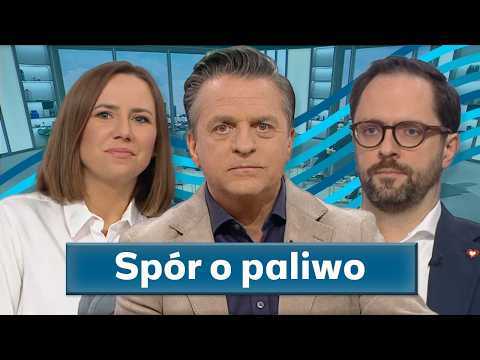
Ostra dyskusja w "Śniadaniu Rymanowskiego". Politycy o rządowej obniżce cen paliw
Summary
The government has announced a reduction in fuel taxes, but critics argue that prices at the pump have not decreased as expected. Political representatives are debating the effectiveness of the government's fuel price reduction initiative amidst rising wholesale fuel prices due to international conflicts. The government faces criticism for delays in implementing fuel price reductions, which are exacerbating financial strain on Polish families. Accusations of legislative manipulation and a lack of proactive solutions are contributing to public distrust in the government's economic commitments.
The introduction of a maximum fuel price has raised concerns about potential shortages and economic disruptions. Critics argue that the legislation was hastily prepared without proper public consultation, indicating a shift towards central control over the market. Transport companies are facing severe financial strain due to rising fuel prices, with many waiting weeks for government intervention. Critics highlight the government's inadequate response and the potential for inflation as a result of these policies.
Perspectives
LLM output invalid; stored Stage4 blocks + metrics only.
Metrics
price
the price of the Khurtian USD
current fuel pricing situation
Indicates the government's struggle to control fuel prices amidst external pressures.
the price of the Khurtian
tax_rate
23rd to 23% of the stock is reduced
fuel tax reduction announcement
Highlights the government's attempt to alleviate consumer burden through tax policy.
the rate of the 23rd to 23% of the stock is reduced
other
12%
national fuel control
This indicates a significant portion of national fuel is under pressure from conflict.
the pressure they will control the fuel, 12% of the national fuel
other
40 percent of the fuel consumption of fuel in the company %
fuel consumption by transport companies
This indicates the significant impact of fuel prices on transport operations.
about 40 percent of the fuel consumption of fuel in the company
other
2 billion USD
government financial commitments
This amount reflects the scale of government intervention needed to stabilize the market.
at 2 billion, in the time of the security
other
the majority of the spiritual ones are in the court
referring to cases of pedophilia
This highlights the ongoing legal challenges faced by institutions regarding accountability.
the majority of the spiritual ones are in the court
other
8 activists units
number of activists shown in a film related to the discussion
This highlights the involvement of activists in raising awareness about pedophilia.
the 8 activists, the people who were shown to the film
Key entities
Timeline highlights
00:00–05:00
The government has announced a reduction in fuel taxes, but critics argue that prices at the pump have not decreased as expected. Political representatives are debating the effectiveness of the government's fuel price reduction initiative amidst rising wholesale fuel prices due to international conflicts.
- The government has announced a reduction in fuel taxes, but critics argue that prices at the pump have not decreased as expected. This raises concerns about whether the government is genuinely helping consumers or merely making empty promises
- Political representatives are debating the effectiveness of the governments fuel price reduction initiative, with accusations of dishonesty being exchanged. The opposition claims that the ruling party is failing to deliver on its commitments to lower prices
- Recent increases in wholesale fuel prices have been attributed to international conflicts, including the war in Ukraine and tensions in the Middle East. This situation complicates the governments ability to stabilize fuel prices domestically
- The proposed measures aim to protect consumers by ensuring lower prices at gas stations, with expectations set for a price drop soon. However, skepticism remains regarding the actual implementation and effectiveness of these measures
- Accusations of deceit have been directed at the ruling party, particularly regarding their handling of fuel pricing and tax policies. This ongoing political conflict highlights the broader implications for public trust in government actions
- The discussion reflects a significant political divide, with each side blaming the other for the current fuel pricing crisis. This contention underscores the challenges faced by policymakers in addressing economic issues while maintaining public confidence
05:00–10:00
The government faces criticism for delays in implementing fuel price reductions, which are exacerbating financial strain on Polish families. Accusations of legislative manipulation and a lack of proactive solutions are contributing to public distrust in the government's economic commitments.
- The government is criticized for delays in fuel price reductions, raising concerns about the financial strain on Polish families amid rising costs
- Accusations suggest the ruling party is manipulating legislative processes to postpone necessary actions, potentially eroding public trust in their economic commitments
- Recent fuel price increases are linked to international market conditions and geopolitical tensions, complicating the governments efforts to stabilize domestic prices
- Critics view the governments proposed solutions as reactive rather than proactive, risking further economic hardship for consumers already facing high fuel costs
- There is a growing demand for the government to communicate transparently about fuel price fluctuations, which could help alleviate public frustration and build trust
10:00–15:00
The introduction of a maximum fuel price has raised concerns about potential shortages and economic disruptions. Critics argue that the legislation was hastily prepared without proper public consultation, indicating a shift towards central control over the market.
- The introduction of a maximum fuel price is seen as a risky move that could threaten fuel availability. This raises concerns about potential shortages and long wait times at gas stations
- Critics argue that the legislation was hastily prepared without proper public consultation, leading to uncertainty about its consequences. This lack of thorough planning could result in significant economic disruptions
- The opposition claims that the governments approach represents a shift from a market economy to a centrally controlled one. Such a transition could undermine the principles of free market competition
- There are warnings that the maximum price policy may lead to rationing of fuel, as suppliers might limit sales to avoid losses. This could exacerbate the existing issues of fuel accessibility for consumers
- The debate highlights a broader issue of energy security, suggesting that the government should consider more comprehensive solutions beyond just fuel prices. Addressing electricity costs and other energy-related expenses is crucial in the current crisis
- The rapid approval of the legislation has drawn criticism for being reactive rather than proactive, with some arguing that it should have been addressed earlier. Delayed action could have lasting negative effects on the economy and transport sector
15:00–20:00
Transport companies are facing severe financial strain due to rising fuel prices, with many waiting weeks for government intervention. Critics highlight the government's inadequate response and the potential for inflation as a result of these policies.
- The recent fuel price hikes have pushed transport companies to the brink of bankruptcy, with many waiting weeks for government action. This delay has raised concerns about the viability of these businesses and the broader economic implications
- Critics argue that the governments response to rising fuel prices has been inadequate and poorly timed. The lack of timely intervention has led to frustration among citizens and industry stakeholders alike
- There are doubts about the effectiveness of the newly proposed maximum fuel price, with fears that it could lead to fuel shortages. This uncertainty adds to doubts about the governments ability to manage the situation effectively
- A broader issue of governance, with accusations that the Prime Minister lacks competent advisors. This perceived incompetence could undermine public trust in the governments ability to handle economic challenges
- The potential for inflation to rise as a consequence of these fuel price policies is a significant concern. Stakeholders are wary that any short-term solutions may lead to long-term economic instability
- The government is expected to implement a reduction in fuel taxes, but the details remain unclear. The effectiveness of this measure will be closely monitored to see if it alleviates the financial burden on consumers
20:00–25:00
The Polish government is facing challenges in managing fuel prices amid an unpredictable international landscape, leading to consumer uncertainty. Rising fuel costs are impacting farmers and could contribute to increased food prices, prompting the government to consider adjustments to fuel taxes.
- The unpredictable international landscape is complicating the governments ability to forecast fuel prices in Poland, leaving consumers uncertain about future costs
- Polish farmers are feeling the impact of rising fuel prices, which could lead to increased food prices as production costs rise
- The government is exploring adjustments to fuel taxes to mitigate rising costs, but the success of these measures hinges on the overall economic climate
- Concerns are mounting about how the ongoing conflict in the Middle East may disrupt global food supply chains, potentially worsening inflation and food scarcity in Poland
- Political representatives are questioning the effectiveness of the governments current actions on fuel price reductions, with doubts about their immediate benefits for consumers
- The opposition criticizes the governments approach to the fuel price crisis, arguing that more decisive measures are necessary to address the economic challenges
25:00–30:00
A recent scandal involving a former Civic Platform member has raised significant concerns about political integrity and the exploitation of sensitive issues for political gain. Critics are calling for accountability regarding the delayed response to the allegations and emphasizing the need for genuine moral responsibility in political discourse.
- The recent pedophilia scandal involving a former Civic Platform member has raised concerns about the integrity of political discourse and the potential for tragedy to be exploited for political gain
- Critics accuse the Law and Justice party of distasteful politics for leveraging this scandal, calling for a more respectful approach to sensitive issues
- There are calls for accountability regarding the nine-month delay in addressing the allegations, indicating a troubling culture of silence within the political sphere
- The speaker emphasizes that anyone guilty of child abuse deserves severe punishment, highlighting the moral obligation to protect vulnerable individuals
- The discussion reveals the hypocrisy of political figures who condemn such crimes while attempting to gain political advantage from them, stressing the need for genuine accountability
- Overall, the segment underscores the intersection of politics and morality, particularly regarding child protection, and calls for a reevaluation of how political capital is generated