Politics / Mexico
Pluralistic review of domestic politics through national press, media commentary and public debate across diverse political perspectives. Topic: Mexico. Updated briefs and structured summaries from curated sources.
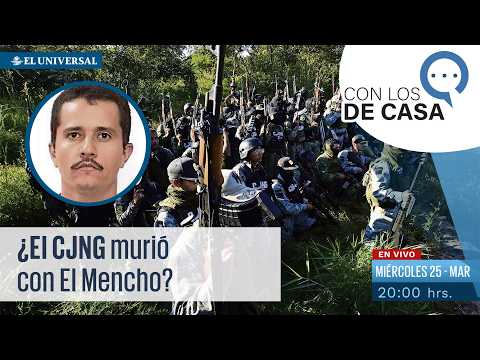
¿El CJNG murió con El Mencho? | EN VIVO
Summary
The Jalisco New Generation Cartel (CJNG) continues to exert significant influence in Mexico despite the death of its leader, Nemesio Oseguera, known as 'El Mencho'. Rival factions are attempting to reclaim territories previously held by the CJNG, indicating ongoing instability in the region. The cartel's operational structure remains intact, suggesting a potential for continued influence and a strategic choice to avoid violent succession disputes.
Recent discussions highlight the CJNG's complex structure, which combines a vertical hierarchy with franchise-like operations, allowing it to adapt while retaining territorial control. The absence of visible leadership struggles raises questions about the mechanisms that enable the cartel to thrive without a clear leader. This decentralized command structure may facilitate flexible operations but also assumes that rival factions remain weak and disorganized.
The upcoming World Cup in Mexico presents significant security challenges, as criminal organizations, particularly the CJNG, are expected to exploit the influx of tourists for illegal activities. The Mexican government is deploying security forces in major cities, but many regions may remain vulnerable to criminal activity. The cartel's advanced weaponry and the government's struggle with personnel shortages heighten the risk of violence and extortion during the event.
Investigations into El Mencho's death reveal significant failures in emergency response and evidence collection, raising concerns about the integrity of law enforcement protocols. The political implications surrounding the narrative of his death further complicate public perception of government authority and effectiveness. The shift from capture to extermination in law enforcement raises critical questions about the underlying assumptions regarding the effectiveness of lethal force.
Perspectives
Analysis of CJNG's resilience and security challenges in Mexico.
Pro-CJNG Resilience
- Highlights ongoing influence of CJNG despite leadership changes
- Argues absence of violent succession disputes indicates strategic stability
- Claims decentralized structure allows for flexible operations
- Notes cartels ability to adapt to external pressures
- Points out CJNGs advanced weaponry enhances operational capacity
Anti-CJNG Security Concerns
- Warns of significant security challenges during the World Cup
- Questions effectiveness of government security measures
- Accuses law enforcement of failures in emergency response
- Critiques systemic corruption undermining judicial effectiveness
- Rejects assumptions that capturing leaders will dismantle cartel operations
Neutral / Shared
- Observes rival factions attempting to reclaim territories
- Notes potential for increased violence during major events
- Highlights the need for comprehensive approaches to address organized crime
Metrics
territories
territories that at the time the jalisco was defeated
territories controlled by the CJNG
Control of territories is crucial for the CJNG's power and influence.
trying to recover some of the territories that at the time the jalisco was defeated
leadership
the succession in the jalisco card would have been given by a kind of blood-redacted
leadership transition within the CJNG
Leadership transitions can create power vacuums and instability.
the succession in the jalisco card would have been given by a kind of blood-redacted
violence
the next few months
potential for increased violence
Upcoming months are critical for assessing the CJNG's response to challenges.
the next few months
other
ten properties that the menchahee had properties
assets linked to the CJNG
This indicates the scale of the cartel's operations and resources.
we have found that there were ten properties that the menchahee had
other
six orders of Cateo orders
law enforcement actions against the cartel
This reflects the ongoing efforts to disrupt the cartel's activities.
they only were cateated for the general fiscality of the republic
security_personnel
chronic lack of highly specialized personnel
specialized personnel for handling explosives and chemical incidents
This shortage leaves the country vulnerable to potential terrorist threats.
we do not have enough units of chemical and radiological incidences
weaponry
high-level drones that can elude electronic protection
advanced weaponry used by the cartel
This capability poses a serious threat during high-profile events.
the cartel of the military has a mini-fuel saire, and not only drones
extortion
extraction that I think is the delito that more resources will bring them
extortion activities targeting local businesses
This directly threatens the economic stability of small merchants.
they start to extortionize the street
Key entities
Timeline highlights
00:00–05:00
The CJNG is facing challenges from rival factions attempting to reclaim lost territories, indicating ongoing instability. Despite the death of Nemesio Oseguera, the CJNG remains influential, with potential plans for a counter-offensive that could escalate violence.
- The CJNG is encountering resistance from rival factions trying to reclaim territories it once controlled, indicating ongoing instability in those areas
- Even after the death of Nemesio Oseguera, the CJNG remains a powerful force in Mexico, raising questions about its future leadership and strategies
- There are signs that the CJNG might be planning a counter-offensive against those who captured Oseguera, which could lead to increased violence
- The current calm following Osegueras death may be misleading, as history shows that rival cartels often regroup and prepare for conflict after a leadership change
- Osegueras health issues likely hindered his ability to lead effectively in his final days, raising concerns about the CJNGs decision-making during this transition
- The situation is dynamic, with the potential for either a strategic retreat by the CJNG or an aggressive push against the Mexican government, making the upcoming weeks critical
05:00–10:00
The CJNG has maintained its operational structure despite the loss of its leader, indicating a potential for continued influence. The absence of violent succession disputes suggests a strategic choice to avoid internal conflict and maintain territorial control.
- The CJNG has retained its operational framework despite the loss of its leader, suggesting its influence will likely persist. This stability raises concerns about the cartels future actions and strategies
- The absence of violent succession disputes within the CJNG indicates a strategic choice to prevent internal conflict, which may help maintain control over their territories
- The cartels preparedness for El Menchos capture implies they had prior intelligence about law enforcement plans, highlighting their operational resilience
- Without a visible leader, the CJNG may benefit from a decentralized command, allowing for more flexible operations and reduced scrutiny
- The current lull in cartel violence could be temporary, as weakened rival factions may regroup, prompting the CJNG to assert its dominance
- The CJNGs historical failure to form alliances may now hinder them, as they navigate a landscape with fewer competitors, creating a delicate power balance
10:00–15:00
The CJNG maintains a complex structure that combines vertical hierarchy with franchise-like operations, allowing it to adapt while retaining territorial control. Recent efforts to dismantle the cartel, including the death of its leader, aim to fracture its power in drug trafficking.
- The CJNGs structure combines a vertical hierarchy with franchise-like operations, enabling it to adapt to local dynamics while maintaining territorial control
- Recent efforts to dismantle the CJNG, including the death of its leader, aim to split the cartel into smaller factions, potentially diminishing its power in drug trafficking
- Concerns are rising about possible terrorist activities linked to the CJNG, especially with intelligence suggesting ties to extremist groups, which poses risks for both Mexico and the U.S
- The upcoming FIFA World Cup may prompt the Mexican government to negotiate with criminal organizations to ensure security, as past international events have led to temporary truces
- The CJNGs strategies reflect lessons from conflicts with Colombian cartels, indicating a shift towards more sophisticated evasion and control methods, suggesting ongoing adaptation to maintain dominance
- The absence of visible succession struggles within the CJNG after its leaders death indicates a strategic approach to leadership transitions, suggesting a resilient power structure
15:00–20:00
The upcoming World Cup in Mexico presents significant security challenges due to the potential exploitation by criminal organizations. The Jalisco New Generation Cartel's advanced weaponry and the government's struggle with personnel shortages heighten the risk of violence and extortion during the event.
- The upcoming World Cup poses significant security challenges for Mexico, as criminal organizations may seek to exploit the event for their gain
- Major events like the World Cup historically lead to increased militarization and surveillance, potentially resulting in permanent security measures that could infringe on civil liberties
- The Jalisco New Generation Cartels advanced weaponry, including artillery and drones, presents a serious threat during high-profile events, enabling potential attacks or extortion
- Mexico faces a chronic shortage of specialized personnel to address potential terrorist threats, particularly in handling explosives and chemical incidents, leaving the country vulnerable
- The cartels franchise model empowers smaller criminal groups, enhancing their influence and facilitating extortion, which directly threatens local businesses
- The Mexican government, with FIFAs support, is working to enhance security for the World Cup, but the effectiveness of these measures is uncertain given the existing challenges
20:00–25:00
The Mexican government is deploying security forces in major cities for the World Cup, but many regions may remain vulnerable to criminal activity. Criminal organizations, particularly the Jalisco New Generation Cartel, are expected to exploit the influx of tourists for illegal activities.
- The Mexican government is deploying security forces in major cities for the World Cup, but this may leave many regions exposed to criminal activity
- Criminal organizations, particularly the Jalisco New Generation Cartel, are likely to exploit the influx of affluent tourists during the World Cup for drug trafficking and other illegal activities
- There are fears that criminal groups might use the World Cup as a chance to launch attacks or pressure the government, with groups in Monterrey appearing more prepared than businesses in Guadalajara
- The U.S. government may be considering a renewed military strategy to combat drug cartels in Mexico
- The infiltration of organized crime into law enforcement complicates efforts against drug trafficking, necessitating thorough investigations to address corruption
- The uncertainty regarding cartel actions during the World Cup underscores the need for proactive security measures to prevent potential violence and disruption
25:00–30:00
The death of Nemesio Oseguera, known as 'El Mencho', raises questions about the Jalisco New Generation Cartel's resilience amid leadership changes. The decentralized structure of the CJNG complicates efforts to disrupt its operations effectively.
- The death of Nemesio Oseguera, known as El Mencho, raises concerns about the Jalisco New Generation Cartels ability to maintain its power amid leadership changes, highlighting the cartels resilience
- Doubts about the circumstances surrounding El Menchos death and transport could impact U.S. perceptions and responses to cartel activities
- The decentralized structure of the CJNG indicates its operations are adaptable, complicating efforts to disrupt its activities effectively
- The narrative regarding El Menchos death may be strategically crafted to influence legal outcomes and public opinion, affecting how law enforcement justifies its actions against cartel violence
- Scrutiny of the Mexican governments involvement in cartel operations adds to doubts about the funding and oversight of security forces, potentially increasing U.S. pressure for accountability
- Challenges in identifying cartel members and verifying their deaths highlight the need for improved forensic protocols to ensure transparency and accountability in law enforcement