Politics / Mexico
Pluralistic review of domestic politics through national press, media commentary and public debate across diverse political perspectives. Topic: Mexico. Updated briefs and structured summaries from curated sources.
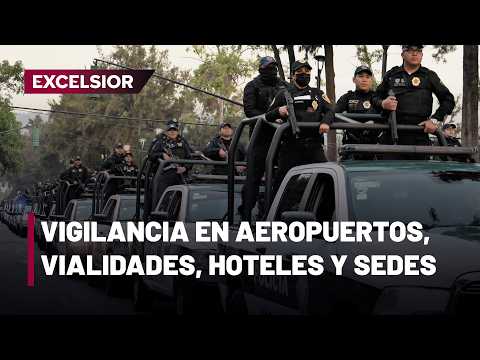
México dará máxima seguridad durante el Mundial 2026 con el Plan Kukulkán
Summary
The Plan Kukulkán aims to ensure safety and organization in Mexico during the 2026 World Cup by deploying 20,000 effective forces and 55,000 security protectors. Specialized teams will address various threats, and anti-drone systems will be implemented to control unauthorized flying objects.
A comprehensive defense strategy will be established, involving 225,000 armed forces personnel across key locations. This strategy includes a five-layer defense system designed to mitigate various security threats during the event.
The deployment of 12,241 personnel will focus on monitoring threats, airport security, and counterterrorism efforts. Specialized teams will work in coordination with federal agencies to ensure a robust security framework.
Modernization efforts at the international airport will include autonomous migratory filters and advanced anti-drone systems. These upgrades aim to enhance passenger experience and improve operational efficiency.
Perspectives
short
Supporters of Plan Kukulkán
- Deploys 20,000 effective forces for enhanced security
- Implements specialized teams to address diverse threats
- Establishes a five-layer defense strategy for comprehensive coverage
- Modernizes airport security with advanced technology
- Optimizes passenger experience through facility improvements
Critics of Plan Kukulkán
- Questions the adequacy of 225,000 personnel to manage security threats
- Raises concerns about potential coordination issues among deployed forces
- Highlights risks of unaddressed threats if personnel are insufficiently trained
- Challenges the effectiveness of airport upgrades in addressing operational inefficiencies
Neutral / Shared
- Focuses on collaboration with federal agencies for security
- Plans for extensive training exercises to enhance interoperability
Metrics
security_forces
20,000 effective forces units
total number of effective security forces deployed
This number indicates the scale of security efforts for the event.
20,000 effective forces
personnel
225,000 units
total armed forces personnel deployed
This large deployment aims to enhance security during a major international event.
we are talking about the return of 225,000 operational effective
specialized personnel
8,000 units
specialized teams trained in defensive management
These personnel are crucial for addressing potential threats effectively.
around 8,000 effective, started an instrument in the summer of January
services established
over 2,000 units
services established nationwide for security
A wide network of services is essential for comprehensive security coverage.
with more than 2,000 services established throughout the long and wide national territory
personnel
12,241 elements units
total personnel deployed for security
This number indicates the scale of military involvement in ensuring safety during the World Cup.
we will have a total of 12,241 elements
personnel
3,741 elements units
initial personnel count
This figure represents the baseline personnel before additional deployments.
a total of 3741 elements
naval personnel
8,500 elements units
naval personnel added to the total
This highlights the significant naval presence aimed at securing maritime routes.
8500 elements of the different naval ships
drone capacity
15 drones units
total drone capacity for operations
This capacity is crucial for monitoring and countering aerial threats.
with a capacity of 15 drones
Key entities
Timeline highlights
00:00–05:00
The Plan Kukulkán aims to ensure safety and organization in Mexico during the 2026 World Cup by deploying 20,000 effective forces and 55,000 security protectors. Specialized teams will address various threats, and anti-drone systems will be implemented to control unauthorized flying objects.
- The Plan Kukulkán aims to ensure a safe and organized environment in Mexico during the 2026 World Cup, addressing national security and international perception. It integrates 23 groups and establishes three main security forces in the host cities: Ciudad de México, Guadalajara, and Nuevo León
- A total of 20,000 effective forces and 55,000 security protectors will be deployed. Specialized teams will handle risks related to chemical, radiological, nuclear, and explosive threats at key locations such as airports, hotels, and stadiums
- A detailed security scheme will be implemented for each venue, including immediate and distant security measures. Anti-drone systems will mitigate unauthorized flying objects, ensuring that only registered drones operate in designated areas
05:00–10:00
The Plan Kukulkán is designed to ensure safety during the 2026 World Cup by establishing surveillance and protection areas in Guadalajara, Monterrey, and Ciudad de México. It will deploy 225,000 armed forces personnel and implement a five-layer defense strategy, including anti-drone systems and specialized teams.
- The Plan Kukulkán aims to ensure a safe environment during the 2026 World Cup by establishing three areas of surveillance and protection across Mexico, specifically in Guadalajara, Monterrey, and Ciudad de México, utilizing Notam for aviation communication
- A five-layer defense strategy will be implemented, incorporating various aircraft types, including strategic long-range aircraft and anti-drone systems, to ensure comprehensive airspace security
- Operational effectiveness will be supported by 225,000 armed forces personnel, including the Navy, Army, Air Force, and National Guard, with over 2,000 services established nationwide to enhance security during the World Cup
- Specialized teams, including 8,000 personnel trained in defensive management and tactical medicine, will address potential threats during the event
- A military exercise will take place mid-month to demonstrate the capabilities of participating agencies and improve interoperability among them
- Security measures will cover airports and water territories, focusing on preventing and mitigating risks to ensure the safety of attendees and participants during the World Cup events
10:00–15:00
The Plan Kukulkán will deploy a total of 12,241 personnel across three major areas to ensure security during the World Cup. Specialized teams will focus on monitoring threats, airport security, and counterterrorism efforts.
- The Plan Kukulkán will deploy a total of 12,241 personnel across three major areas: the Gulf, the metropolitan area, and the Pacific coast, focusing on various military tasks to ensure security during the World Cup
- Personnel will monitor open sources and the Darkweb to identify risks and threats related to the event, particularly concerning airports and maritime security
- The Navy will ensure safe navigation for vessels, regulate foreign tourists entering through maritime routes, and address organized crime related to trafficking and illegal substances
- Specialized teams in the metropolitan area will focus on urban rescue, airport security, counterterrorism, and drone operations, including anti-drone systems to enhance safety during the World Cup
- Exercises and training will be conducted rigorously, including cabinet exercises and real-scale drills, to ensure preparedness for any threats during the World Cup, with an emphasis on human rights and appropriate use of force
15:00–20:00
A regional scheme will deploy 1,018 personnel across key locations in Mexico to ensure operational mobility and efficient crisis response during the World Cup. Security measures at marine ports and the international airport in Mexico City will be modernized, including the installation of autonomous migratory filters and an anti-drone system.
- A regional scheme of strategic reaction will deploy 1,018 personnel across key locations, including Mexico City, Toluca, Manzanillo, and Guadalajara, ensuring operational mobility and efficient response to potential crises during the World Cup
- Security measures will be reinforced at marine ports in Nayarit, Jalisco, and Colima, with eight port captains overseeing operations involving 18 marines to maintain control over tourist departures
- The modernization of security at the international airport in Mexico City includes the acquisition of 40 autonomous migratory filters, enhancing passenger processing speed by 50%, and vehicles equipped with X-ray inspection systems to scan 100% of cargo
- An anti-drone system will be implemented to take control of detected drones up to 5 kilometers away from the airport, with the capability to neutralize them within 45 seconds
- The installation of 3,240 cameras with analytics, algorithms, and facial recognition technology will improve security and efficiency at the airport, supported by artificial intelligence to enhance passenger mobility
- Renovations at the international airport will include upgrades to security filters, documentation rooms, and passenger areas, aiming to improve the overall user experience during the World Cup
20:00–25:00
The remodeling of the international airport includes updates to security filters and the rehabilitation of food areas, enhancing user experience. These improvements aim to optimize spaces and improve comfort for passengers.
- The international airports remodeling will include updates to security filters, documentation rooms, and areas for crew and passenger arrivals and departures, enhancing the overall user experience. Additionally, the rehabilitation of the food area in the airport terminals will modernize terminal bars and optimize spaces, improving user comfort