Politics / Indonesia
Policy and political decisions with potential market and society impact. Topic: Indonesia. Updated briefs and structured summaries from curated sources.

Dibalik Serangan AS-Israel ke Iran, CIA Temukan Lokasi Pertemuan Rahasia
Full timeline
0.0–300.0
The CIA has provided critical intelligence on the location of high-ranking Iranian officials, facilitating a coordinated operation between the US and Israel. This operation resulted in the deaths of several Iranian military officials while some intelligence personnel escaped.
- The CIA has gathered crucial intelligence regarding the location of high-level Iranian officials, allowing the US and Israel to coordinate a strategic operation against Iran. This intelligence was deemed too valuable to overlook, especially after the recent 12-day conflict
- The operation targeted a complex where key Iranian defense officials were gathered, reflecting a high level of coordination and intelligence sharing between Washington and Tel Aviv. Reports indicate that several high-ranking Iranian military officials were killed during the operation, while key intelligence personnel managed to escape
300.0–600.0
The operation involved a coordinated effort between the US and Israel targeting high-ranking Iranian defense officials. This collaboration highlights the importance of intelligence sharing in military operations.
- The operation targeted a complex where key Iranian defense officials were gathered, reflecting a high level of coordination and intelligence sharing between Washington and Tel Aviv. Several high-ranking Iranian military officials were killed during the operation, while key intelligence personnel managed to escape
- Coordination between Washington and Tel Aviv has been a critical factor in executing the operation, showcasing the close relationship between the two nations. The quality of information collected has been refined through precise processes in communication among elite intelligence agencies

Kilas Antara 2 Maret 2026
Full timeline
0.0–300.0
The Indonesian government is prioritizing safety and security, with key officials addressing risks related to international relations and social conflict. Recent reports indicate a rise in health issues across 18 countries, prompting proactive measures in health and infrastructure development.
- The Indonesian government is focused on ensuring safety and security, with key figures like the Minister of Foreign Affairs and the Minister of Infrastructure and Development playing crucial roles. Recent developments indicate a serious risk of social conflict, particularly in Jakarta, raising concerns about the health and safety of individuals involved in these discussions
- Agus Hari Murty Yudoyono, the Infrastructure Coordinator, has been addressing risks associated with international relations, especially concerning the United States and Israel. The escalation of conflict in various regions, including the involvement of the Taliban, has prompted the government to take proactive measures to manage the situation
- The World Health Organization has reported an increase in health-related issues affecting 18 countries, which is compounded by the ongoing conflict. The Indonesian government is working to facilitate cooperation with international partners to address these challenges, focusing on health and infrastructure development
300.0–600.0
The National Immigration Organization reported that 16 million rupees were raised for immigration initiatives in Indonesia, reflecting significant financial efforts. A project called Punecak Imlek is planned for February 22 to enhance cultural and community engagement during Ramadhan.
- The National Immigration Organization reported that 16 million rupees were raised for immigration initiatives in Indonesia, reflecting significant financial efforts. This aligns with the governments focus on enhancing safety and security in the country
- A project called Punecak Imlek is planned for February 22 to enhance cultural and community engagement during Ramadhan. This initiative emphasizes the importance of harmony and tolerance for Indonesias progress and unity
- The city of Tantara is under construction, with plans for further development by the end of the year. This showcases ongoing urban development efforts in Indonesia, contributing to the nations growth
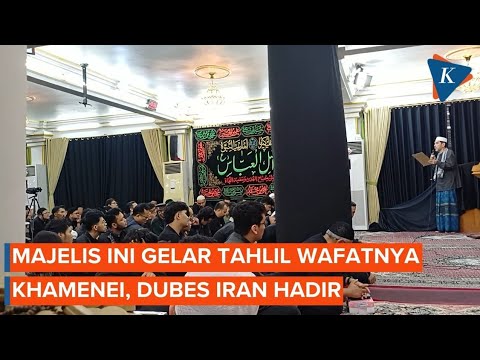
Tahlil Wafatnya Ali Khamenei Digelar di Pasar Minggu Jaktim, Dubes Iran Hadir Langsung
Full timeline
0.0–300.0
The community's connection to traditions is emphasized as a source of strength and resilience. Cultural sites like Swarm Virgin are highlighted for their significance in fostering shared experiences and addressing concerns about war.
- The communitys strong connection to traditions serves as a source of strength and resilience, highlighting the importance of cultural roots
- Significant cultural sites, like Swarm Virgin, are called upon for appreciation, with photography symbolizing shared cultural experiences
- Concerns about war are addressed, suggesting that it can be a catalyst for growth and support, encouraging a proactive approach to national challenges
- A question directed at Mr. Mahamat indicates a desire for leadership to engage in discussions about pressing issues related to conflict
300.0–600.0
Komunitas Ahlul Bait Indonesia held a tahlil gathering following the death of Iran's Supreme Leader, Ayatollah Ali Khamenei, at the Islamic Cultural Center in South Jakarta. This event underscores the community's commitment to honoring their leaders and maintaining cultural practices.
- Komunitas Ahlul Bait Indonesia menggelar majelis tahlil setelah wafatnya pemimpin tertinggi Iran, Ayatollah Ali Khamenei, di gedung Islamic Cultural Center, Jakarta Selatan

Saatnya Menahan Diri | Bedah Editorial MI
Full timeline
0.0–300.0
The military action by Israel and the United States against Iran on February 28 has raised global concerns about a potential third world war. The conflict underscores the need for diplomatic solutions to prevent further escalation and loss of life.
- The military action by Israel and the United States against Iran on February 28 has shocked the world, raising fears of a potential third world war, with both sides preparing for possible retaliation
- Iran is expected to respond aggressively after the national mourning period for its leader, Ayatollah Ali Khamenei, who was killed in the attack, highlighting the geopolitical implications of this conflict beyond just the two nations involved
- The historical context of world wars serves as a warning against using military force to resolve conflicts, emphasizing the need for diplomatic solutions to prevent catastrophic loss of life and destruction
- The United Nations is urged to intervene to prevent further escalation, with a call for all member states to engage in negotiations rather than taking sides to maintain global peace
- Indonesia is positioned to play a strategic role in mediating the conflict, advocating for adherence to the UN Charter and reminding the US of its commitment to peace as outlined in the recently established Board of Peace
- The potential consequences of military action extend beyond immediate combatants, affecting global society as a whole, with a call for world leaders to refrain from military aggression, especially involving weapons of mass destruction
300.0–600.0
Israel and the United States are calculating their military strategies against Iran, while Iran prepares for potential retaliation. The situation highlights the urgent need for diplomatic intervention to prevent escalation and maintain global stability.
- Israel and the United States are strategically calculating their military actions against Iran, while Iran is also preparing for potential retaliation, indicating a high level of tension and the possibility of escalating conflict
- The historical context of previous world wars highlights the devastating consequences of military conflict, serving as a reminder of the importance of diplomacy over military solutions
- The United Nations must intervene to prevent the conflict from escalating further, urging all member countries to prioritize negotiations and avoid taking sides in the dispute
- Indonesia has a strategic role in mediating the conflict, advocating for adherence to the UN Charter, particularly Articles 2.3 and 2.7, which emphasize restraint in military actions that threaten other nations sovereignty
- The potential for global conflict is significant if military actions continue unchecked, as the repercussions of war extend beyond the involved nations, affecting global stability and humanity
600.0–900.0
The United States is viewed as a significant threat in the Middle East, particularly regarding Iran, which could reshape global dynamics. The involvement of major powers like Russia and China is essential for maintaining stability and preventing conflict escalation.
- The United States is perceived as a significant threat in the Middle East, particularly concerning Iran, with ambitions that could reshape the global order and increase tensions within the Muslim community. This situation underscores the need for solidarity among Muslim nations to address these challenges
- The involvement of major powers like Russia and China is crucial in the ongoing geopolitical landscape, necessitating caution in navigating these complex international relationships
- Indonesia plays a key role in promoting peace and stability in the region, advocating for dialogue and cooperation among nations to prevent the escalation of conflicts
900.0–1200.0
The speaker emphasizes the United Nations' critical role in mediating global conflicts, particularly between the United States, Israel, and Iran. They highlight the historical failures of military interventions in Iraq and Afghanistan, advocating for diplomatic solutions to prevent further instability.
- The speaker emphasizes the United Nations role in addressing global conflicts, particularly regarding the tensions between the United States, Israel, and Iran. They argue that the UN must prioritize diplomatic solutions to prevent escalation
- Concerns are raised about the historical consequences of military interventions, citing instability in Iraq and Afghanistan as examples of failed strategies. Continued military actions could lead to further global instability
- The potential for widespread destruction is highlighted, suggesting that military conflicts could result in catastrophic outcomes for civilians worldwide. The speaker calls for the UN to actively mediate conflicts and promote peace
1200.0–1500.0
The government is urged to mediate in the conflict, with a specific call for legal action directed at Donald Trump. The speaker warns that failure to address the humanitarian crisis could lead to a loss of life exceeding 60 million people.
- The government is encouraged to act as a mediator in the conflict, with a direct call to Donald Trump for legal action, suggesting a proactive approach to international relations and conflict resolution
- The speaker emphasizes the importance of addressing the humanitarian crisis, warning that the world could face a significant loss of life, potentially exceeding 60 million people, if conflicts escalate
- There is a call for acceptance and understanding among nations, highlighting the need for cooperation to ensure global growth and stability, rather than succumbing to fear of the future
- The situation in Iran is complex, requiring the government to navigate various internal and external pressures, indicating that any resolution will need careful consideration of these dynamics
- The speaker references the historical context of the Iranian revolution and ongoing political developments, suggesting that understanding these factors is essential for addressing current conflicts
1500.0–1800.0
The speaker discusses the interconnectedness of Israel and the U.S. government, suggesting that their coordinated actions may escalate tensions with Iran.
- The speaker emphasizes the connection between Israel and the U.S. government, suggesting their actions are coordinated and driven by shared ambitions, which could escalate tensions with Iran
- There is a warning against allowing ambitious leaders to provoke conflict, highlighting the need for caution in political and economic ambitions that could lead to further military actions
- The speaker calls for Indonesias leadership to engage in managing military training and decisions that affect international relations, advocating for diplomatic solutions over military actions

Nasib Warga Sebelum Ada BPJS Kesehatan | PUTAR BALIK
Full timeline
0.0–300.0
Health insurance in Indonesia has historically been limited, primarily benefiting government employees. The BPJS system, established in 2014, aimed to provide universal health coverage to address previous gaps.
- Historically, health insurance in Indonesia was limited, primarily benefiting government employees and their families. The poor relied heavily on the governments budgetary capabilities for health care support
- The BPJS system, established in 2014, aimed to provide universal health coverage. This addressed the gaps left by previous systems that only catered to a select group of individuals
300.0–600.0
The health insurance system for PNS was established with a contribution of 2% from their income, primarily benefiting PNS and their families. The BPJS system, established on January 1, 2014, aimed to provide universal health coverage but faced implementation challenges.
- The health insurance system for PNS was established with a contribution of 2% from their income, primarily benefiting PNS and their families. In 1992, PT ASCAS Percero was created to manage this insurance, but high costs limited access for many
- By 1993, only 60% of impoverished individuals could access modern healthcare, prompting the Karto Sehat program to target 27.2% of this demographic. However, implementation challenges hindered its effectiveness
- In 2004, the national social system was restructured to address the rising number of poor individuals, leading to the establishment of BPJS on January 1, 2014, which aimed to provide universal health coverage
600.0–900.0
The BPJS was officially launched on January 1, 2014, expanding health insurance coverage to a broader population beyond just government employees. At that time, 116.12 million people were registered under the BPJS system, indicating a significant policy shift in healthcare accessibility in Indonesia.
- On January 1, 2014, the BPJS was officially launched, providing health insurance coverage to a broader population beyond just PNS and their families. At that time, 116.12 million people were registered under the BPJS system, marking a significant shift in health insurance accessibility in Indonesia
- The BPJS was designed to eliminate the previous privilege of health insurance that was limited to certain groups, making it available to all citizens. This transition represents a significant policy shift in addressing inequalities in access to healthcare

Hukum mencium pasangan saat berpuasa
Full timeline
0.0–300.0
Friendship and community are strengthened through shared practices and worship in sacred spaces. The significance of Ramadhan is highlighted as a period for spiritual connection and self-reflection.
- Friendship and community are fostered through shared practices and worship, especially in sacred spaces. These connections enhance the sense of belonging among individuals
- Past experiences are often recalled fondly. People highlight the ease of those times compared to the challenges they face today
- Support from friends, including those from diverse backgrounds, plays a crucial role in navigating difficulties. This support system helps individuals feel less isolated
- The concept of prayer is emphasized, particularly the invocation of the Holy Spirit during significant moments. This practice strengthens the spiritual connection among individuals
- Concerns about personal safety and the potential for misguidance are acknowledged. This stresses the importance of remaining vigilant in various situations
- Building a safe and nurturing environment at home is essential for personal and communal well-being. Such an environment fosters growth and support for everyone involved
- The significance of Ramadhan is discussed, focusing on its spiritual importance. This period enhances the connection to God and encourages self-reflection