Politics / Greece
Greece politics page with daily media monitoring across Kathimerini, Naftemporiki and Proto Thema, structured summaries of domestic political developments and a country-level press overview.
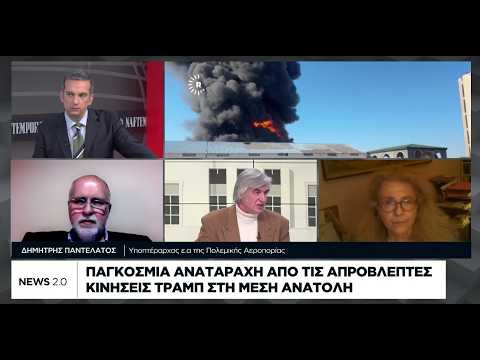
Παγκόσμια αναταραχή από τις απρόβλεπτες κινήσεις Τραμπ στη Μέση Ανατολή
Summary
The discussion highlights the complexities surrounding U.S. military involvement in the Middle East, particularly regarding Iran. Concerns arise over the legality and justification of military actions, with comparisons drawn to past conflicts. The potential for military escalation is significant, raising questions about the implications of unilateral decisions by the U.S.
Participants emphasize the humanitarian crisis in the region, criticizing the international community's inadequate response. The need for a more collaborative approach to address the underlying issues is stressed, as current strategies risk further deterioration of the situation.
Negotiations regarding Iran's nuclear program are deemed critical to prevent military escalation. However, the complexities of regional dynamics and the influence of external actors complicate the effectiveness of diplomatic efforts.
The U.S. faces significant challenges in potentially launching a ground invasion in Iran, requiring a larger military force than previously deployed. Public support for military action is waning, which may lead to a reevaluation of strategies.
Perspectives
Analysis of U.S. and Israeli actions in the Middle East.
Proponents of U.S. Military Action
- Argues for the necessity of military presence to deter threats from Iran
- Highlights the importance of U.S. support for allies in the region
Critics of U.S. Military Action
- Denies the legality of current military actions in the region
- Questions the effectiveness of unilateral military strategies
Neutral / Shared
- Acknowledges the complexities of international law regarding military intervention
- Notes the potential for diplomatic solutions to mitigate tensions
- Recognizes the influence of regional dynamics on U.S. foreign policy
Metrics
troops
more American countries in the past units
increase in American military presence
This indicates a shift in military strategy that could affect regional stability.
we have been in a lot of work and more American countries in the past.
troops
16,000 units
total number of troops considered for deployment
This number indicates the scale of military involvement being contemplated.
the government will also be taking total 16,000
troops
10,000 units
another troop figure mentioned
This figure reflects the varying estimates of military force needed.
10,000, 11,000, 11,000, 11,000, 11,000
troops
2.3 million units
total war teams mentioned
This suggests a large scale of military readiness or potential mobilization.
2.3 million war teams
troops
1.17 million units
another troop figure mentioned
This indicates the scale of military resources being discussed.
1.17 million people
Key entities
Timeline highlights
00:00–05:00
The increase of American troops in the region suggests a potential military escalation, raising concerns about imminent conflict. Comparisons to the Kosovo conflict highlight questions regarding the legality of possible military actions and the implications of unilateral decisions by the U.S.
- The recent increase of American troops in the region indicates a potential military escalation. This buildup raises concerns about imminent conflict
- The current situation draws parallels to the Kosovo conflict, where NATO intervened against Serbia. Such comparisons highlight questions regarding the legality of possible military actions
- President Trumps unilateral approach to military actions contrasts with past interventions that involved international consensus. This lack of collaboration may lead to unpredictable outcomes
- Trumps claims of neutralizing threats contradict earlier statements, which raises doubts about U.S. credibility
- Unclear communication from the U.S. government regarding military objectives fosters uncertainty among allies and adversaries alike
- The involvement of Israel and other nations adds complexity to the current dynamics. Their participation could significantly impact regional stability and the outcome of any military actions
05:00–10:00
Current military actions in the region are viewed as illegal and unjustified, raising concerns about global repercussions. The humanitarian crisis is severe, and the international community's response is inadequate, risking further deterioration of the situation.
- Current military actions in the region are considered illegal and lack justification, raising concerns about global repercussions after the conflict ends
- Tensions are escalating, with signs of political and military deterioration, making it difficult to predict the outcome of the situation
- The U.S. administrations reactive approach is creating a precarious environment in the region
- Iran has effectively established itself as a key player, countering U.S. influence and altering regional dynamics
- Discussions about potential military action from regional players like the Emirates are ongoing, but their capabilities are uncertain, which could lead to further escalation
- The humanitarian crisis in the region is severe, and the international communitys inadequate response risks worsening the situation
10:00–15:00
Negotiations regarding Iran's nuclear program are critical to prevent military escalation. The U.S.
- Negotiations addressing Irans nuclear program are essential to prevent military escalation and ensure security for all parties involved
- The U.S. is struggling to manage its role in the Middle East, creating a volatile situation
- Trumps claims of victory in the conflict are misleading, as the U.S. faces significant challenges to its credibility and influence internationally
- Irans decentralized military structure complicates potential U.S. intervention, with ground assaults posing severe risks
- The Yugoslav conflict serves as a warning about the dangers of fragmented military units, emphasizing the need for effective communication and centralized command
- The current crisis demands careful monitoring and strategic planning to avoid repeating historical mistakes, as miscalculations could lead to dire humanitarian and geopolitical consequences
15:00–20:00
The U.S. is facing significant challenges in potentially launching a ground invasion in Iran, requiring a larger military force than previously deployed.
- The U.S. faces major obstacles in launching a ground invasion in Iran, necessitating a larger force than what was deployed in the Yugoslav wars
- Trumps decision-making is complicated by the risk of escalating U.S. involvement in Iran, which could lead to a scenario reminiscent of Vietnam
- Recent polling shows a decrease in public support for Trumps military strategy, indicating potential political repercussions for his leadership
- The differing perspectives of the U.S. and Israel on Irans situation add complexity to their strategic relationship
- To diminish Chinas influence, the U.S. should consider severing its energy ties with Iran and Saudi Arabia
- Chinas significant investments in Iran highlight its reliance on the country for energy and trade, emphasizing the strategic importance of U.S. actions
20:00–25:00
The ongoing conflict in the region is complicated by Israel's actions, which are perceived as undermining diplomatic negotiations. This situation raises concerns about the potential for broader conflict and the need for proactive international mediation.
- The ongoing conflict in the region is exacerbated by the actions of Israel, which is perceived as undermining diplomatic negotiations. This situation complicates the efforts of international powers to stabilize the area
- There is a growing concern that the costs of military actions outweigh any potential benefits for Israel. This realization could lead to a reevaluation of their aggressive strategies in the region
- The Israeli government is facing internal pressures that may influence its foreign policy decisions. The current administration is seen as increasingly right-wing, which could further escalate tensions
- Recent military actions have disrupted ongoing negotiations, highlighting the fragility of peace efforts. This pattern suggests that any hope for resolution may be hindered by aggressive military posturing
- The implications of Israels actions extend beyond its borders, affecting regional stability and international relations. The potential for broader conflict increases as tensions rise between Israel and its neighbors
- The situation calls for a more proactive role from Europe in mediating the conflict. Without intervention, the cycle of violence may continue, leading to further humanitarian crises
25:00–30:00
The Israeli government is pursuing a far-right agenda that risks escalating tensions in the region. This approach has united previously divided factions against Israeli policies, potentially reshaping alliances and power dynamics.
- The current Israeli government is pursuing a far-right agenda that aims to expand its territorial control, particularly in Lebanon. This approach risks escalating tensions and further destabilizing the region
- Israels military actions have inadvertently united various factions, including Lebanese groups and Iranian supporters, who were previously divided. This consolidation of opposition could lead to increased resistance against Israeli policies
- The recent military conflict initiated by Israel was seen as a strategic opportunity by the U.S. administration, particularly under Trumps leadership
- The military strategy employed by Israel appears to be irrational, given the complexities of engaging with Iran. This lack of foresight could result in significant consequences for both Israel and its allies
- The ongoing situation highlights the fragility of the political landscape in the region, with rising tensions affecting not only Israel but also its neighboring countries. The implications of these developments could reshape alliances and power dynamics
- The discussion emphasizes the need for a reevaluation of military strategies and diplomatic approaches in the Middle East. A failure to adapt could lead to further conflict and humanitarian crises