Politics / Germany
Chinese Electric Cars and Market Dynamics
Chinese electric vehicles (EVs) are rapidly enhancing in quality and performance, significantly transforming the automotive market and compelling manufacturers to reduce production costs. The Auto China 2026 exhibition highlights an influx of Chinese brands into the European market, with German manufacturers increasingly incorporating Chinese design features into their EVs.
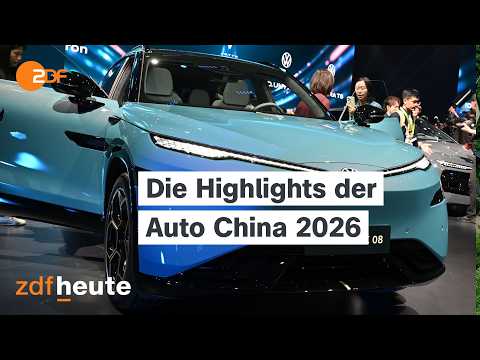
Source material: Chinese Electric Cars: Faster, Better, Crazier - Can German Manufacturers Keep Up?
Summary
Chinese electric vehicles (EVs) are rapidly enhancing in quality and performance, significantly transforming the automotive market and compelling manufacturers to reduce production costs. The Auto China 2026 exhibition highlights an influx of Chinese brands into the European market, with German manufacturers increasingly incorporating Chinese design features into their EVs.
Key trends at the exhibition include the emergence of large SUVs, the integration of advanced driver assistance systems, and a notable increase in premium and luxury electric vehicles from Chinese manufacturers, challenging the historical dominance of German brands. The concept of Dark Factories is emphasized, where automation reduces the need for human labor, enabling efficient production and customization of vehicles tailored to individual customer orders.
Volkswagen is launching the ID-Ara electric SUV at Auto China 2026, featuring a range of up to 1000 km and built on a platform specifically developed in China. The company is prioritizing partnerships with Chinese firms to accelerate innovation and reduce costs, reflecting a strategic shift to compete in the Chinese market.
Volkswagen aims to introduce 20 new electric vehicles in China this year, with plans to expand to 30 by the end of 2027, highlighting its commitment to the region. Despite economic challenges in China, the German automotive industry remains optimistic, having sold 3.7 million cars last year, surpassing sales in the European market.
Perspectives
Chinese Manufacturers
- Highlight advancements in battery technology and rapid charging capabilities
- Emphasize the growing popularity of Chinese EVs driven by patriotic consumer trends
German Manufacturers
- Struggle to maintain market share against rapidly evolving Chinese brands
- Face challenges in adapting to changing consumer preferences while preserving brand loyalty
Neutral / Shared
- Both markets are experiencing significant shifts due to technological advancements
- Partnerships between German and Chinese manufacturers are becoming increasingly important
Metrics
under 40,000 euros EUR
price of a Chinese electric vehicle
This pricing strategy could disrupt the European market by offering affordable luxury options
This car is already under 40,000 euros.
3.7 million cars units
total cars sold by the German automotive industry in China
This figure highlights the importance of the Chinese market for German manufacturers
We bought 3.7 million cars here.
1.6%
market share of all German manufacturers in China
A low market share indicates significant competition from local brands
All German manufacturers in China are currently 1.6%.
13 months
time taken to bring the ID-Junx 07 to market
This rapid development cycle contrasts with traditional timelines in Germany
The concept of the car is only 13 months old.
40%
reduction in development costs compared to traditional processes
Lower costs can enhance competitiveness in the market
We're now 30% faster and around 40% cheaper with normal development processes.
about 6 minutes from 10 to 95 percent minutes
time required to charge Chinese electric vehicles
This rapid charging capability makes Chinese EVs competitive with traditional fuel refueling times
Our new battery is about 6 minutes from 10 to 95 percent.
Key entities
Timeline highlights
00:00–05:00
Chinese electric vehicles are rapidly improving in quality and performance, significantly impacting the automotive market. The Auto China 2026 exhibition showcases the increasing presence of Chinese brands in Europe, with German manufacturers adopting Chinese design elements.
- Chinese electric vehicles (EVs) are rapidly enhancing in quality and performance, significantly transforming the automotive market and compelling manufacturers to reduce production costs
- The Auto China 2026 exhibition highlights an influx of Chinese brands into the European market, with German manufacturers increasingly incorporating Chinese design features into their EVs
- Key trends at the exhibition include the emergence of large SUVs, the integration of advanced driver assistance systems, and a notable increase in premium and luxury electric vehicles from Chinese manufacturers, challenging the historical dominance of German brands
- The concept of Dark Factories is emphasized, where automation reduces the need for human labor, enabling efficient production and customization of vehicles tailored to individual customer orders
- Chinese brands like Sieke are forming partnerships with European suppliers to enhance their luxury offerings while maintaining competitive pricing through optimized production processes
05:00–10:00
Chinese electric vehicles are rapidly advancing in quality and performance, significantly influencing the automotive market. German manufacturers are increasingly adopting Chinese design elements to remain competitive.
- Volkswagen is launching the ID-Ara electric SUV at Auto China 2026, featuring a range of up to 1000 km and built on a platform specifically developed in China
- The company is prioritizing partnerships with Chinese firms to accelerate innovation and reduce costs, reflecting a strategic shift to compete in the Chinese market
- Volkswagen aims to introduce 20 new electric vehicles in China this year, with plans to expand to 30 by the end of 2027, highlighting its commitment to the region
- The ID-Junx 07, a model developed entirely in China, was brought to market in just 13 months, demonstrating a significantly faster production timeline than traditional methods in Germany
- Despite economic challenges in China, the German automotive industry remains optimistic, having sold 3.7 million cars last year, surpassing sales in the European market
10:00–15:00
Chinese electric vehicles are gaining popularity due to a patriotic trend and advancements in battery technology. German manufacturers face significant challenges as they compete with rapidly evolving Chinese brands in the automotive market.
- Chinese electric vehicles (EVs) are increasingly popular, driven by a patriotic trend that encourages consumers to support domestic brands, a movement backed by the government to lessen reliance on foreign imports
- Leading brands like BYD and CATL excel in battery technology, providing rapid charging solutions that significantly cut down the time required to recharge EVs, making them competitive with traditional fuel refueling times
- The Chinese automotive market is rapidly evolving, with manufacturers prioritizing innovation and cost efficiency, creating substantial challenges for German automakers who have invested heavily in their own EV development
- The year 2026 is anticipated to be pivotal for German car manufacturers as they confront fierce competition from Chinese brands, which are quickly gaining traction with advanced technology and attractive designs
- The acceptance of German EVs in China will largely hinge on consumer preferences, as local buyers are increasingly attracted to the innovative features and affordability offered by Chinese models