Politics / France
Prison Guard Experiences and Corruption
Sébastien Piteau shares insights from his 20-year career as a prison guard, highlighting the unpredictable and often violent nature of the job. He emphasizes the systemic issues within the prison administration that leave guards feeling unsupported and dehumanized, leading to a challenging work environment.
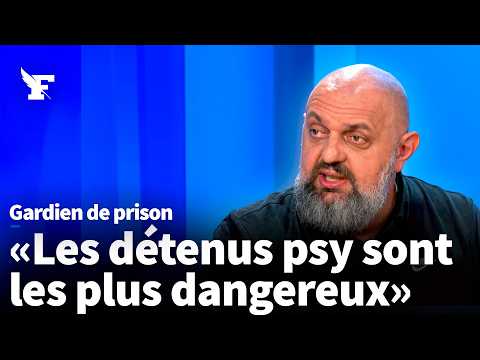
Source material: Témoignage : un gardien de prison raconte son quotidien
Summary
Sébastien Piteau shares insights from his 20-year career as a prison guard, highlighting the unpredictable and often violent nature of the job. He emphasizes the systemic issues within the prison administration that leave guards feeling unsupported and dehumanized, leading to a challenging work environment.
Piteau discusses the disconnect between the insights of prison staff and external psychological assessments, which often undermine their authority. He points out the dangerous environment for guards and the systemic issues that hinder accountability and support within the prison system.
Improving the recruitment process for prison guards is crucial to combat corruption effectively. Piteau notes that corruption within prisons involves not only guards but also directors and external actors, complicating efforts to address the issue.
The lack of mandatory medical treatment for inmates poses risks to their safety and that of others. This absence of care can lead to manipulative individuals exploiting vulnerable inmates, exacerbating systemic issues within the prison environment.
Perspectives
short
Prison Guards' Perspective
- Highlights the violence and unpredictability of prison life
- Claims that systemic issues leave guards unsupported
- Argues that external assessments undermine guards expertise
- Proposes better recruitment and training to combat corruption
- Warns about the dangers posed by manipulative inmates
Critique of the System
- Questions the effectiveness of current psychological assessments
- Rejects the notion that better recruitment alone will solve corruption
- Accuses the system of neglecting the psychological state of inmates
- Denies that the absence of mandatory medical treatment is the sole issue
Neutral / Shared
- Acknowledges the presence of corruption among various prison staff
- Notes the evolution of inmate behavior and its impact on prison dynamics
Key entities
Timeline highlights
00:00–05:00
Sébastien Piteau discusses the unpredictable and often violent nature of life as a prison guard over his 20-year career. He highlights systemic issues within the prison administration that leave guards feeling unsupported and dehumanized.
- Sébastien Piteau describes his 20 years as a prison guard, highlighting the unpredictable nature of daily life in prison. This unpredictability ranges from mundane tasks to extreme violence, reflecting the complex environment guards navigate
- He emphasizes the systemic issues within the prison administration that often leave guards unsupported. This lack of support contributes to a challenging work atmosphere, where guards feel their humanity is overlooked
- Piteau shares a troubling experience where he faced scrutiny after discovering illegal substances during a routine search. This incident illustrates the pressure guards face to justify their actions, even when performing their duties
- He recounts a particularly traumatic intervention where a detainee died, leading to immediate questioning and suspicion of the guards actions. This situation underscores the emotional toll and lack of support guards experience in high-stress scenarios
- Piteau argues that guards possess valuable insights into the detainees they interact with over many years. This expertise is often disregarded, despite its potential to inform decisions about rehabilitation and release
- He warns that the current approach to managing both guards and inmates fails to recognize their shared humanity. This oversight could hinder effective rehabilitation and contribute to ongoing issues within the prison system
05:00–10:00
The speaker discusses the disconnect between prison staff's insights and external psychological assessments, which undermines their authority. They also highlight the dangerous environment for guards and the systemic issues that hinder accountability and support within the prison system.
- The speaker highlights a case of a life-sentenced inmate who was perceived as a manipulative individual by prison staff. This reflects a disconnect between the insights of prison guards and the assessments made by external psychological experts
- There is a systemic disregard for the expertise of prison staff, who often have years of experience with inmates. This undermines their authority and can lead to poor decisions regarding inmate management and release
- The speaker recounts an incident where a colleague was severely injured by an inmate, emphasizing the dangerous environment within prisons. This incident illustrates the urgent need for better safety measures and administrative support for prison staff
- Inmates are increasingly using legal avenues to challenge their treatment, sometimes successfully obtaining compensation. This trend indicates a shift in power dynamics within the prison system, where inmates leverage legal rights against administrative decisions
- The speaker describes a personal experience of uncovering corruption within the prison system, which was met with administrative resistance. This highlights the challenges faced by whistleblowers and the lack of accountability within the prison hierarchy
- The speaker expresses frustration over the lack of support from the administration, which often prioritizes avoiding conflict over addressing serious issues. This culture of silence can exacerbate problems within the prison system and hinder necessary reforms
10:00–15:00
Improving the recruitment process for prison guards is crucial to combat corruption effectively. Corruption within prisons involves not only guards but also directors and external actors, complicating efforts to address the issue.
- Improving the recruitment process for prison guards is essential to combat corruption effectively. A well-selected workforce can help mitigate the risks associated with corrupt practices within the prison system
- Corruption in prisons is not limited to guards; it also involves directors and external actors like lawyers. This widespread issue complicates efforts to address corruption, as it permeates various levels of the prison hierarchy
- Inmates often exploit the vulnerabilities of guards, particularly those facing financial difficulties. This dynamic creates opportunities for corruption, as inmates can manipulate weaker individuals to smuggle contraband
- The emergence of a new generation of criminals has introduced threats that can coerce guards into corrupt activities. Fear of violence or retaliation can lead some guards to compromise their integrity
- The changing profile of inmates reflects a decline in respect and order within prisons, largely attributed to increased drug use. This deterioration complicates the management of inmates and poses safety risks for both staff and other prisoners
- Mental health issues among inmates are a growing concern, with some becoming dangerous due to untreated psychological conditions. This situation creates significant challenges for prison staff, who must navigate the complexities of managing such individuals
15:00–20:00
Inmates are not mandated to receive medical treatment, which poses risks to their safety and that of others. This lack of care can lead to manipulative individuals exploiting vulnerable inmates, exacerbating systemic issues within the prison environment.
- Inmates are not required to receive medical treatment, which can jeopardize their safety and that of others. This lack of mandatory care increases the risk of dangerous influences from malicious individuals
- Manipulative individuals can exploit inmates, especially if they stop taking essential medications. This vulnerability highlights the potential for inmates to be turned into threats within the prison system
- Insufficient resources in prisons impact healthcare and overall inmate management. The lack of adequate support intensifies the challenges faced by both staff and inmates
- Corruption in prisons can arise from various influences, including inmates who may be coerced. This complexity indicates that corruption extends beyond guards to a wider network
- Changes in inmate behavior, marked by decreased respect and increased drug use, have created a more chaotic prison environment. This shift complicates efforts for staff to maintain order
- Understanding the realities of prison life is crucial, as many misconceptions exist about conditions behind bars. Shedding light on these issues can lead to opportunities for reform and improved management