Politics / Czechrepublic
Czech Republic politics page with daily media monitoring across ČTK, CT24 and TV Nova, structured summaries of domestic political developments and a country-level press overview.
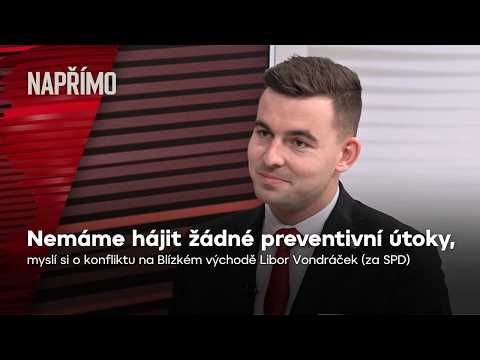
Vondráček: Nejsou to naše války, neměli bychom se do nich zapojovat | Napřímo
Summary
The discussion centers on the Czech Republic's involvement in foreign conflicts, particularly in the context of preventive military measures. The critiques these measures, arguing they often escalate tensions rather than resolve them, and raises concerns about the potential entanglement of the Czech Republic in conflicts that do not directly affect its security.
A future strategy is deemed necessary to address escalating conflicts, with emphasis on the role of the Ministry of Education in shaping this strategy. The expresses skepticism about the government's crisis management capabilities and highlights societal fears that inhibit open discussions on critical issues.
The importance of avoiding foreign conflicts, especially regarding Iran, is underscored, advocating for a focus on domestic stability. The questions military recruitment strategies, suggesting they should align with national needs rather than external engagements.
The role of civil society and youth in ensuring national security is emphasized, alongside concerns about the government's effectiveness in managing public perception and social media. The argues that civil society's independence in securing the homeland is complicated by state power dynamics and misinformation.
Perspectives
short
Libor Vondráček
- Critiques preventive military measures for escalating tensions
- Questions the Czech Republics involvement in foreign conflicts
- Emphasizes the need for a future strategy to address conflicts
- Advocates for military recruitment aligned with national needs
- Highlights the role of civil society in national security
- Criticizes the governments effectiveness in managing public perception
Opposing Views
- Support preventive military measures as necessary for security
- Advocate for active involvement in international conflicts
- Propose that current strategies are sufficient for crisis management
- Argue for military recruitment focused on international obligations
- Downplay the role of civil society in national security
- Defend the governments communication strategies as effective
Neutral / Shared
- Discusses the complexities of public opinion regarding government initiatives
- Acknowledges the need for financial investment in public campaigns
Metrics
other
21 milliard of the crown CZK
financial implications for the state
This amount indicates significant funding that could impact future strategies.
about the opposite of the floor, and the state of the area where there are less ideas on the grain.
financial_investment
tens of millions EUR
financial investment required for the media campaign
This indicates a significant commitment of resources by the government.
the National Charter of Strategy is in the right position, where we would have to put millions of tens of millions of people on the ground
Key entities
Timeline highlights
00:00–05:00
The speaker critiques preventive military measures, arguing they often escalate tensions rather than resolve them. Concerns are raised about the Czech Republic's potential involvement in foreign conflicts, particularly regarding Iran.
- The speaker critiques the effectiveness of preventive military measures, suggesting they often escalate tensions rather than resolve them. This is particularly relevant in the context of the ongoing situation in Ukraine
- Concerns are expressed about the potential for the Czech Republic to become involved in foreign wars, especially regarding the Islamic Republic of Iran. The speaker emphasizes the importance of not participating in conflicts that do not directly affect the nation
- There is a call for careful consideration of the Czech governments role in international conflicts, highlighting the need for a thorough investigation into the implications of such involvement
05:00–10:00
The speaker discusses the need for a future strategy to address escalating conflicts, emphasizing the role of the Ministry of Education in this context. Concerns are raised about the government's crisis management capabilities and the societal fear that inhibits open discussion on critical issues.
- The speaker emphasizes the need to build a future strategy in response to escalating conflicts, suggesting that the Ministry of Education should represent this concept in the Armageddon Republic. There is a call to reassess priorities in the context of investigations and to adapt strategies for development in light of ongoing conflicts
- Concerns are raised about the governments ability to manage crises effectively, particularly in light of the World Health Conference and the need for proper device usage. The speaker reflects on the fear prevalent in society, suggesting that many people feel unable to express their opinions or engage in discussions about critical issues
- There is a critique of the governments handling of social media comments, indicating that those in power may not fully understand the risks faced by individuals in conflict zones
10:00–15:00
The speaker emphasizes the importance of avoiding involvement in foreign conflicts, particularly regarding Iran, and advocates for a focus on domestic stability. Concerns are raised about military recruitment strategies, suggesting they should align with national needs rather than external engagements.
- The speaker emphasizes the importance of not getting involved in foreign conflicts, particularly highlighting the situation in Iran and its potential repercussions for the Czech Republic
- Concerns are raised about the militarys future, suggesting that it should focus on domestic stability and security rather than being used as a tool for foreign wars
- The speaker critiques current military recruitment strategies, indicating that they should be based on national needs rather than external conflicts
- There is a comparison made between past military engagements in Afghanistan and Iraq, suggesting that these experiences should inform current military policy
- The speaker warns against the dangers of provoking conflicts, stating that such actions could lead to significant mistakes affecting national security
15:00–20:00
The speaker highlights the critical role of civil society and youth in ensuring national security and stability. Concerns are raised about the government's effectiveness in managing public perception and social media.
- The speaker emphasizes the importance of civil society and the role of young people in building a system that can protect their homeland, expressing concern about the governments effectiveness in ensuring security on the European continent
- Concerns are raised about the governments ability to manage social media and public perception, indicating that the current administration may not fully respect the law or the needs of the community
- The speaker highlights the need for a balanced approach to security, stressing the importance of individuals being prepared and responsible for their own safety and that of their country
20:00–25:00
The speaker discusses the importance of understanding the European Union's opinions on the Czech Republic, highlighting the need for political leaders to be sensitive to these views. Criticism is directed at the National Security Strategy and a leader named Mr.
- The speaker emphasizes the importance of understanding the opinions of the European Union regarding the Czech Republic, suggesting that sensitivity to these opinions is crucial for political leaders. Concerns are raised about the National Security Strategy, with criticism directed at its current state and a leader named Mr. Valek, indicating a lack of maturity in leadership
25:00–30:00
The government aims for 90% of the population to align with the National Charter of Strategy, requiring a substantial media campaign and financial investment. Concerns have been raised regarding the government's effectiveness and transparency in communicating its initiatives to citizens.
- The government aims for 90% of the population to align with the National Charter of Strategy, necessitating a significant media campaign and financial investment. However, there are concerns about the governments effectiveness and transparency in communicating its actions to citizens
- The discussion highlighted the financial implications of government initiatives, particularly the electronic evidence system, which has faced criticism and resistance. There is a belief that the government has made mistakes in its approach to this system, leading to public dissatisfaction
- The speaker emphasized the need for personal compromise and collaboration with the democratic government to achieve common goals. Concerns about the future were voiced, particularly regarding the potential outcomes of current policies and the fear of ineffective implementation of necessary changes