Politics / Cyprus
Cyprus politics page with daily media monitoring across Alpha Cyprus and SigmaLive, structured summaries of domestic political developments and a country-level press overview.
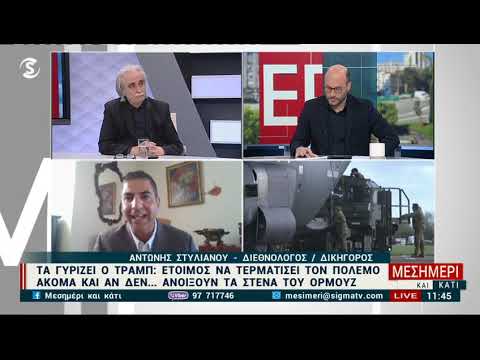
Ο ρόλος της Κίνας στην επομένη μέρα του πολέμου και η νέα δυναμική με τις ΗΠΑ
Summary
The discussion centers on the geopolitical implications of China's involvement in global affairs, particularly in the context of recent conflicts. Experts highlight the significance of energy resources and economic stability as critical factors influencing international relations. The panel emphasizes the need for strategic cooperation among nations to address these challenges effectively.
Concerns about rising energy prices and their impact on local economies are prevalent, with specific attention to regions like Cyprus. The panelists argue that the European Union's role is crucial in fostering unity and addressing economic crises. They also discuss the potential for adaptive measures by governments to mitigate the effects of these economic pressures.
The conversation shifts to the Iranian issue, with panelists noting China's strategic interests in the region. They express concerns about the historical context of international relations and the potential for conflict escalation. The need for a nuanced understanding of these dynamics is underscored, particularly regarding military actions and their implications.
Panelists critique the ideological underpinnings of current geopolitical strategies, suggesting that economic interests often overshadow ideological battles. They call for a reevaluation of how nations engage with one another, particularly in light of the militarization of international law. The discussion highlights the importance of public trust and transparency in diplomatic efforts.
Perspectives
Analysis of geopolitical dynamics and the role of China.
Proponents of Strategic Cooperation
- Advocate for unity among nations to tackle geopolitical challenges
- Highlight the importance of energy resources in shaping international relations
- Emphasize the need for adaptive measures to address economic pressures
Critics of Current Geopolitical Strategies
- Question the effectiveness of military actions in resolving conflicts
- Critique the overshadowing of ideological battles by economic interests
- Call for transparency and public trust in diplomatic efforts
Neutral / Shared
- Acknowledge the complexity of international relations and the role of historical contexts
- Recognize the potential for conflict escalation due to military actions
- Discuss the implications of rising energy prices on local economies
Key entities
Timeline highlights
00:00–05:00
Former President Trump's willingness to negotiate a ceasefire indicates a shift in U.S. foreign policy amidst a complex geopolitical landscape.
- Former President Trumps recent openness to negotiate a ceasefire marks a notable change in U.S. foreign policy, reflecting a more complex geopolitical landscape
- The global trend towards the militarization of politics raises concerns about authoritarianism, as powerful nations increasingly impose their will on others
- Leaders like Trump and the Israeli Prime Minister are contributing to a destabilized global order, which adversely affects ordinary citizens in conflict zones
- The military buildup around Iran indicates preparations for potential conflict, highlighting the urgent need for diplomatic efforts to avoid escalation
- Unilateral actions are threatening the current state of international law, increasing the risk of global instability and heightened tensions between nations
- The economic fallout from these conflicts is significant, with rising living costs impacting vulnerable populations and necessitating a reassessment of governance priorities
05:00–10:00
The geopolitical landscape is increasingly influenced by energy-driven disputes, affecting global markets and local economies. Rising oil and natural gas prices are straining economies, particularly in regions like Cyprus.
- The geopolitical landscape is increasingly defined by a geoeconomic struggle, transforming conflicts into energy-driven disputes that affect global markets and local economies
- Rising oil and natural gas prices are straining economies in regions like Cyprus, significantly impacting citizens daily lives and economic stability
- The conflict is evolving into a commercial war, with control over strategic waterways becoming critical, raising concerns about the lack of European Union intervention and potential regional instability
- Shifting dynamics between the U.S. and Iran reveal differing narratives about the wars objectives, complicating international relations and increasing the risk of military escalation
- Tensions within NATO are rising, particularly between European nations and the U.S, driven by internal capitalist competition that may lead to militaristic actions and a reassessment of alliances
- Chinas potential role in the conflict is being examined, with its historical reluctance to engage in direct conflict influencing predictions about its future involvement
10:00–15:00
The geopolitical landscape is increasingly complex as nations engage in military actions, raising the risk of conflict escalation. Concerns about a decline in dollar transactions suggest potential shifts in global monetary policy with significant economic implications.
- The geopolitical landscape is evolving as nations engage in military actions across key regions, increasing the complexity of international relations and the risk of conflict escalation
- A decline in dollar transactions raises concerns about a potential shift in global monetary policy, which could have significant economic consequences worldwide
- As a small island nation, there is heightened anxiety about reliance on external powers for military support, which historically has led to sovereignty issues
- The growing militarization of society is viewed as a threat, promoting a culture of conflict that could influence public perception and policy decisions
- Chinas involvement in current geopolitical tensions is complicated by its historical avoidance of direct military engagement, yet its economic ties with Iran enhance its influence in the region
- Recent military assistance from China to Iran, including advanced aircraft, signals a deeper commitment to regional conflicts, highlighting Chinas strategic interests in energy security
15:00–20:00
The militarization of international law is reshaping global interactions and responses to conflicts. This shift is influenced by power dynamics rather than ideological battles, impacting economic stability and energy markets.
- The militarization of international law is not merely ideological; it has significant economic implications. This shift could lead to dangerous interpretations of global events and policies
- There is a risk of oversimplifying complex geopolitical situations by framing them within a purely ideological context. Such simplifications can result in misguided responses to international crises
- The current militarization of politics, particularly in relation to Iran, reflects broader geopolitical strategies. Understanding these dynamics is crucial for navigating future conflicts and alliances
- The evolution of international law is being shaped by power dynamics rather than ideological battles. This transformation could redefine how nations interact and respond to conflicts
- The recent changes in U.S. leadership have altered the landscape of international relations significantly
- The implications of these developments extend beyond immediate conflicts, affecting global energy markets and economic stability. Countries must adapt to these changes to maintain their strategic interests