Politics / Cyprus
Cyprus Political Landscape Analysis
The Sigma poll indicates a significant rise in voter disappointment in Cyprus, with 58% of respondents expressing dissatisfaction. This shift suggests potential changes in the political landscape, with smaller parties possibly gaining influence as traditional parties face declining support.
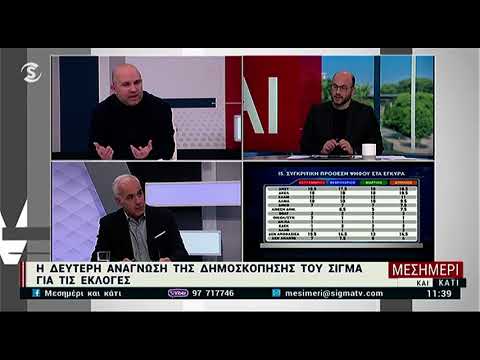
Source material: Analysis of Sigma Poll for Parliamentary Elections by Nasios Oreinos and Andreas Chatzikyriakos
Summary
The Sigma poll indicates a significant rise in voter disappointment in Cyprus, with 58% of respondents expressing dissatisfaction. This shift suggests potential changes in the political landscape, with smaller parties possibly gaining influence as traditional parties face declining support.
The political landscape in Cyprus is shifting, with traditional parties losing support and new entities potentially emerging. Voter dissatisfaction is rising, which may significantly influence the upcoming elections.
Candidates are failing to present clear political proposals, leading to a perception that the election is focused on preserving the status quo rather than introducing innovative solutions. Voter sentiment is fragmented, suggesting that smaller parties may gain traction due to discontent with larger parties.
International events, particularly the war in Iran, are heavily influencing current electoral dynamics, complicating serious public discourse and policy discussions. Traditional parties are reluctant to confront uncomfortable truths that could alienate voters.
Perspectives
short
Emerging Political Forces
- Highlights the potential for smaller parties to gain influence amid rising voter dissatisfaction
- Argues that traditional parties are losing support, indicating a shift in the political landscape
Neutral / Shared
- Identifies the impact of international events on local electoral dynamics
- Acknowledges the complexity of voter behavior and the potential for apathy
Key entities
Timeline highlights
00:00–05:00
The Sigma poll indicates a significant rise in voter disappointment in Cyprus, with 58% of respondents expressing dissatisfaction. This shift suggests potential changes in the political landscape, with smaller parties possibly gaining influence as traditional parties face declining support.
- The recent Sigma poll reveals a potential shift in the political landscape of Cyprus, indicating the emergence of new political formations and changing voter dynamics
- Voter discontent has risen significantly, with 58% of respondents expressing disappointment, highlighting an increasing frustration among the electorate compared to earlier months
- The analysis points to a possible reconfiguration of power in the Cypriot parliament, where smaller parties may gain influence as traditional parties experience declining support
- Despite recent political upheavals, the broader public sentiment has not fully aligned with these events, suggesting a disconnect between political developments and voter reactions
- Understanding the difference between anger and disappointment is essential; while anger may indicate hope for change, disappointment can lead to voter apathy, potentially affecting future elections
05:00–10:00
The political landscape in Cyprus is shifting, with traditional parties losing support and new entities potentially emerging. Voter dissatisfaction is rising, which may significantly influence the upcoming elections.
- The political landscape in Cyprus is undergoing significant changes, with traditional party structures showing signs of disintegration and new political entities potentially emerging
- Voter disillusionment is on the rise, as a notable increase in dissatisfaction among the electorate may impact voting intentions in the upcoming elections
- The two major parties are experiencing a decline in support compared to previous elections, suggesting a fragmentation of the electorate
- The upcoming elections are anticipated to yield a parliament with a markedly different composition, with predictions indicating that at least one-third of the representatives will be newcomers
- The potential for punitive voting behavior among the electorate could favor emerging parties over established ones, complicating the political dynamics further
10:00–15:00
The political landscape in Cyprus is experiencing a shift as traditional parties face declining support and voter dissatisfaction rises. Predictions suggest that smaller parties may gain traction in the upcoming elections, potentially leading to a significant demographic change in the new parliament.
- The political landscape is shifting, with major parties facing challenges as voter support moves away from traditional strongholds
- Candidates are failing to present clear political proposals, leading to a perception that the election is focused on preserving the status quo rather than introducing innovative solutions
- Voter sentiment is fragmented, suggesting that smaller parties may gain traction due to discontent with larger parties like the Democratic Party and the Progressive Party
- Predictions indicate that the upcoming elections could result in a significant demographic shift in the new parliament, with at least one-third of representatives being newcomers
- There is a growing skepticism towards established parties, reflected in historical trends of declining voter trust and engagement
15:00–20:00
The political landscape in Cyprus is shifting as traditional parties face declining support amid rising voter dissatisfaction. This trend may lead to significant changes in party dynamics and voter alignment in the upcoming elections.
- The political landscape is becoming increasingly constrained, limiting candidates ability to propose significant policy changes as they prioritize maintaining voter support amid external pressures
- International events, particularly the war in Iran, are heavily influencing current electoral dynamics, complicating serious public discourse and policy discussions
- Candidates are often resorting to vague promises instead of presenting concrete proposals, resulting in a lack of substantive political debate and differentiation
- Traditional parties are reluctant to confront uncomfortable truths that could alienate voters, leading to a political environment where honesty is often sacrificed for electoral gain
- The upcoming elections are anticipated to be a pivotal moment in political history, potentially resulting in significant shifts in party dynamics and voter alignment
20:00–25:00
The political landscape in Cyprus is becoming increasingly fragmented, with traditional parties struggling to connect with voters. The upcoming elections may lead to significant shifts in party dynamics and voter behavior.
- The political landscape is fragmented, leading to a low number of seats for each party, which limits their ability to exert significant influence
- Traditional parties face challenges in effectively communicating with voters, as they hesitate to address the harsh realities of the political situation for fear of losing support
- Geopolitical tensions, particularly the war in Iran, are complicating the electoral environment, creating confusion among voters and affecting party strategies
- The upcoming elections are anticipated to be a crucial turning point in political history, with potential shifts in party dynamics and voter behavior
- The participation of multiple parties in the elections may result in unexpected outcomes, including the formation of a coalition government that diverges from traditional expectations