Politics / Croatia
International Conflicts and Regulations
The discussion centers on the complexities of international conflicts, particularly the wars involving Ukraine and Russia, and the implications of American interventions in countries like Iraq and Iran. Skepticism is raised regarding the motivations behind support for Ukraine, suggesting it is driven by economic interests rather than a genuine commitment to democracy.
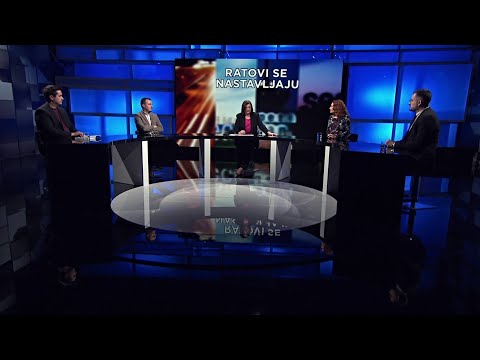
Source material: Peti dan: Ratovi se nastavljaju; zabrane
Summary
The discussion centers on the complexities of international conflicts, particularly the wars involving Ukraine and Russia, and the implications of American interventions in countries like Iraq and Iran. Skepticism is raised regarding the motivations behind support for Ukraine, suggesting it is driven by economic interests rather than a genuine commitment to democracy.
Challenges faced by regimes in maintaining power amidst secular democratic movements and criticisms of military incompetence are highlighted. The ongoing war is viewed as a tragic victory for Russia, with dire implications for Ukraine and a looming global economic crisis.
The normalization of the Ukraine conflict raises concerns about complacency among Western powers, potentially masking deeper economic motivations behind their support. The geopolitical landscape is shifting, complicating the situation as regional and superpowers vie for influence.
Legal regulations are discussed in the context of preventing underage drinking, emphasizing the need for protection based on constitutional principles. Concerns about the addictive nature of social media algorithms highlight the potential negative impacts on children's behavior and mental health.
Perspectives
short
Proponents of Intervention and Regulation
- Argues that American interventions are primarily self-serving
- Highlights the need for legal regulations to protect children from alcohol and social media
- Emphasizes the importance of addressing economic interests in international conflicts
- Claims that the normalization of the Ukraine conflict reflects troubling complacency among Western powers
- Proposes that a focus on social economy is essential for improving living conditions
Critics of Intervention and Regulation
- Questions the effectiveness of American interventions in promoting democracy
- Denies that legal frameworks alone can address societal discrimination
- Challenges the assumption that existing regulations can effectively curb underage drinking
- Critiques the oversimplification of complex geopolitical dynamics
- Rejects the notion that economic power directly translates to cultural control
Neutral / Shared
- Notes the complexities of international conflicts and the implications of military actions
- Observes the impact of historical narratives on current perceptions of military actions
- Acknowledges the role of grassroots movements in challenging dominant narratives
Metrics
other
the war is going to be a terrible victory
perception of the war's outcome
This reflects the complex nature of victory in modern conflicts.
the war is going to be a terrible victory
other
two or three times more
the duration of the war
This suggests a prolonged conflict with significant implications for global stability.
the war will be in the last three years
other
the consumption of alcohol in America
impact of regulations on alcohol consumption
Understanding changes in consumption patterns can inform future regulatory decisions.
it has changed the consumption of alcohol in America
other
a very serious matter
prevalence of underage drinking
Understanding the severity can drive policy changes.
When we look at statistics, it is a very serious matter.
Key entities
Timeline highlights
00:00–05:00
The discussion addresses the complexities of international conflicts, particularly focusing on the wars involving Ukraine and Russia, and the implications of American interventions in countries like Iraq and Iran. It raises skepticism about the motivations behind support for Ukraine, suggesting it is driven by economic interests rather than a genuine commitment to democracy.
- The discussion centers on ongoing wars, particularly the conflict involving Ukraine and Russia. It highlights the complexities of international relations
- Concerns are raised about the implications of American interventions in various countries, including Iraq and Iran. The effectiveness and motivations behind these actions are questioned
- Support for Ukraine is portrayed as politically motivated. It is driven by economic interests rather than a genuine commitment to democracy
- Irans situation is depicted as a struggle against an autocratic regime. Skepticism is expressed about the prospects for democracy in the country
- The historical context of previous world wars illustrates the cyclical nature of conflict. Persistent fears accompany such crises
- The critique focuses on the belief that external forces can easily bring about democratic change. This is particularly relevant for nations with entrenched regimes, such as Iran
05:00–10:00
The regime is struggling to maintain power amidst challenges from secular democratic movements and criticisms of military incompetence. The ongoing war is seen as a tragic victory for Russia, with dire implications for Ukraine and a looming global economic crisis.
- The regimes weakness is evident as it struggles to maintain power. It faces challenges from secular democratic movements that seek to empower women
- The administration is criticized for lacking military knowledge. This contributes to a chaotic political environment and ineffective governance
- The ongoing war is portrayed as a tragic victory for Russia. It is driven by Russias desire to assert its interests, while the situation in Ukraine remains dire
- Irans position in the geopolitical landscape is complex. It seeks to navigate its relationships with both America and China amidst ongoing conflicts
- The potential for a global economic crisis looms, particularly in Europe and America. The repercussions of the war and energy recovery efforts are unfolding
- There is a need for a reevaluation of strategies. The current approach to the war and international relations appears increasingly problematic
10:00–15:00
The ongoing war in Ukraine has become normalized, overshadowing other global issues and raising concerns about European support sustainability. The geopolitical landscape is shifting, complicating the situation as regional and superpowers vie for influence.
- The normalization of the war in Ukraine has led to a troubling acceptance of ongoing conflict. This acceptance overshadows other pressing global issues
- European countries face challenges in coordinating support for Ukraine. These challenges raise questions about the sustainability of their efforts
- The geopolitical landscape is shifting as regional powers and superpowers vie for influence. This competition complicates the situation in Ukraine
- The impact of Russian aggression extends beyond Ukraine. It affects global security dynamics and regional stability in areas like Taiwan
- Concerns about military interventions are rising. Conservative leaders are grappling with the implications of their decisions on international relations
- The historical context of American military involvement reveals a complex relationship with various nations. This history influences current strategies and alliances
15:00–20:00
The ongoing war in the Middle East reflects a perceived weakness among military powers, particularly Israel and the US, as evidenced by their military strategies. Comparisons are drawn between the situations in Ukraine and the Middle East, highlighting the impact of military actions on civilian lives.
- The ongoing war in the Middle East reveals a sense of weakness among military powers, particularly in Israel and the US. This perception is evident in the military technology and strategies they employ
- The situation in Ukraine is often compared to the plight of civilians in the Middle East. Both scenarios highlight the consequences of military actions on innocent lives
- International relations are shifting, with countries like Pakistan and Afghanistan playing significant roles. These nations are navigating their own paths while being influenced by larger superpowers
- The US administration is reportedly receiving intelligence about Chinas activities, especially concerning Taiwan. This information raises concerns about potential conflict and its implications for global stability
- The concept of superpowers is evolving, with regional powers asserting their influence. This shift complicates the geopolitical landscape and challenges traditional notions of power dynamics
- There is an increasing focus on human rights and military strategies in addressing global conflicts. A more nuanced understanding of these issues is essential in the context of international relations
20:00–25:00
The political landscape is marked by confusion regarding the rights of officials and the implications of intervention in various countries. Economic power is emphasized as a crucial factor in influencing cultural narratives and human rights discussions.
- Confusion exists regarding the political landscape, particularly about the rights of officials and the implications of intervention in various countries
- Cultural domination is viewed as a key factor in human rights discussions. There is an emphasis on the need for economic power to influence cultural narratives
- The influence of Trumps administration is noted, especially concerning international integration and the changing strategies of American imperialism
- Concerns are raised about the state of the conflict, highlighting its normative role in global affairs. The seriousness of the current geopolitical situation is also emphasized
- The historical context of the Second World War and ongoing public revisionism in countries like Croatia and Poland is discussed
- The narrative surrounding Russia and Ukraine is examined. This includes the role of media in shaping perceptions of denazification and historical corrections
25:00–30:00
The situation in Ukraine is compared to the Soviet Union, emphasizing the symbolic military knowledge of the Russian army. Concerns are raised about the potential for new conflicts and the chaotic implications for the region's future.
- Ukraines situation is compared to the Soviet Union, highlighting the symbolic military knowledge of the Russian army in the region. The narrative of Slava Ukraine is tied to the context of the Second World War
- The failure of the Russian offensive is attributed to its inability to achieve denazification in Ukraine. This failure is reflected in the political gestures made in Western parliaments regarding the Second World War
- The narrative surrounding the Second World War is complex, with implications for Israel and its independence. The expansion of Soviet narratives has influenced global perceptions and education about historical events
- The role of the United States in shaping post-Second World War policies is significant. The connection between armed forces and historical narratives is emphasized, particularly regarding prisoners of war
- Concerns are raised about the potential for new conflicts, such as denazification in the Khirvac region. Traditional relations between nations are questioned in light of these emerging tensions
- Marijana expresses fears that the conflict in Ukraine may escalate beyond previous wars. The situation is described as chaotic, with significant implications for the future of the region