Politics / China
Chen Baoqiang's Legacy
In 1949, the Chinese Communist Party aimed to liberate Taiwan, facing significant challenges due to a lack of naval and air support. Chen Baocang's intelligence operations were crucial for the People's Liberation Army's military strategies and successes. His ideological shift towards the Communist Party was influenced by interactions with party members and engagement with anti-Japanese literature.
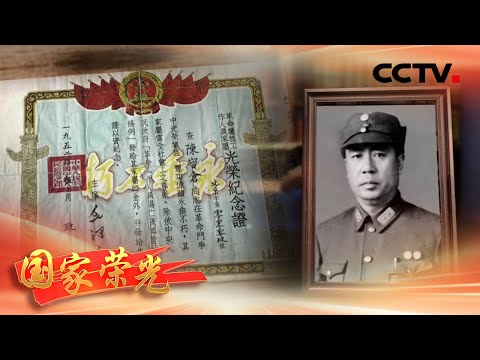
Source material: 他的遗骨在众人的接力下回到祖国,陈宝仓烈士潜伏身份证明首次公开 | CCTV「国家荣光」20260406
Summary
In 1949, the Chinese Communist Party aimed to liberate Taiwan, facing significant challenges due to a lack of naval and air support. Chen Baocang's intelligence operations were crucial for the People's Liberation Army's military strategies and successes. His ideological shift towards the Communist Party was influenced by interactions with party members and engagement with anti-Japanese literature.
Chen Baoqiang played a significant role in the surrender of Japanese troops in Qingdao in October 1945, marking a pivotal moment in his military career. His subsequent appointment in the National Defense Ministry highlighted his importance in managing military logistics during a critical transitional period. Despite personal risks, his commitment to national reunification in Taiwan was evident.
After being cleared of suspicion, Chen Baoqiang returned to the Ministry of National Defense as a senior advisor, gathering intelligence on the Nationalist government's operations. His execution on June 10, 1950, serves as a poignant reminder of the sacrifices made for national unity. The narrative surrounding his actions raises questions about the effectiveness of covert operations in politically charged environments.
Chen Baoqiang's family faced significant challenges in retrieving his ashes due to Taiwan's political climate, ultimately succeeding with help from friends. His contributions as a covert operative were later acknowledged by a high-ranking official in the People's Republic of China. The successful recovery of his remains implies a network of support that may not be fully understood.
Perspectives
short
Supporters of Chen Baoqiang
- Highlight Chen Baoqiangs crucial role in intelligence operations
- Emphasize his commitment to national reunification despite personal risks
- Acknowledge his contributions to military logistics during critical periods
Critics of the Communist Party's Strategy
- Question the adequacy of the Communist Partys military infrastructure
- Raise concerns about reliance on individual contributions for military effectiveness
- Critique the potential for misinformation affecting military planning
Neutral / Shared
- Note the political dynamics surrounding Chen Baoqiangs legacy
- Recognize the challenges faced by his family in retrieving his ashes
Metrics
other
150 years
duration of the Chinese Army's presence in Taiwan
This long history underscores the complexity of the Taiwan issue.
The Chinese Army have conserved in the Taiwan-Fantheks for about 150 years.
other
0.5 million USD
total amount of money related to contributions
This figure highlights the financial implications of Chen Baochang's legacy.
The total amount of money is 0.5 million
Key entities
Timeline highlights
00:00–05:00
In 1949, the Chinese Communist Party aimed to liberate Taiwan, facing significant challenges due to a lack of naval and air support. Chen Baocang's intelligence operations were crucial for the People's Liberation Army's military strategies and successes.
- In 1949, the Chinese Communist Party focused on liberating Taiwan, facing challenges due to insufficient naval and air support. This urgency for intelligence led to Chen Baocangs deployment for underground operations in Taiwan
- Chen Baocang utilized his role in the National Defense Ministry to collect vital military intelligence on Kuomintang forces. His reports detailed troop movements and military assets, essential for planning liberation efforts
- The intelligence gathered by Chen and his team was crucial for the Peoples Liberation Armys success in the 1950 Hainan Island campaign, marking a significant advance towards unifying Taiwan with mainland China
- Chen Baocangs shift from a Kuomintang officer to a dedicated Communist soldier highlights a deep ideological transformation driven by a commitment to national salvation. His journey illustrates the complexities of loyalty during a turbulent time in Chinese history
- During the 1937 Battle of Shanghai, Chen showcased his strategic skills by strengthening defenses against Japanese forces despite limited resources. His successful efforts delayed Japanese advances and demonstrated his military leadership
- Chens experiences within the Kuomintang exposed him to systemic corruption and inefficiency, leading to his disillusionment with the party. This realization ultimately drove him to align with the Communist cause, reflecting the influence of internal party dynamics on personal decisions
05:00–10:00
Chen Baocang's ideological shift towards the Communist Party was influenced by his interactions with party members and his engagement with anti-Japanese literature. His intelligence-gathering efforts and partnership with Zuo Hongtao were pivotal in supporting the Communist cause during a tumultuous period.
- Chen Baocangs encounter with a Communist Party member during his time with the Nationalist Party ignited his interest in revolutionary ideas, marking the start of his ideological shift
- While recovering from injuries, Chen engaged deeply with anti-Japanese literature and Communist strategies, which led him to embrace Communist beliefs and seek closer ties with the party
- Chen established a strong partnership with Zuo Hongtao, a key figure in the underground Communist Party, fostering mutual trust that was essential for his intelligence-gathering efforts
- As Chen provided critical intelligence to the Communist Party, he faced heightened scrutiny from the Nationalist Party, putting his safety at risk and underscoring the internal tensions within the Nationalist ranks
- In the lead-up to Japans surrender, Chen was appointed to oversee the Japanese militarys capitulation, leveraging his military and diplomatic expertise during this complex transition
- Chens commitment to protecting Communist allies from Nationalist persecution highlighted his dedication to their cause and solidified his role in resisting both Japanese forces and Nationalist oppression
10:00–15:00
Chen Baoqiang played a significant role in the surrender of Japanese troops in Qingdao in October 1945, marking a pivotal moment in his military career. His subsequent appointment in the National Defense Ministry highlighted his importance in managing military logistics during a critical transitional period.
- In October 1945, Chen Baochang played a pivotal role in the ceremony for the surrender of Japanese troops in Qingdao, marking a significant moment in his military career and showcasing his leadership during a crucial historical transition
- As a representative of the National Governments Military Commission, Chen was responsible for the symbolic transfer of military authority from the Japanese commander, emphasizing his importance in restoring order in the region after the war
- After the surrender, Chen was appointed to a key role in the National Defense Ministry, where he managed military logistics in Shandong, a critical position during a time of transition
- Chen faced political challenges from local leaders who attempted to undermine him for personal gain, testing his integrity and commitment to the militarys mission amid accusations and discrediting efforts
- Despite being sidelined by political maneuvering, Chen maintained connections to military intelligence and sought to contribute to national unity, demonstrating his dedication to the countrys future through engagement with former colleagues in Taiwan
- In 1948, Chens involvement with the left faction of the Nationalist Party and his connections with the Communist Party in Hong Kong reflected his strategic positioning during the civil conflict, indicating a desire for communication and cooperation for national reconciliation
15:00–20:00
Chen Baocang returned to the Ministry of National Defense as a senior advisor after being cleared of suspicion, relocating his family to Taiwan. He utilized his military status to gather intelligence on the Nationalist government's operations while facing significant challenges due to enemy surveillance.
- After being cleared of suspicion, Chen Baocang returned to the Ministry of National Defense as a senior advisor, allowing him to re-engage in military and political affairs
- Chen relocated his family to Taiwan, taking three daughters and one son while leaving his eldest daughter in Shanghai, driven by his commitment to his work and the political climate
- Upon arriving in Taiwan in the summer of 1949, Chen used his military status to gather intelligence on the Nationalist governments operations, which was crucial for understanding the political landscape
- Chen faced significant challenges in transmitting intelligence due to enemy surveillance, highlighting the risks of his covert operations
- He collaborated with a fellow officer who recognized the importance of unity between Taiwan and the mainland, facilitating the flow of critical military data to the Communist Party
- As tensions escalated in Taiwan, Chens awareness of danger prompted him to orchestrate a secret evacuation for his family, showcasing his military instincts
20:00–25:00
Chen Baoqiang's commitment to national reunification in Taiwan was evident despite the personal risks he faced. His execution on June 10, 1950, serves as a poignant reminder of the sacrifices made for national unity.
- Chen Baochang chose to stay in Taiwan to support national reunification, demonstrating his unwavering commitment to his ideals despite personal risks
- The arrest of a key member of the Taiwanese underground party posed significant threats, yet Chen managed to avoid detection initially, showcasing his skill in evading capture
- A search of Chens residence revealed handwritten military intelligence, which ultimately led to his identification by authorities, highlighting the dangers of his covert activities
- After his capture, Chen endured severe torture but remained steadfast, refusing to divulge critical information, which underscores his strong convictions
- Chen was executed on June 10, 1950, marking a tragic conclusion to his life and mission, and serving as a reminder of the sacrifices made for national unity
- Following his death, his family expressed a strong desire to return his ashes to the mainland, reflecting their hope for reconciliation despite the logistical challenges
25:00–30:00
Chen Baochang's family faced significant challenges in retrieving his ashes due to Taiwan's political climate, ultimately succeeding with help from friends. His contributions as a covert operative were later acknowledged by a high-ranking official in the People's Republic of China.
- Chen Baochangs family encountered numerous obstacles in retrieving his ashes due to Taiwans political situation, yet they successfully secured his remains with the assistance of friends and crematorium workers
- His daughter bravely took on the task of bringing his ashes back to mainland China, navigating a dangerous journey that included swimming to shore after being denied entry into Hong Kong
- A document from a high-ranking official in the Peoples Republic of China later confirmed Chen Baochangs identity as a covert operative, underscoring his significant contributions to the revolutionary movement
- Mao Zedong highlighted the importance of honoring revolutionaries like Chen Baochang, who sacrificed their lives for national unity, reflecting a commitment to remembering their legacy
- Chen Baochangs funeral was conducted discreetly, attended by a small group due to the sensitive nature of his past, emphasizing the importance of his sacrifices for the nation
- The inscription on Chen Baochangs grave symbolizes his enduring spirit and dedication to his country, representing the legacy of many revolutionaries who fought for unity and sacrifice