Politics / China
Autonomous Driving in Guangzhou
Guangzhou, the capital of Guangdong Province, has emerged as a significant hub for autonomous driving innovation, with driverless taxis now operating at scale throughout the city. The Chinese government has invested heavily in developing the necessary technology and infrastructure to support this transformation in urban transportation.
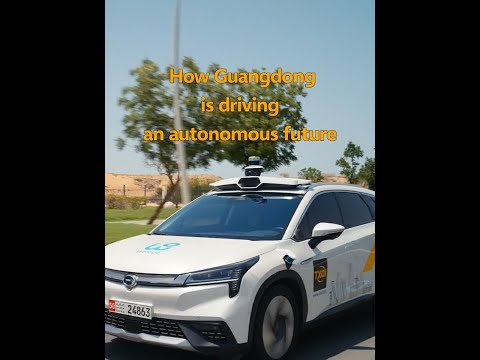
Source material: GLOBALink | How Guangdong is driving an autonomous future
Summary
Guangzhou, the capital of Guangdong Province, has emerged as a significant hub for autonomous driving innovation, with driverless taxis now operating at scale throughout the city. The Chinese government has invested heavily in developing the necessary technology and infrastructure to support this transformation in urban transportation.
An entire ecosystem has been established, comprising automakers, software teams, and hardware suppliers, which is essential for turning autonomous driving concepts into operational fleets. Companies like We Ride and Pony.ai are gaining invaluable operational experience that cannot be replicated in laboratory settings.
As the industry transitions from technology validation to mass production, the demand for skilled talent has surged, prompting universities in the Greater Bay Area to adapt their curricula to meet these needs. This influx of talent is crucial for sustaining the growth of the autonomous driving sector.
Guangzhou-based firms are also expanding their operations internationally, with We Ride launching the first Robotaxi commercial service in Abu Dhabi. This expansion indicates the global potential of autonomous driving technology and its applications beyond China.
Perspectives
short
Proponents of Autonomous Driving
- Highlight advancements in driverless taxi operations in Guangzhou
- Emphasize government investment in technology and infrastructure
- Argue for the establishment of a supportive ecosystem for autonomous driving
- Point out the operational experience gained by companies like We Ride and Pony.ai
- Stress the importance of talent development in the sector
Critics of Autonomous Driving
- Question the safety and regulatory frameworks surrounding autonomous vehicles
- Warn about potential challenges in urban environments not accounted for by operational experience
Neutral / Shared
- Acknowledge the transition from technology validation to mass production
- Recognize the international expansion of Guangzhou-based autonomous driving firms
Metrics
other
first Robotaxi commercial operation service in downtown Abu Dhabi
expansion of autonomous driving services
This marks a significant milestone in the international expansion of autonomous driving technology.
We Ride announced the launch of the first Robotaxi commercial operation service in downtown Abu Dhabi
Key entities
Timeline highlights
00:00–05:00
Guangzhou is a leading hub for autonomous driving innovation, with driverless taxis operating at scale. The Chinese government has significantly invested in creating an ecosystem that supports the development and deployment of this technology.
- Guangzhou, the capital of Guangdong Province, is a hub for autonomous driving innovation, with driverless taxis operating at scale. The Chinese government has invested significantly in this technology, creating an ecosystem that includes coding, testing, and building vehicles
- Full-stack industrial clusters in Guangzhou and Xinjiang feature collaboration among automakers, software teams, and hardware suppliers. This integrated approach is essential for transitioning from lab demonstrations to operational autonomous vehicles
- Companies like We Ride and Pony.ai are gaining invaluable operational experience on the road, which cannot be replicated in a lab. This practical experience is crucial as the industry moves from technology validation to mass production
- The demand for talent in the autonomous driving sector has surged, with a need for various engineering roles. Universities in the Greater Bay Area are adapting their curricula to ensure students are equipped with the necessary skills
- Guangzhou-based autonomous driving firms are expanding internationally, with We Ride launching the first Robotaxi commercial service in Abu Dhabi. This expansion highlights the global potential of autonomous driving technology
- As driverless mobility transitions from labs to city streets and international markets, it promises to reshape transportation. Ongoing innovation aims to create smarter, safer, and more connected urban environments