Politics / China
China's Economic Growth and AI Transformation
James Heckman, a Nobel Prize-winning economist, shares insights on China's economic prospects, emphasizing the importance of human capital and early childhood development. He expresses optimism about the country's growth, driven by advancements in technology and education.
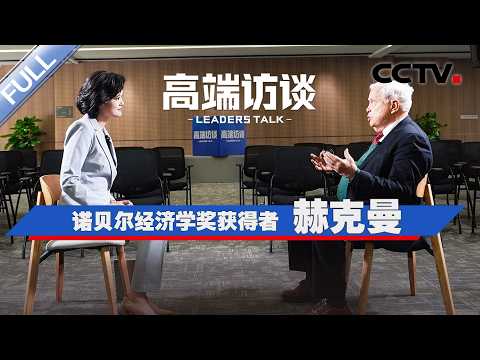
Source material: Exclusive Interview with Nobel Prize in Economics Winner Heckman | CCTV 'High-End Interview' 20260417
Summary
James Heckman, a Nobel Prize-winning economist, shares insights on China's economic prospects, emphasizing the importance of human capital and early childhood development. He expresses optimism about the country's growth, driven by advancements in technology and education.
Heckman highlights the transformative impact of artificial intelligence on the job market, arguing that exposure to AI does not necessarily lead to job loss but can enhance employment opportunities. He notes that AI can improve productivity across various professions.
The economist discusses his recognition by the Chinese government through the Friendship Award, reflecting on his experiences in China and the dynamism he observes in its society. He appreciates the entrepreneurial spirit and the engagement of Chinese scholars.
Heckman underscores the significance of women's empowerment and access to education in China's economic success, contrasting it with historical limitations faced by women in other countries. He notes the increasing participation of women in the workforce as a key factor in economic development.
Perspectives
short
Support for China's Economic Development
- Highlights the importance of human capital and early childhood development in driving economic growth
- Expresses optimism about the role of AI in enhancing job opportunities rather than displacing workers
Concerns about Economic Policies
- Critiques the tariffs imposed by the Trump administration for lacking economic foundation and harming low-income consumers
Neutral / Shared
- Acknowledges the significant role of womens empowerment in Chinas economic success
- Reflects on the importance of curiosity and passion in economic research
Metrics
other
70th anniversary
the anniversary of the People's Republic of China
This milestone reflects China's historical significance and progress
that was the 70th anniversary.
tariff
15%, 20%, 25%
increase in coffee prices due to tariffs
Higher prices disproportionately affect low-income consumers
Coffee gone up 15%, 20%, 25%, I've heard different figures.
Key entities
Timeline highlights
00:00–05:00
James Heckman, a Nobel Prize-winning economist, expresses optimism about China's economic future, emphasizing the importance of early childhood development and human capital. He discusses how artificial intelligence is transforming the job market, creating new opportunities rather than simply displacing workers.
- James Heckman, a Nobel Prize-winning economist, shares his positive outlook on Chinas economic prospects, based on his extensive observations of the country
- He addresses the transformative effects of artificial intelligence across various sectors, noting that job displacement does not equate to unemployment but instead opens up new opportunities
- Heckman underscores the critical role of early childhood development and human capital in fostering economic growth, highlighting that investments in these areas yield substantial returns
- The advancements in Chinas artificial intelligence industry are viewed as essential for achieving high-quality economic and social development, with technology emerging as a significant growth driver
05:00–10:00
James Heckman discusses the significant role of human capital in China's economic development, particularly through early childhood education and women's empowerment. He highlights the dynamism and optimism present in China's evolving job market, driven by artificial intelligence and educational advancements.
- James Heckman, a Nobel Prize-winning economist, has dedicated his research to understanding Chinas development, particularly the role of human capital in social mobility
- He has actively participated in early childhood education initiatives in China, offering academic consultation to enhance educational outcomes in rural communities
- Heckmans work highlights the significance of early childhood development for individual and societal advancement, attracting attention from global policymakers
- He emphasizes that human capital accumulation is vital for national progress, showcasing the positive impact of targeted educational policies implemented in China over the last decade
10:00–15:00
James Heckman discusses the impact of tariffs imposed by the Trump administration, highlighting their lack of economic foundation and negative effects on low-income consumers. He emphasizes the need for stable trade relationships and the importance of curiosity in economic research.
- James Heckman expresses concerns about the tariffs imposed by the Trump administration, arguing they lack a solid economic foundation and contribute to instability in global trade
- He highlights that tariffs increase the cost of living and disproportionately affect low-income consumers by raising prices on essential goods, such as coffee, which is not produced domestically
- The fluctuating nature of tariffs creates uncertainty in trade relationships, discouraging investment and complicating long-term partnerships, which diminishes the reliability of the U.S. as a trading partner
- Heckman reflects on his career, emphasizing that a deep curiosity and passion for economics have driven his research, and he advises young economists to pursue their interests with determination
- The discussion also notes a shift in global trading patterns as countries seek alternatives to U.S. partnerships, indicating changing dynamics in international trade
15:00–20:00
James Heckman discusses the importance of early childhood development and human capital in China's economic growth. He expresses optimism about China's future, attributing it to the country's industriousness and pragmatic values.
- The speaker finds joy in learning through exploration and emphasizes the importance of understanding complex problems and learning from mistakes
- He highlights the critical role of parental engagement, especially maternal love, in early childhood development, linking it to economic returns on investment in children
- The speaker expresses strong optimism about Chinas future, attributing it to the countrys industriousness, intelligence, and pragmatic values, contrasting this with perceived issues in American society
- He praises the work ethic of Chinese students, noting their dedication, and contrasts it with a sense of dependency and lack of pride observed in some segments of American society
- Acknowledging Chinas historical challenges, such as the Opium War, he recognizes the nations growing strength and unity, which he believes fosters a sense of purpose among its people